
Beyond Local Sensing: Measuring CRN Whitespace via Social Centrality
Whitespace measurement and virtual backbone construction for Cognitive Radio Networks: From the social perspective
The paper proposes a social-perspective framework for measuring spectrum whitespace and constructing a Virtual Backbone (VB) in Cognitive Radio Networks (CRNs). It introduces "Centrality Score" to weight Primary User (PU) activity and develops a Spectrum Altitudes based Virtual Backbone (SAVB) algorithm that improves spectrum utilization by selecting secondary users in high-availability areas.
TL;DR
This research shifts the paradigm of spectrum sensing in Cognitive Radio Networks (CRNs) from "what is near me" to "how does the primary network behave globally." By applying Social Network Theory—specifically betweenness centrality—the authors accurately predict spectrum availability and construct a Virtual Backbone (SAVB) that significantly boosts network throughput.
The Missing Piece: Global Traffic Awareness
In a CRN, Secondary Users (SUs) must exploit "whitespace" without bothering Primary Users (PUs). Existing methods usually assume PUs are equally active or only look at the local neighborhood.
However, the authors observe a critical insight from social networks: Not all nodes are created equal. A PU located at a strategic "bridge" in the network topology will relay more traffic and be "busy" more often than an isolated PU. Ignoring this global role leads to catastrophic interference or wasted spectrum opportunities.
Methodology: From Centrality to Spectrum Altitudes
1. The Centrality Score
The core innovation is the Centrality Score (). It uses the concept of Betweenness Centrality—the frequency with which a node sits on the shortest path between other pairs.
- Physical Intuition: If a PU is a "hub," its is high, implying it is statistically more likely to be transmitting/receiving, thus offering less whitespace to nearby SUs.
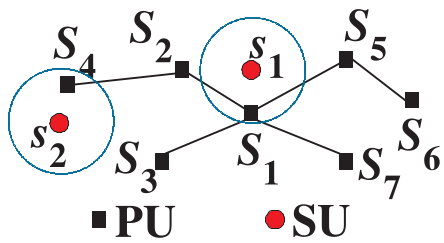 Fig 1. Even with same number of neighbors, is busier than because it serves as a central relay.
2. Analytical Framework
The paper derives mathematical lower and upper bounds for whitespace under three social activity patterns:
- i.i.d.: Simple probabilistic activity.
- Poisson: Modeling intensity over space/time.
- Gaussian: Reflecting human social cycles (e.g., peak hours in working districts).
3. SAVB: Spectrum Altitudes based Virtual Backbone
Using these scores, the authors define Spectrum Altitude (), a metric identifying SUs with the best average whitespace access to their neighbors. The SAVB algorithm constructs a backbone by:
- Finding a Maximal Independent Set (MIS) based on the highest altitudes.
- Connecting these nodes using "connectors" that maximize remaining bandwidth.
Experimental Results
The authors validated their model against "Actual" statistical data and compared their SAVB against the "US" (Unicast Scheduling) algorithm.
- Accuracy: The difference between the proposed SNWE (Social Network Whitespace Estimation) and reality was minimal (e.g., < 2.7% for i.i.d. distributions).
- Performance: As PU activity increases, the SAVB algorithm maintains a higher throughput than traditional cell-based partitioning because it avoids "noisy" primary areas.
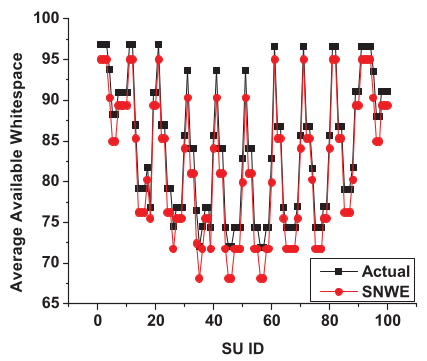 Fig 2. Simulation results across different distributions (i.i.d., Poisson, Gaussian) showing SAVB's efficiency.
Critical Insight & Conclusion
The genius of this work lies in treating a physical layer problem (spectrum availability) with a medium-access layer solution (graph centrality). By recognizing that PU activity is a function of topology, the authors provide a bridge between theoretical graph theory and practical CRN deployment.
Takeaway: Future CRN protocols should look at the "Social Importance" of primary nodes. Knowing who the "influencers" are in the primary network is the key to staying out of their way.
Limitations: The model assumes knowledge of the primary network's topology. In highly adversarial or opaque environments, SUs might need to infer this centrality through long-term observation rather than direct data.