
Whither Digital Equality? Unpacking the Democratic Divide in Online Politics
Whither Digital Equality?: An Empirical Study of the Democratic Divide
This empirical study explores the "democratic divide" in online political participation using the Pew Internet & American Life Project’s 2008 pre-election survey. It moves beyond access and skills gaps to analyze how demographic variables like age, gender, and education influence specific types of online political engagement.
TL;DR
Is the internet truly the "great equalizer" for democracy? Leveraging data from the 2008 U.S. election, this study reveals that while we are closing the gap in internet access, a democratic divide persists. Even when everyone is online, political participation remains skewed toward educated males, though Social Networking Sites (SNS) offer a unique "leveling" effect for different educational backgrounds.
The Shift from Access to Participation
In the early days of the web, the "Digital Divide" was a matter of who had a computer and a dial-up connection. As infrastructure improved, the conversation shifted. The author argues that we have entered the era of the Third-Level Divide: the gap between those who use digital resources for public life and those who do not.
The central tension is between techno-determinism (the belief that more tech leads to more democracy) and socio-determinism (the reality that old social hierarchies simply move into new digital spaces).
Methodology: Beyond the Surface
The study analyzes the 2008 Pew survey through two statistical lenses:
- Cross-group comparison (ANOVA/Chi-square): Do different groups act differently?
- Logistic Regression: When we control for everything else, what actually predicts political action?
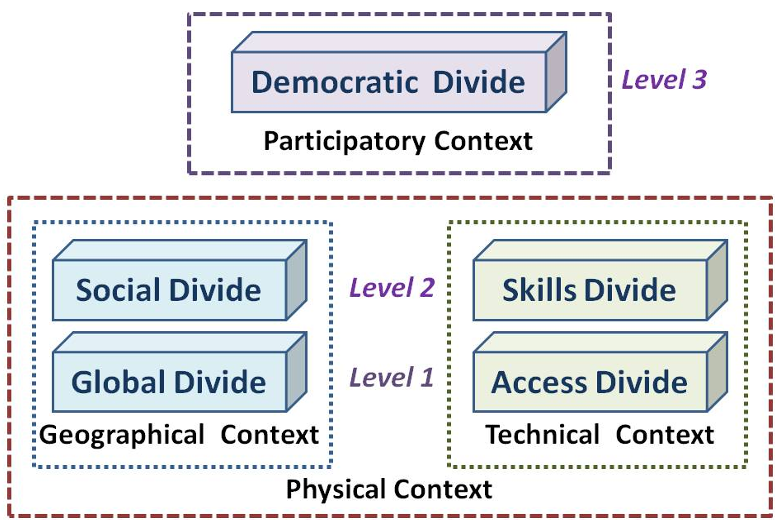 Figure 1: The transition from Access/Skills to Democratic Engagement.
Key Findings: The New Hierarchy of Engagement
1. The Education and Gender Gap
Traditional socioeconomic factors still dominate "deliberative" tasks. Well-educated males are significantly more likely to engage in formal campaign activities (contributing money, signing petitions, posting commentary).
2. The SNS "Trade-off"
Social Networking Sites (SNS) like Facebook (in its 2008 form) showed a fascinating anomaly: The education gap vanished. Less-educated users were just as likely to engage politically on SNS as their counterparts. However, this was replaced by a generational gap, where younger "Netizens" dominated the space but often focused on "fun-oriented activism" rather than deep deliberation.
3. The Power of "Internet Efficacy"
The single strongest predictor of whether someone would participate online wasn't their income—it was their belief that the internet actually works as a political tool. This "Internet Efficacy" is a psychological barrier that older generations struggle with more than younger ones.
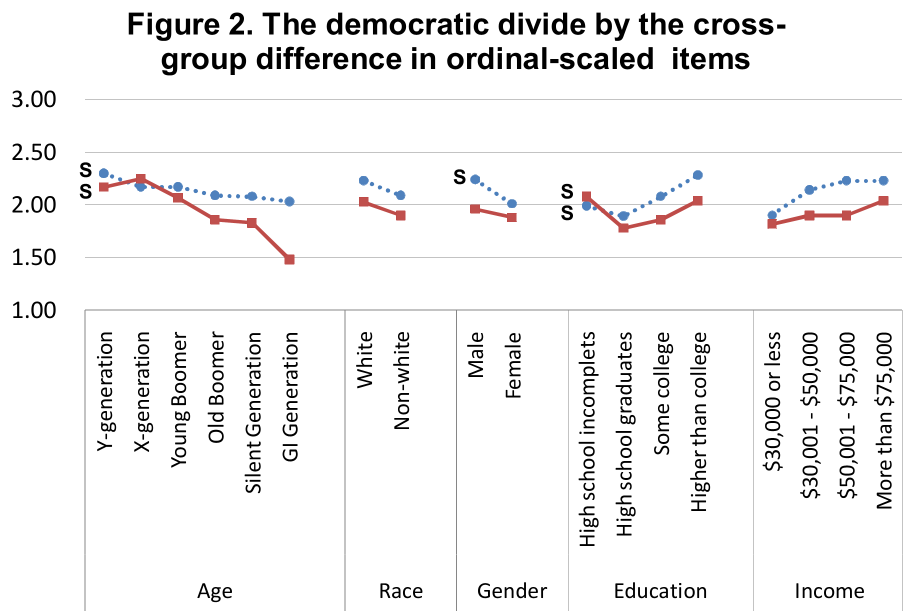 Figure 2: Note the steep decline in internet efficacy as age increases, far outpacing the decline in actual daily usage.
Detailed Regression Analysis
The regression models confirm a "V-shaped" pattern for education in information-seeking. Both the least educated (who are information-needy) and the most educated (who are information-literate) tend to seek out political news, provided the barriers to access are removed.
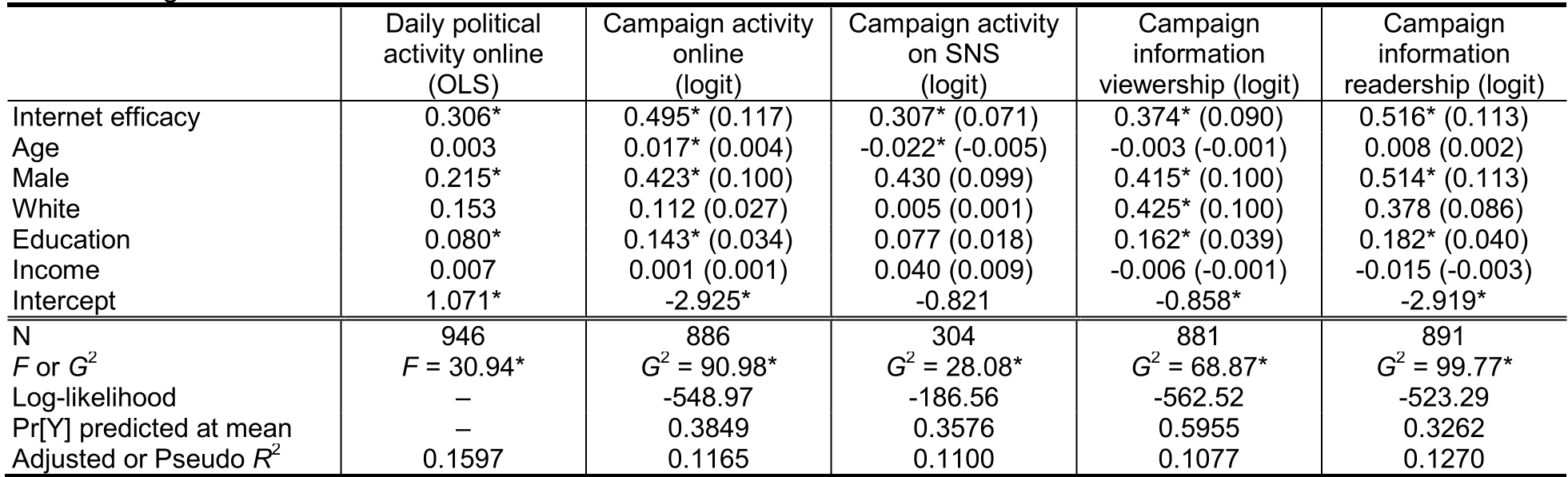 Table 1: Logistic regression results showing Internet Efficacy as a dominant predictor.
Critical Insight: Who is Digital Democracy For?
The study concludes with a sobering reality: The internet benefits those who already participate. While the "income divide" is disappearing in politics (suggesting the internet reduces the cost of participation), it does not necessarily reduce the inclination to participate.
Limitations & Future Outlook
- Data Recency: The 2008 data reflects an era before widespread smartphone dominance and algorithmic echo chambers.
- The "Slacktivism" Risk: The generational gap highlights that while young people are active, their engagement might be "shallow" (likes vs. votes).
- Policy Shift: Governments should stop focusing solely on "getting people online" and start focusing on "making the internet feel politically meaningful" for marginalized groups.
Conclusion
Bridging the technical divide is only level one. To achieve true digital equality, we must address the democratic divide—the psychological and social barriers that prevent a diverse citizenry from turning digital access into political power.