
SCCGQ: Optimizing Subgraph Topology Under Hard Size Constraints
Who Should Be Invited to My Party: A Size-Constrained k-Core Problem in Social Networks
This paper introduces the Size-Constrained k-Core Group Query (SCCGQ), a novel graph problem that identifies a user group of exactly size h including a query user that maximizes social closeness while maintaining a k-core structure. The authors propose the Blast Scatter (BS) and Bounded Extension (BE) algorithms to solve this NP-hard problem efficiently in large-scale social networks.
TL;DR
Finding the "perfect" group for a party or a project isn't just about who is invited; it's about how they relate. This paper tackles the Size-Constrained k-Core Group Query (SCCGQ)—finding a group of size that forms a -core with maximum social closeness. The authors prove this is NP-hard and introduce the Bounded Extension (BE) algorithm, which uses clever geometric and structural pruning to make these queries feasible on million-edge graphs.
The Motivation: Why Standard k-Cores Aren't Enough
In graph theory, a -core is a subgraph where every node has at least neighbors. While -core decomposition is a staple for finding cohesive communities, it has two major flaws for real-world applications like event planning or task scheduling:
- Size Agnosticism: A -core might contain 5 nodes or 5,000. If you only have 10 seats at a dinner table, a standard -core algorithm won't help.
- Weight Neglect: Not all social ties are equal. Existing methods often ignore "closeness" (Jaccard similarity or interaction frequency).
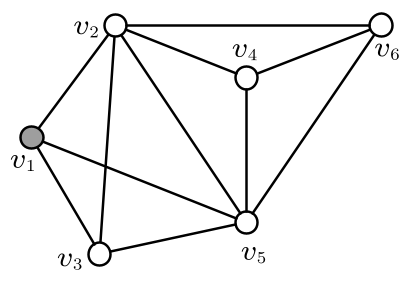
The authors bridge this gap by defining the SCCGQ problem:
Methodology: From Blast Scatter to Bounded Extension
1. Blast Scatter (BS) Algorithm
The BS algorithm moves away from naive combinations by starting at the query node and expanding outward. It uses a greedy approach, selecting a "center" and adding multiple neighbors simultaneously to satisfy the degree requirement as quickly as possible.
2. Social Distance Pruning
The most intuitive yet powerful insight is the Social Distance Theorem. If the shortest path from a node to the query node is , cannot possibly be part of a connected -core of size .
3. Bounded Extension (BE) and Closeness Upper Bounds
The BE algorithm introduces a "Look-Ahead" mechanism. For any partial group , the algorithm calculates the maximum possible closeness it could achieve if it were expanded to size . If this Upper Bound (UC) is less than the closeness of a result we've already found, the entire branch is pruned.
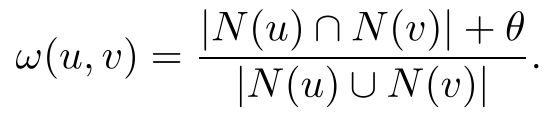 Equation: Closeness is calculated using the Jaccard Coefficient of neighbor sets, ensuring meaningful social ties.
Experimental Performance
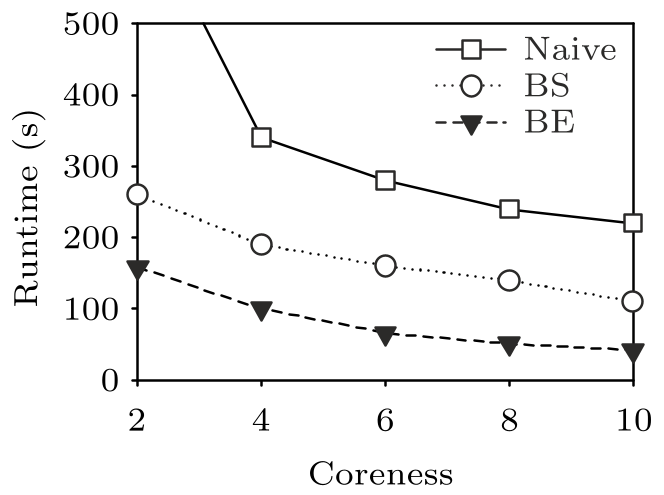
The authors tested their approach against the Gowalla and Brightkite datasets. The results demonstrate a clear hierarchy in performance:
- Naive: Exponential growth, fails quickly as or query user degree increases.
- BS: Respectable, but struggles with the sheer volume of expansions.
- BE (Our Star): Maintains near-linear runtime growth even when the query user has a high degree (e.g., a "social butterfly" node).
Critical Insights & Takeaways
- Structural Relaxation: Unlike "cliques" (where everyone must know everyone), the -core is a more realistic model for social groups, allowing for "friends of friends" to bridge connections.
- Search Space Mastery: The paper proves that in social network analysis, Topological Constraints + Size Constraints = Pruning Power. By combining graph distance with structural degree requirements, we can turn an NP-hard problem into a manageable query.
- Future Outlook: While the paper uses an offline index (SAI), future work could explore dynamic social networks where edge weights change in real-time.
Conclusion
This work provides a robust framework for personalized group discovery. Whether you are an event organizer or a project manager, the ability to find the "densest" small group within a massive network is a fundamental tool for maximizing collaboration and social harmony.