
Whose Body Is It? The Rise of Physical Capital and the Microchip Frontier
5004_Whose Body Is It The Body as Physical Capital in a Techno-Society.
This paper explores the transition of the human body from a biological entity to "physical capital" within a postmodern techno-society. It examines the "Modern Primitives" movement and the rise of subdermal implantable technologies (RFID/NFC) as tools for both self-expression and potential systemic surveillance.
TL;DR
In our postmodern consumerist world, the human body is no longer just a biological vessel; it has become "physical capital." From tattoos and piercings to subdermal LED sensors and RFID tags, individuals are utilizing their own skin as a medium for self-expression and data-driven utility. This paper explores the deep friction between personal "biohacking" and the potential for top-down, state-led "chipification," arguing that the right to govern one’s own body is the ultimate frontier of moral freedom.
Context: From Commodities to the Embodied Self
We have long been accustomed to the commoditization of external goods. However, authors Sharon R. Bradley-Munn and Katina Michael argue that Western society is turning inward. Data mining via sensors has turned our behavior into a product; now, we are treating our physical frames as assets to be upgraded. Whether through "Modern Primitivism" or high-tech "Grinding," the body is the new hub for ambient intelligence.
The Problem: The "Iron Cage" of Technological Rationality
The core issue identified by the authors is coerced docility. As sensors become ubiquitous, there is a risk that technological change—often endorsed for "systematic order"—becomes repressive.
- The Tension: On one hand, we have the "maker-hacker" culture (individual empowerment).
- The Threat: On the other, we have top-down mandates (e.g., social security IDs or workplace access chips) that could strip humanity of the power to refuse technology.
Methodology: The Body as a "Sign Carrier"
The methodology relies on "Corporeal Sociology." The authors analyze how people use their bodies to impart knowledge to the world. They examine the transition from surface-level alterations (tattoos) to transdermal layers (microchips).
 Caption: The interplay between technological sensors and human expression represents a paradigm shift in connectivity.
They categorize these movements into:
- Modern Primitives: Utilizing ancient-style rituals (piercing, scarification) for spiritual or sexual identity construction.
- Biohackers/Grinders: Using open-source biotechnology (like the Northstar device) to augment human capabilities.
Experimental Evidence: The Case of the "Swedish Cyborgs"
The paper cites real-world examples of this shift:
- Epicenter (Sweden): An office block where employees use microchip implants for building access.
- Grindhouse Wetware: A startup in Pittsburgh that created the "Circadia" device—a wireless biometric sensor implanted under the skin to track body temperature and send alerts via Bluetooth.
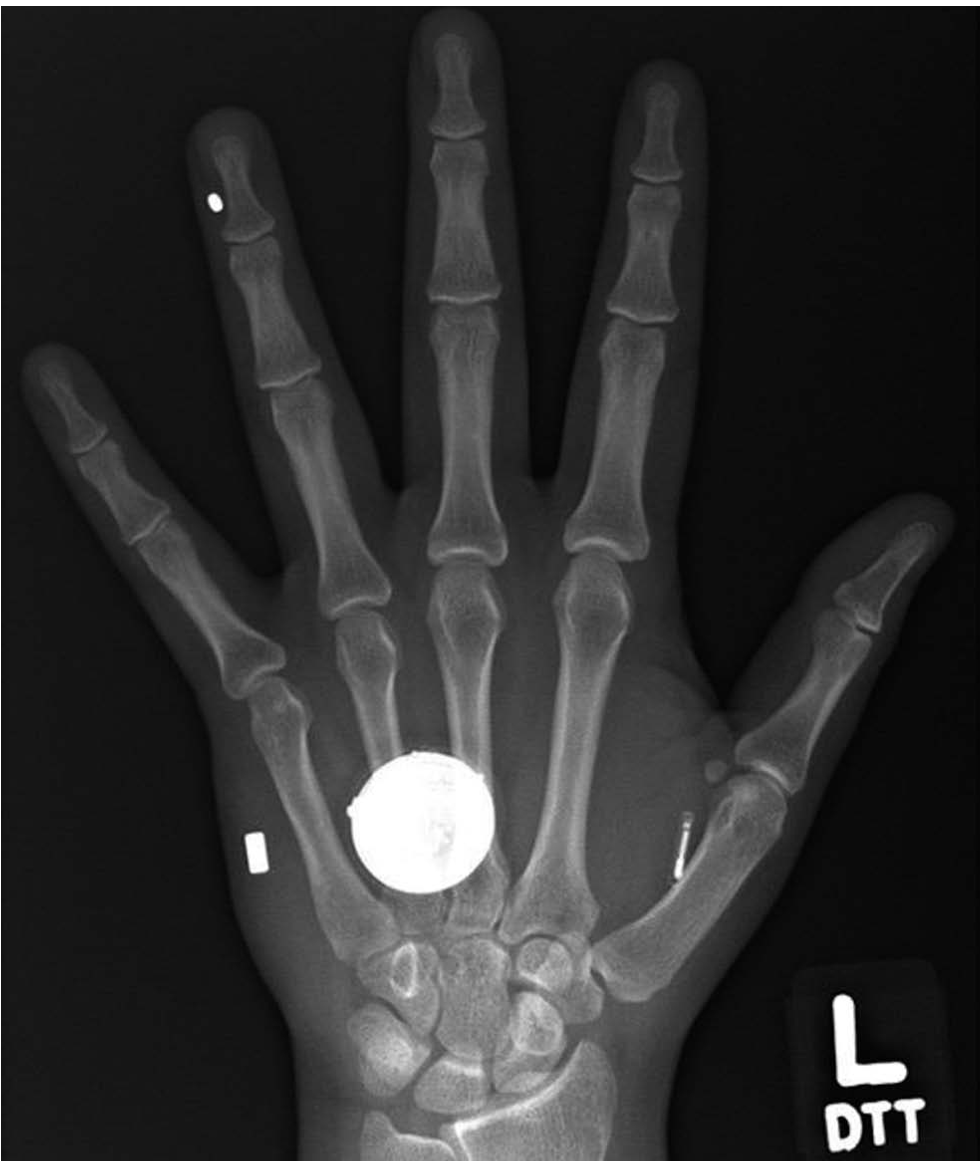 Caption: X-ray showing the Northstar device, magnets, and NFC tags integrated into a human hand.
Critical Insight: The "Plumb Line" of Ownership
The authors propose a "plumb line"—a moral boundary. They argue that ownership of one’s body must remain with the individual. While biohacking can be a form of resistance against normalization, it can also inadvertently "sow pillows for the armholes of the people," making the idea of the "cyborg" so culturally acceptable that society enters a state of docility before "Big Government" or "Big Tech" mandates the chip.
Conclusion & Future Outlook
The paper serves as a vital warning. As we merge with man-made machines, the human body remains "sacred." The transition to modernity’s end is marked by our fascination with remaking our own identity.
- Takeaway: The right to self-legislate modification must be protected, but we must stay vigilant against "top-down" servitude.
- Limitations: The distinction between "harmful" self-mutation (psychological disorders) and "empowering" modification remains a grey area requiring better legal articulation.
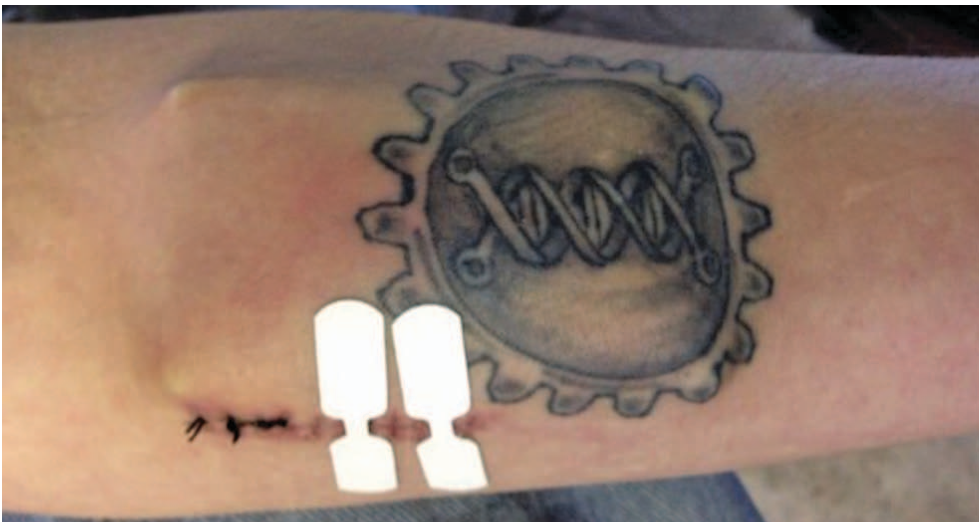 Caption: Tim Cannon's Circadia 1.0 device demonstrates the invasive reality of subdermal bio-monitoring.