
WhozThat? Bridging the Digital-Physical Divide through Mobile Social Ecosystems
9914_WhozThat evolving an ecosystem for context-aware mobile social networks.
This paper introduces WhozThat, a context-aware mobile social networking (MoSoNet) system that bridges online social identities with physical locations. By exchanging social networking IDs via local wireless links (Bluetooth/WiFi) and fetching associated profiles via wide-area Internent, it enables real-time social discovery and group-based environmental adaptation.
TL;DR
WhozThat is a pioneering mobile social networking system that answers the age-old social question: "Who's that unfamiliar person?" By using a mobile phone to broadcast a social media handle to nearby strangers and pulling their public profile data from the web, the system creates a "context-aware" environment. Beyond simple introductions, it enables smart environments—like a bar that automatically plays music matching the collective tastes of everyone currently inside.
Background & Positioning
Published in 2008, this work sits at the intersection of early smartphone evolution and the explosion of online social networks (OSNs) like Facebook and MySpace. While prior work like CenceMe focused on sending local data to the cloud, WhozThat reverses the flow, bringing digital social context into the local physical space to enrich human discourse.
The Core Problem: The Barrier of Unfamiliarity
Despite the wealth of information we share online, physical social settings remain "information-poor." We often stand in rooms full of people with shared interests but have no way of knowing it without awkward introductions. The authors argue that technology should lower this barrier by providing a discreet electronic "caption" for every individual in a room.
Methodology: The Two-Phase Identity Protocol
The "magic" of WhozThat lies in its simple yet powerful two-step protocol:
- The Meet-and-Greet (Local): Smartphones periodically broadcast a unique social handle via local wireless links (Bluetooth or WiFi). In this phase, devices discover "who" is nearby without needing a centralized location server.
- Context Creation (Global): Once a handle is received, the phone uses its cellular data connection (3G/HSDPA) to query the OSN's API and retrieve the owner's public profile, interests, and photos.
Architecture Overview
The system is designed to be agnostic of the specific social network or wireless technology used.
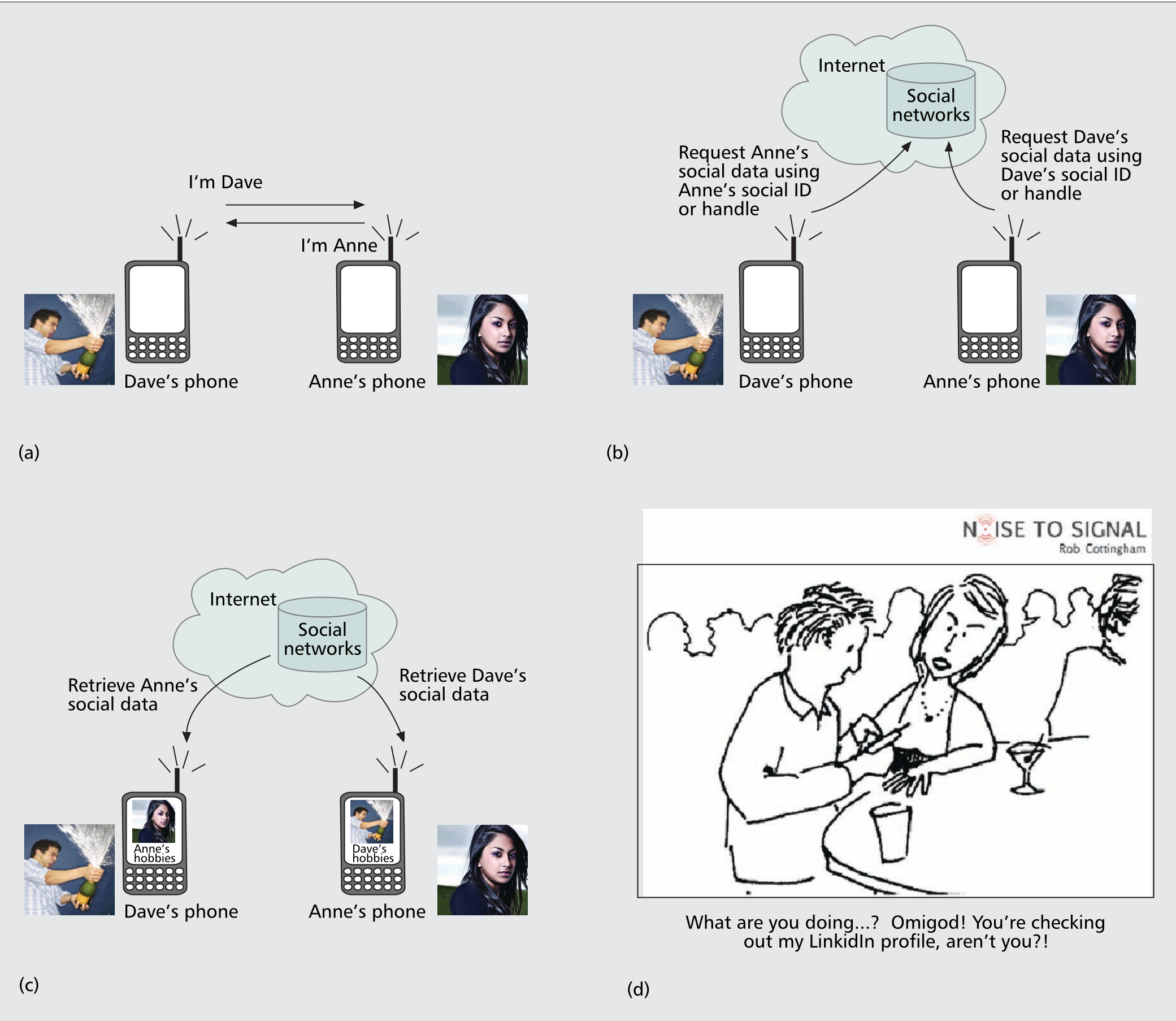 Figure 1: The two-phase protocol showing Anne and Dave discovering each other's interests through their social handles.
Evolving the Ecosystem: The Smart Jukebox
The true innovation of the paper is the concept of an "evolving ecosystem." The authors don't just stop at a digital business card; they propose that once identities are shared, the environment itself should become context-aware.
They implemented WZPlaylistGen, a music player that:
- Scans the room for WhozThat handles.
- Fetches the "favorite artists" of every person present via the Facebook API.
- Uses the Audioscrobbler API to find top tracks for those artists.
- Generates a collaborative playlist that represents the "center of gravity" of the group's musical taste.
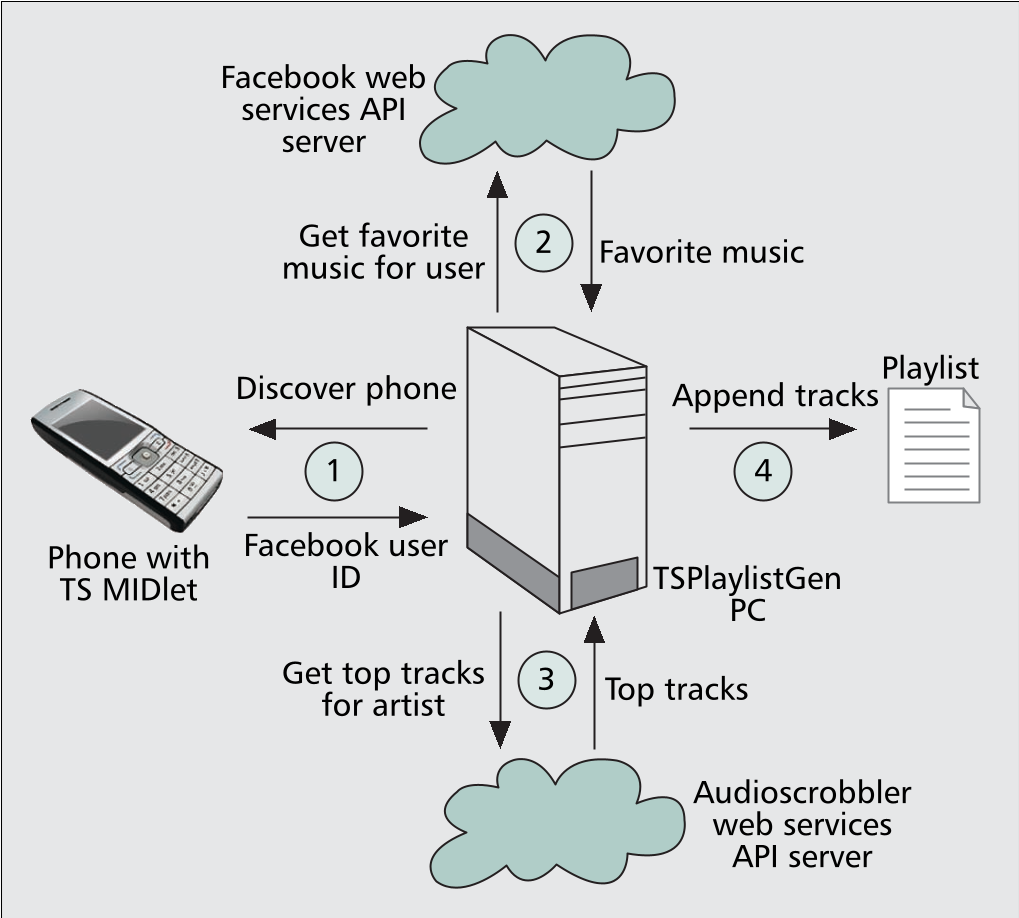 Figure 2: The WZPlaylistGen system architecture integrating Facebook and Audioscrobbler services.
Experiments and Prototyping
The authors validated the system using both JME (Java Micro Edition) emulators and physical Nokia N80 handsets. Their tests confirmed that social handles could be exchanged efficiently over Bluetooth, and profile data could be rendered on mobile screens in real-time.
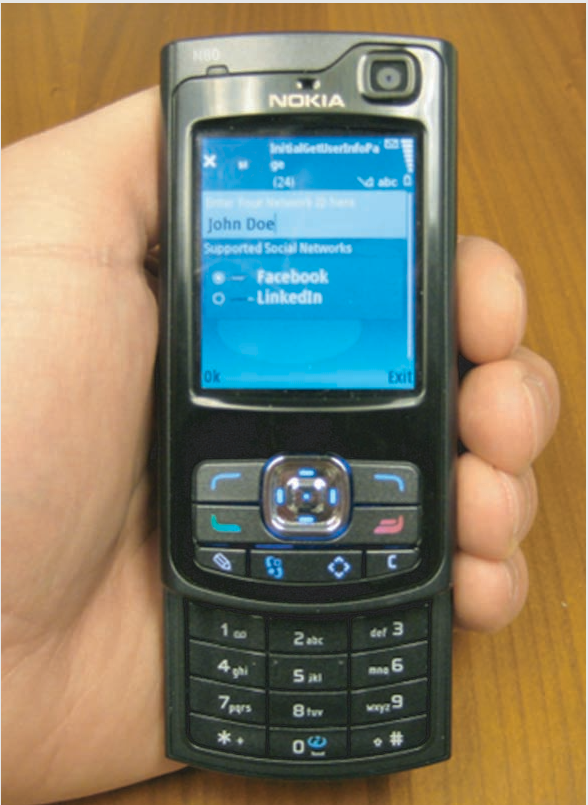 Figure 3: Real-world implementation showing social profile retrieval on a mobile handset.
Critical Insight: Security and Privacy
The paper candidly addresses the "Elephant in the Room": Privacy. Broadcasting a permanent social ID creates risks of cyberstalking and unwanted data mining. The authors propose several future research directions:
- Indirection Handles: Using temporary aliases instead of permanent IDs.
- Context-Dependent Disclosure: Automatically revealing more information at a social party and less in a professional or public setting.
- Opt-in/Opt-out: Granular control over when the "WhozThat" beacon is active.
Conclusion & Future Outlook
WhozThat was visionary in its foresight of how mobile devices would become the primary interface for our social lives. While modern privacy regulations (like GDPR) and "walled gardens" of social media platforms have made this specific implementation difficult to deploy widely, the core concept of Proximal Contextual Awareness is more relevant than ever in the age of AR glasses and the Metaverse.
Takeaway: The future of social interaction isn't just about connecting online; it's about using our digital identities to break the ice in the real world.