
Beyond the Like: What Drives Professional Influence on LinkedIn?
What makes opinion leaders share brand content on professional networking sites (e.g LinkedIn, Viadeo, Xing, SkilledAfricans…)
This paper explores the underlying motivations and personality traits that drive Opinion Leaders to share "Brand Content" on Professional Networking Sites (PNS) like LinkedIn and Viadeo. Utilizing a qualitative focus group methodology, the study identifies a specific hierarchy of motivations—led by content interest and expert positioning—that distinguishes professional networking from traditional social media.
TL;DR
While most people use LinkedIn to browse jobs, a tiny sliver of "Opinion Leaders" creates the vast majority of the value. This paper digs into the why—revealing that professional sharing isn't just about being helpful; it's a calculated move for expert positioning, technical efficiency, and a refined form of professional reciprocity.
The "90-9-1" Problem: Why We Only Care About the 1%
In the world of social media, the Pareto principle is too generous. We live by the 90-9-1 law: 90% are lurkers, 9% are occasional contributors, and a mere 1%—the Opinion Leaders—drive the narrative.
The author, Karim Grissa, argues that prior research has spent too much time asking why people join Facebook and not enough time asking why the 1% share brand content on professional sites like LinkedIn. In the B2B sector, where LinkedIn is 3x more effective at lead conversion than Facebook, understanding these power users isn't just academic—it's high-stakes business strategy.
Methodology: High-Score Influence
To find true Opinion Leaders, the study didn't just pick "active" users. They required a Klout score higher than 65. By conducting focus groups with these high-influence individuals (bloggers, engineers, community managers), the research moved past "average user" data to find the real mechanics of professional influence.
Methodology & Results Mapping
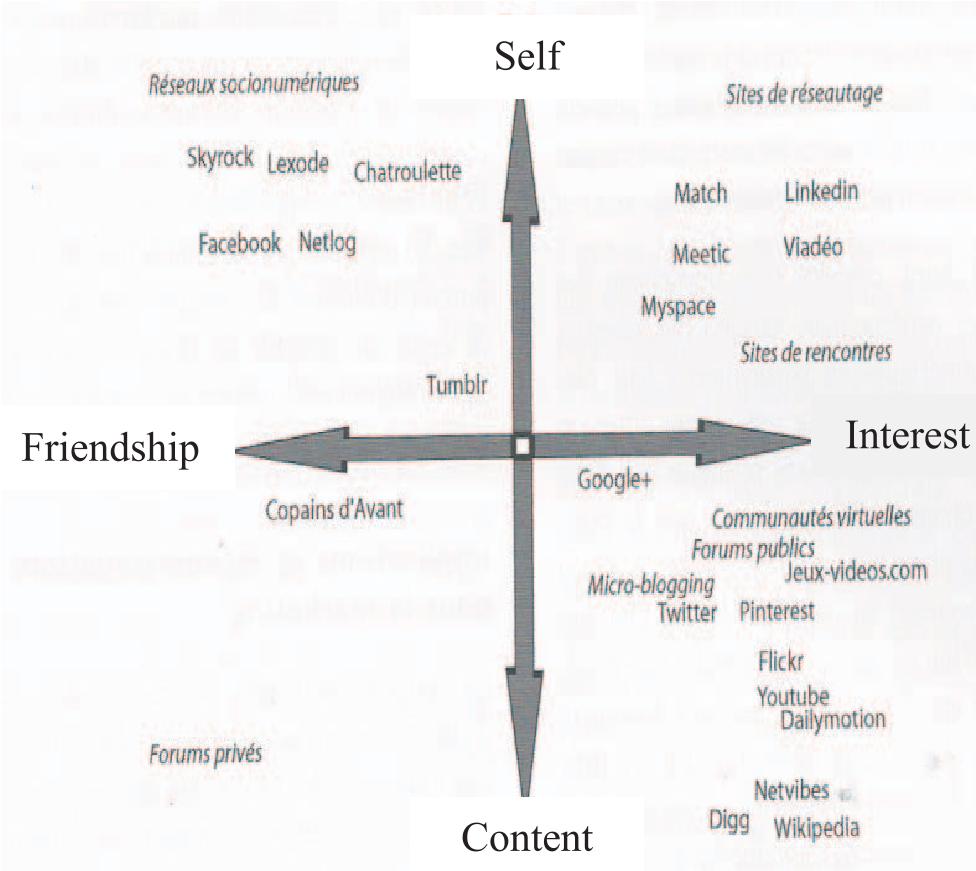
The study identifies a hierarchy of motivations. Unlike friendship-based networks where sociability is king, Professional Networking Sites (PNS) are driven by Expertise and Utility.
1. Positioning as an Expert (17%)
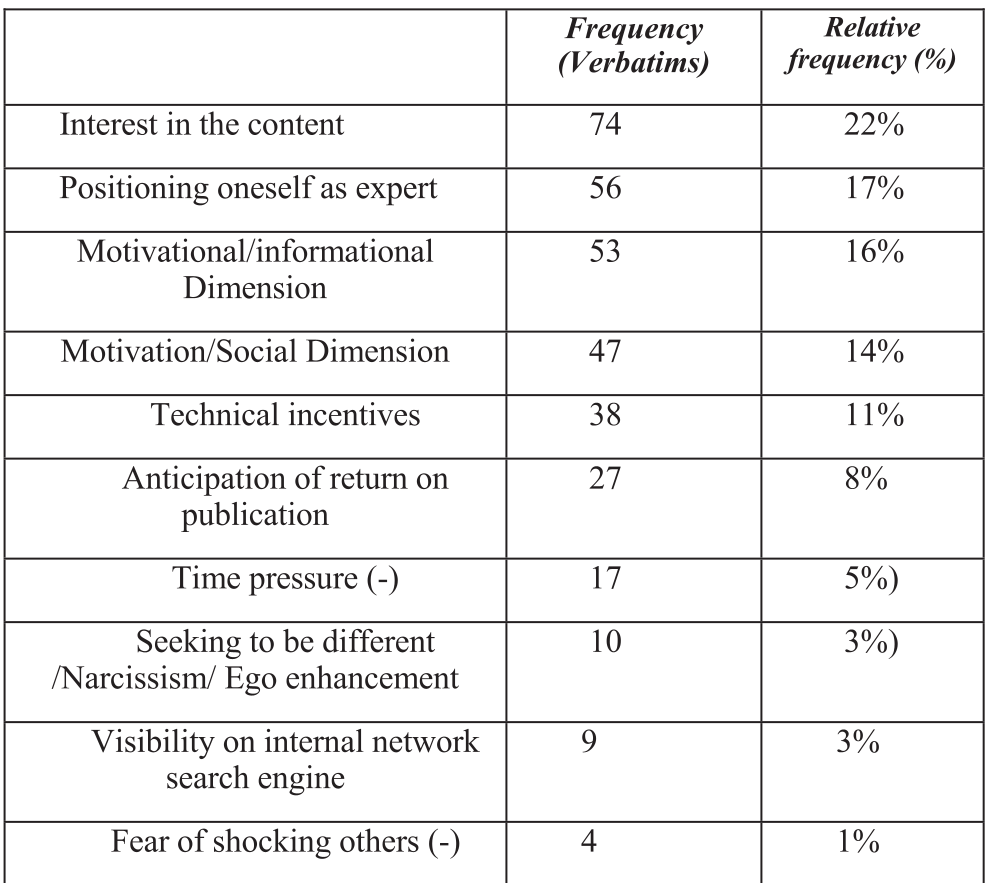
The core driver. Opinion Leaders share brand content to be the "go-to" person in their field. It’s digital signaling: "I share this high-level Java insight; therefore, I am a high-level Java expert."
2. Redefining Reciprocity: The "Symbolic ROI"
In traditional virtual communities, users share knowledge hoping someone will help them later. On LinkedIn, the study found a shift toward Anticipation of Return on Publication. Opinion Leaders aren't looking for a "return favor"; they want immediate validation through likes, comments, and re-shares. As one participant put it: "Without feedback... I would have the impression of talking to a wall."
3. The Neglected "Technical Factor" (11%)
Most theories ignore the UI/UX. This paper highlights that Opinion Leaders are heavily influenced by Technical Incentives—tools like LinkedIn Pulse or the ability to cross-post to Twitter. If the tool makes the user look like an "Influencer," they are more likely to use it.
The "Dark Side": Time and Narcissism
The study doesn't ignore the friction. Two significant barriers and traits emerged:
- Time Pressure (5%): Being a leader is exhausting. These users often manage multiple platforms and feel the "ROI of time" takes too long to materialize.
- Narcissism/Ego-Enhancement (3%): While small in direct admission, projective techniques revealed that peers view intensive sharing as a narcissistic reflex—a need to be distinguished from the "masses."
Critical Insight: Implications for Content Strategy
If you are a Brand Manager, this paper offers a roadmap:
- Don't target the masses: Target the Opinion Leaders. Their endorsement has 8x the dissemination power.
- Make them look smart: If your brand content doesn't help an Opinion Leader "position themselves as an expert," they won't touch it.
- Optimize for the ROI of the "Like": Opinion Leaders need immediate social feedback to continue their commitment.
Future Outlook
The researcher suggests that the next step is applying Planned Behavior Theory to these findings. Since Opinion Leaders only have "partial control" (limited by time and technical tools), future models must account for the environment as much as the individual's psychology.
Takeaway: Professional sharing is a performance of expertise. To win on LinkedIn, your brand content must become the "costume" your Opinion Leaders want to wear.