
WiFiTreasureHunt: Weaponizing Social Pressure and Gamification to Fight Obesity
WiFiTreasureHunt: a mobile social application for staying active physically
WiFiTreasureHunt is a location-based mobile social application designed for Android to combat obesity by encouraging physical activity through gamification. It introduces randomly generated exercise tours with hidden treasures and real-time group-based synchronization to foster social competition and engagement.
TL;DR
WiFiTreasureHunt is an Android-based "Exergame" that transforms physical exercise into a competitive social treasure hunt. By combining GPS tracking, real-time group synchronization, and randomized "surprises," it aims to solve the engagement gap in outdoor physical activities for students.
Context & Motivation
Despite the proliferation of sensors in smartphones (GPS, accelerometers, compasses), early health apps often felt like chore-trackers rather than games. The authors identified that to keep young adults active, an application needs more than just data—it needs motivation. Building on their previous work, Fitness Tour, the researchers pivoted toward a model that leverages two psychological levers: Social Influence and The Element of Surprise.
Problem & Insight: Why Exercise Records Aren't Enough
Prior works (like Fitness Tour) recorded heartbeats and calories, but they functioned as passive logs. The researchers realized that:
- Isolation is Boring: Users are more likely to stay active if their peers are watching and participating.
- Predictability Kills Engagement: Static routes become repetitive. The Insight: By hiding "treasures" at random locations and broadcasting group progress in real-time, the app creates a "fun-filled" competitive environment where social pressure acts as a motivator to finish the tour.
Methodology: The Mechanics of the Hunt
The system follows a classic Client-Server architecture:
- The Client: An Android app that tracks the user's location and communicates via WiFi Access Points (APs).
- The Server: Manages game state, generates random tours of locations (typically ), and assigns "treasures" to three of them.
Real-Time Synchronization
One of the core technical features is the simultaneous map update. When User A reaches "Packard Lab," the server validates the GPS threshold and immediately pushes an update to User B’s device. This allows groups of 2-3 players to compete or collaborate dynamically.
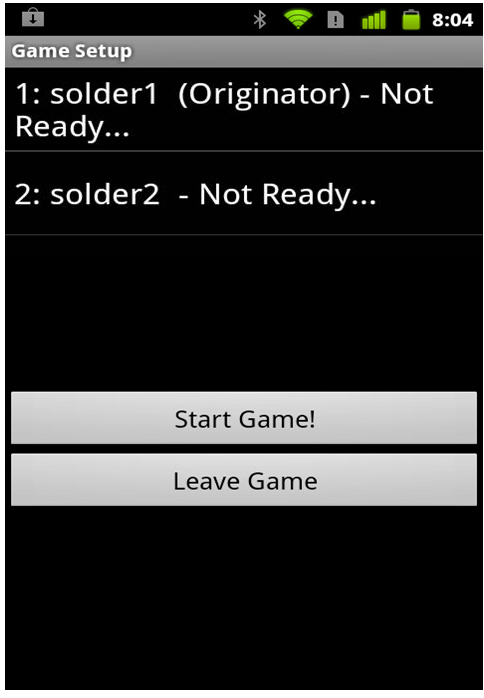 Figure 1: (a) Login and Friend Selection; (b) The exercise tour map showing marked locations L1-L10.
Experiments & User Interaction
The evaluation focused on user experience and the technical feasibility of the "Visit Update" feature. In a test scenario, the system demonstrated that as soon as a player visits a location, the marker color changes (e.g., to blue), signifying that the spot has been "checked."
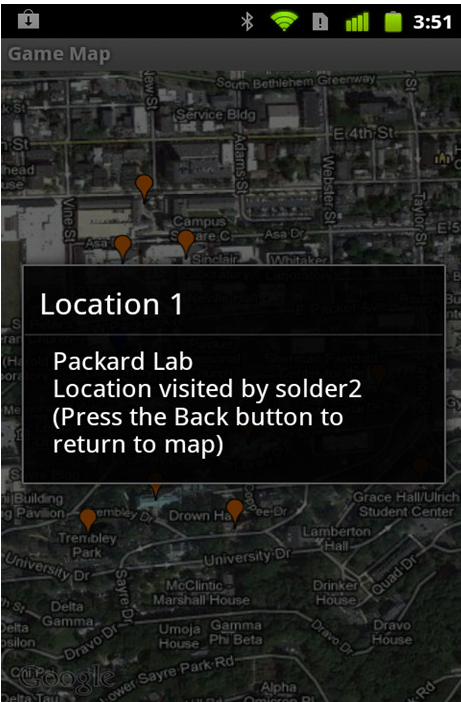 Figure 2: Real-time update showing a group member has successfully visited a location.
The game concludes only when all hidden treasures are found, ensuring players cover a significant physical distance before the "reward" loop closes.
Critical Analysis & Future Outlook
While WiFiTreasureHunt presents a compelling case for social exergaming, it was developed in an era (2012) where WiFi was the primary connectivity medium on campus.
- Limitations: Reliance on local WiFi Access Points limits the game to specific campus/school environments. Its privacy controls, though mentioned, require deeper scrutiny as location sharing becomes more sensitive.
- The SOTA Path: This work laid the groundwork for what we now see in massive hits like Pokémon GO. The incorporation of a Facebook interface for competitive rankings was an early precursor to modern social-fitness ecosystems (like Strava or Nike Run Club).
Takeaway
The genius of WiFiTreasureHunt isn't in the tracking—it's in the transparency. By showing users exactly what their friends are doing in real-time, it transforms a solo walk into a collective mission, proving that HCI (Human-Computer Interaction) can be a primary driver for behavioral health changes.