
Edge-Enhanced CABAN: Reimagining Low-Cost, Reliable Healthcare Monitoring
Design and Deployment of a Wireless BAN at the Edge for Reliable Healthcare Monitoring
This paper presents a low-cost Cloud-Assisted Body Area Network (CABAN) integrated with Edge Computing for real-time healthcare monitoring. Utilizing an off-the-shelf smart watch as a gateway and an edge-based K-Nearest Neighbors (KNN) classifier, the system achieves reliable anomaly detection without requiring a supplementary smartphone.
TL;DR
This research tackles the inefficiency and high cost of traditional health monitoring by introducing an Edge-Computing integrated Body Area Network (BAN). By shifting complex data correlation from the remote cloud to the network edge, the system reduces false alarms from a staggering 65% to 0%, all while using hardware costing under $80.
Problem & Motivation: The Elderly Monitoring Gap
Despite the proliferation of wearables, two major hurdles prevent widespread adoption among the elderly:
- Device Dependency: Most smartwatches require a smartphone "bridge," adding complexity and cost.
- The "Crying Wolf" Effect: Simple threshold-based sensors often trigger false alarms during physical activities (like jogging), leading to medical staff fatigue and user distrust.
The authors' insight is rooted in Edge Computing. By processing data closer to the user, they can perform "Spatial-Temporal Correlation"—comparing current heart rates with activity levels (steps) and environmental data—to determine if a high heart rate is a sign of a heart attack or just a morning jog.
Methodology: The Hierarchical Intelligence
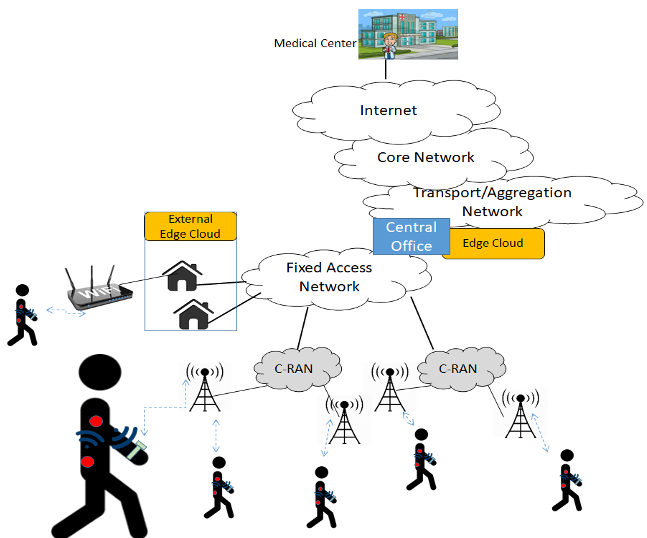
The system architecture is divided into three distinct layers to balance speed and accuracy:
1. The Gateway Node (Smart Watch)
A commercial S1 Plus smart watch runs a custom Android application. It performs local anomaly detection using the Box-and-Whisker method: This provides an immediate, albeit noisy, safety net.
2. The Edge Node (The "Brain")
The heavy lifting occurs here. Using a K-Nearest Neighbors (KNN) classifier, the edge node correlates heart rate with pedometer data.
- Context Awareness: If the heart rate is >100 bpm but the pedometer shows zero movement, the system flags an abnormality.
- Personalization: The model trains on a "Day 1" baseline of the specific user, adapting to their unique physiological profile.
3. The Cloud
The cloud remains as a long-term storage and visualization layer (using Adafruit), providing doctors with a longitudinal view of patient health.
Experiments & Results: Eliminating False Positives
The study compared two patients: Patient A (resting) and Patient B (jogging). Under traditional monitoring, Patient B might trigger an alarm due to a high heart rate.
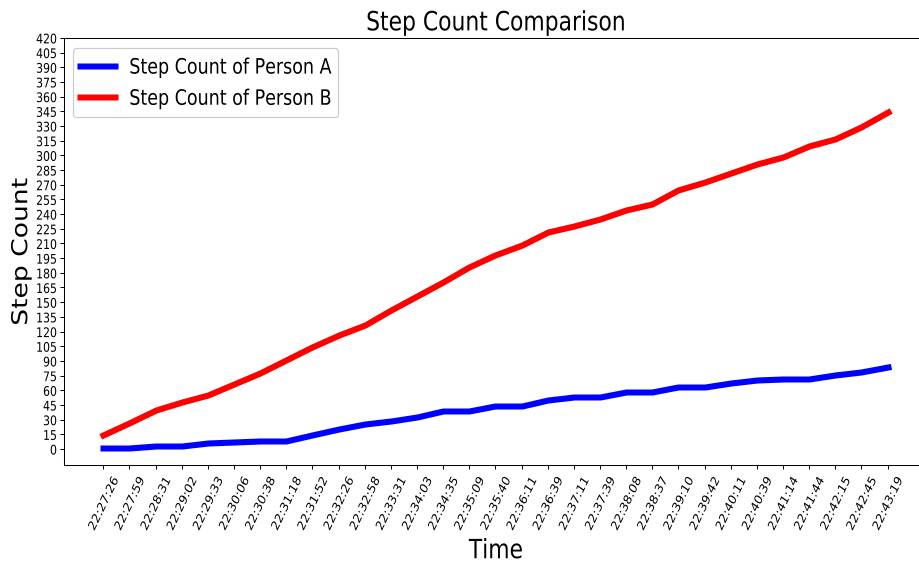
- Gateway-only: The Box-and-Whisker check at the watch level resulted in a 65% false alarm rate because it couldn't "see" that Patient B was simply exercising.
- Edge-enhanced: By correlating steps with heart rate, the KNN model reached an accuracy of nearly 100% (0% false alarms).
- Latency: Notifications were dispatched within tens of milliseconds, proving that edge processing doesn't sacrifice speed for accuracy.
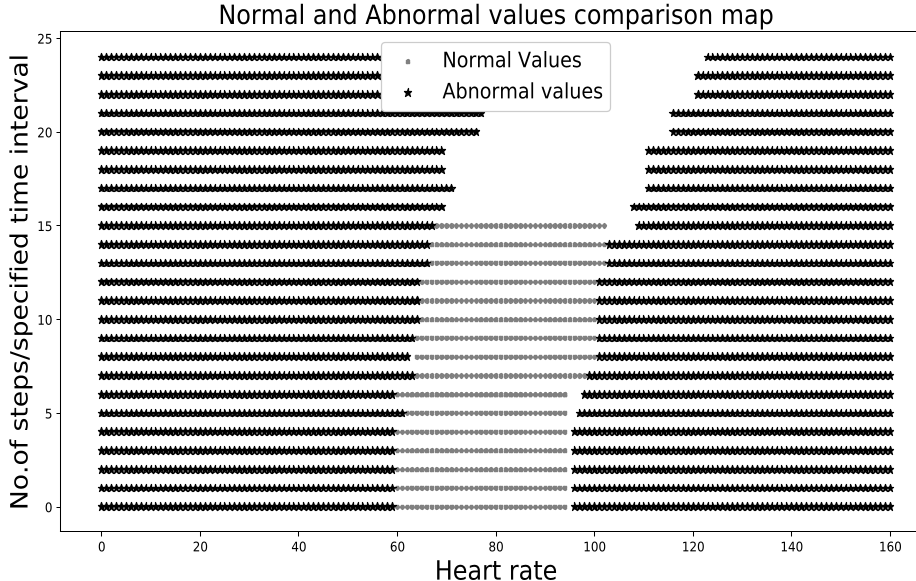 In the KNN map above, the green region represents safe physiological states, while the red region denotes outliers that trigger emergency protocols via Twilio (SMS) and Email.
Critical Analysis & Conclusion
Takeaway
This paper proves that "expensive" doesn't always mean "better." Sophisticated routing of data through the network edge allows for high-tier medical reliability on entry-level consumer hardware.
Limitations
- Single-Lead Data: The current prototype relies heavily on heart rate and steps; integrating more complex ECG signal analysis at the edge remains a computational challenge.
- Battery Life: Sampling sensors every 20 seconds balances safety and power, but more frequent high-fidelity transmission might drain the watch quickly.
Future Outlook
The next step for this technology lies in Privacy-Preserving Edge Learning, where anonymized data from multiple patients at the same edge node could be used to detect localized environmental health threats (like heatwaves) without compromising individual privacy.