
What If Wireless Routers Were Social? Bridging the Gap Between SNA and Mesh Networks
9635_What if wireless routers were social approaching wireless mesh networks from a social networks perspective.
This paper introduces a novel framework for analyzing Wireless Mesh Networks (WMNs) using Social Network Analysis (SNA) metrics. By mapping wireless routers to social actors, the authors propose "Socially Aware" protocols for reliability assessment and channel access scheduling, achieving significant improvements in network throughput and robustness.
Executive Summary
TL;DR: This research transforms our understanding of Wireless Mesh Networks (WMNs) by treating inanimate routers as "social actors." By applying Social Network Analysis (SNA) metrics like Betweenness and Closeness Centrality, the authors develop new methods for identifying critical nodes and scheduling traffic, resulting in enhanced network reliability and throughput.
Academic Positioning: This work is a seminal "cross-pollination" paper. It moves beyond traditional signal-to-noise or one-hop neighbor metrics to introduce a topological awareness level rooted in social science, providing a new lens for multihop network optimization.
Problem & Motivation: The Limits of "Local" Thinking
In traditional wireless networking, "importance" is often equated with "Degree Centrality"—how many direct neighbors a node has. However, this is a flawed logic for multihop environments.
The authors argue that a node might have many neighbors (high degree) but be located in a "cul-de-sac" of the network, whereas a node with fewer neighbors might serve as a critical bridge (high betweenness) between two large clusters. Prior works often missed these bottleneck nodes, leading to catastrophic failures and inefficient scheduling when these key "social" actors were overwhelmed or removed.
Methodology: From Actors to Routers
The paper defines a 1-to-1 mapping between social entities and mesh components. In this framework:
- Nodes = Wireless Routers
- Links = Signal-to-Noise Ratio (SNR) or communication quality
- Multimodal Links = Multi-channel/Multi-interface communication
Centrality Metrics in a Wireless Context
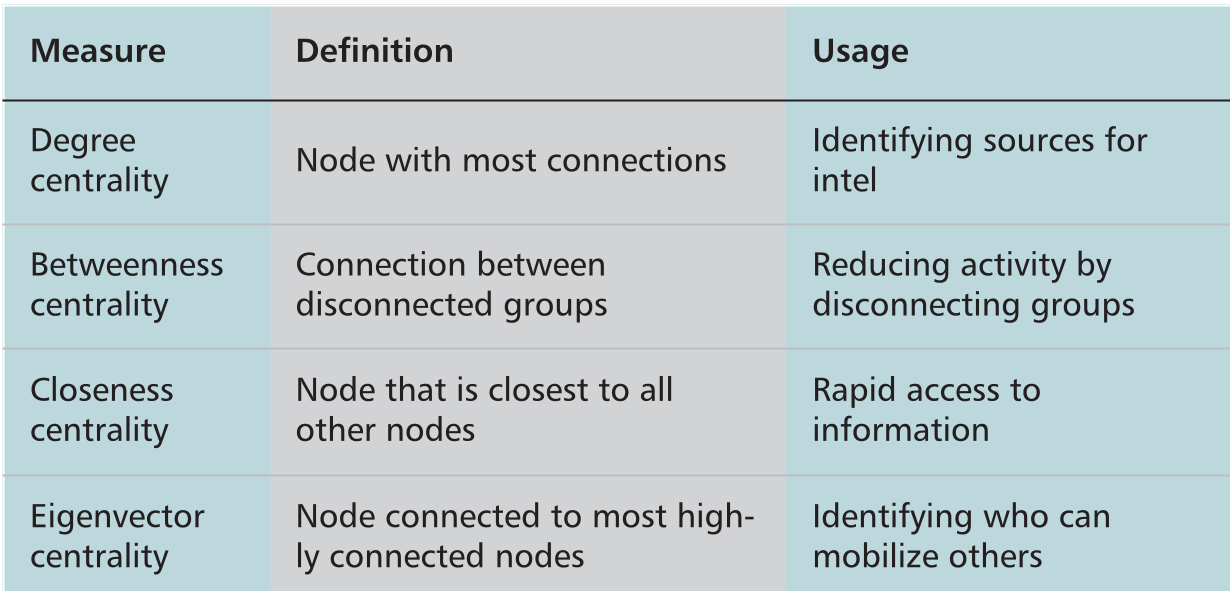
The core of the methodology utilizes three specific metrics to quantify "social status" in the network:
- Degree Centrality: Simple connectivity count.
- Closeness Centrality: How fast a node can disseminate info to the rest of the network (inverse of the sum of distances).
- Betweenness Centrality: The fraction of shortest paths passing through a node, identifying "gatekeepers."
Socially-Aware TDMA Scheduling
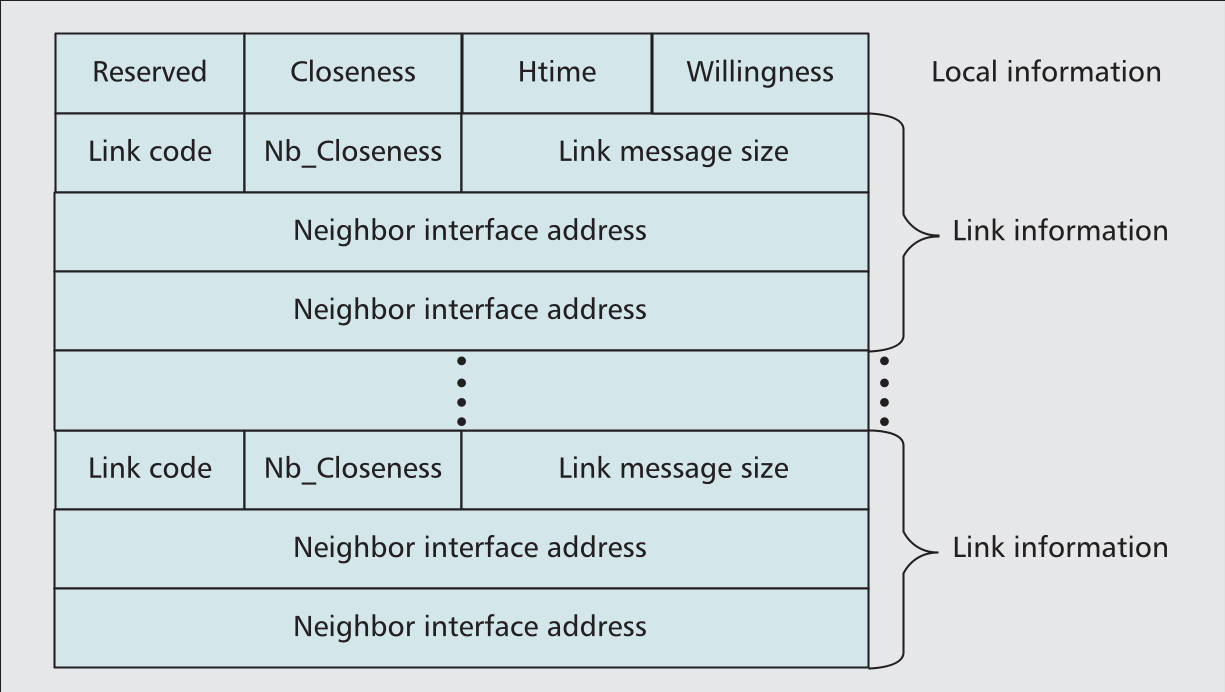
One of the paper's key contributions is a distributed channel access scheme. Nodes exchange their Closeness Centrality values through modified OLSR HELLO messages. Each node then participates in a "lottery" for time slots. A node with higher closeness (a "more popular" node) receives more "tickets," increasing its probability of winning the slot and transmitting.
Experiments & Results: Validating the Social Intuition
The authors tested their theories on the UCSB MeshNet and MIT Roofnet datasets.
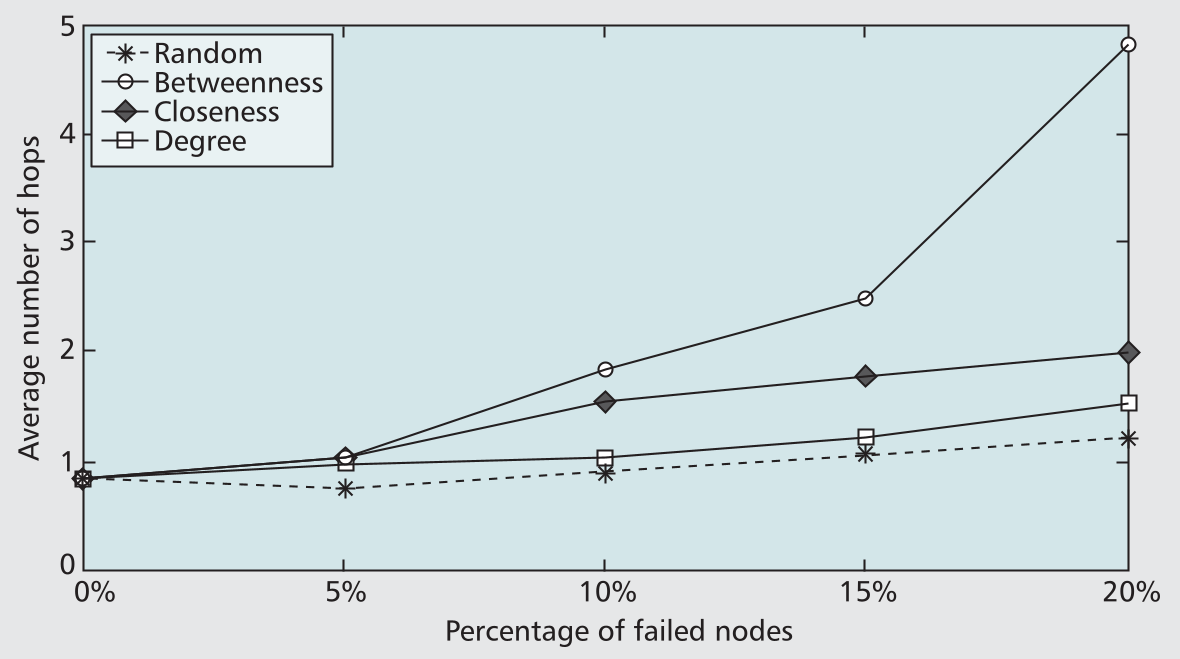
Coordinated Attacks
When the top 5 "Betweenness" nodes were targeted, the average hop count for the rest of the network spiked significantly compared to random failures. This proves that SNA metrics can identify the vulnerability points of a mesh network far more accurately than random or degree-based analysis.
Throughput Gains
In the TDMA case study, the socially-aware scheduling outperformed the random-weighted baseline. By prioritizing central nodes that frequently relay or originate traffic, the overall network delay was reduced, and throughput was maximized.
Critical Analysis & Conclusion
Takeaway
The research successfully demonstrates that global topology matters more than local connectivity. By incorporating social metrics into the MAC and Routing layers, WMNs become more resilient and efficient.
Limitations
- Computation Overhead: Calculating Betweenness Centrality requires knowledge of all shortest paths, which can be computationally expensive ( or ) as the network scales.
- Fairness and Starvation: Using Betweenness Centrality for scheduling may lead to "starvation" for nodes on the periphery of the network (zero centralities) unless specific fairness heuristics are added.
Future Outlook
This work paves the way for "Self-Organizing Networks" (SON) where routers dynamically adjust their weights based on their social importance, potentially applying these concepts to 5G/6G slicing or vehicular networks (VANETs).