
Intelligent Sensing: Transforming Aquaculture with Zigbee-Based Wireless Sensor Networks
The Application of Wireless Sensor in Aquaculture Water Quality Monitoring
The paper introduces a comprehensive Wireless Sensor Network (WSN) system designed for real-time aquaculture water quality monitoring. By integrating Zigbee-based communication, embedded computing, and multi-sensor fusion, the system achieves autonomous, long-term monitoring of critical parameters like dissolved oxygen, pH, and ammonia levels.
TL;DR
This paper presents a robust, end-to-end Wireless Sensor Network (WSN) architecture specifically engineered for the demanding conditions of aquaculture. By deploying a hierarchical network of specialized nodes, the system automates the collection of water quality metrics (pH, temperature, dissolved oxygen), drastically reducing the risk of fish mortality and improving environmental sustainability.
Background & Motivation
Aquaculture is a high-stakes industry where water quality variables—like dissolved oxygen and ammonia nitrogen—can shift rapidly, leading to catastrophic stock loss. Despite this, many farms still rely on manual testing or fragile wired infrastructure. The authors identify a critical gap: the need for an unattended, low-power, and self-organizing system that can operate in the field for years without human intervention.
The core insight is the application of MEMS technology and Zigbee protocols to create a "digital nervous system" for the pond, moving away from isolated measurements to a continuous, data-driven management model.
Methodology: The Three-Tier Hardware Architecture
The system's strength lies in its modular hardware design, which is segmented into three distinct functional roles:
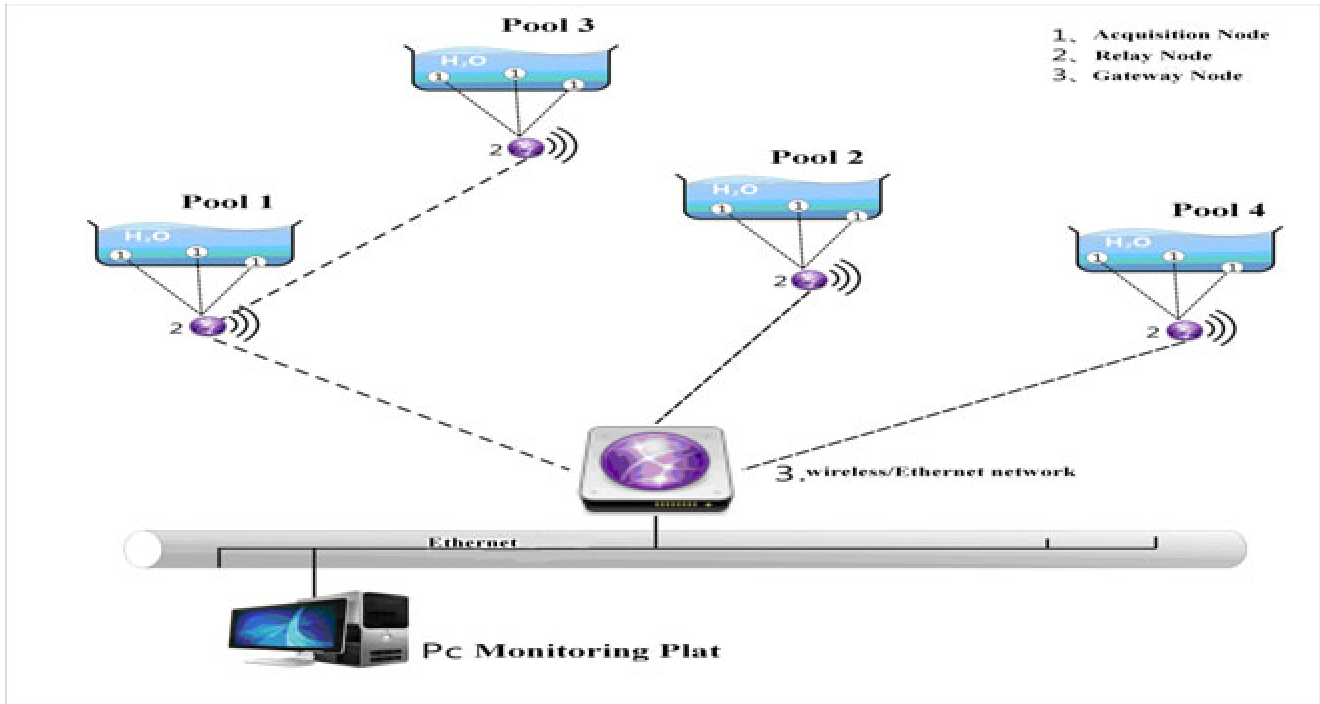
1. Acquisition Nodes: The Frontline Sensors
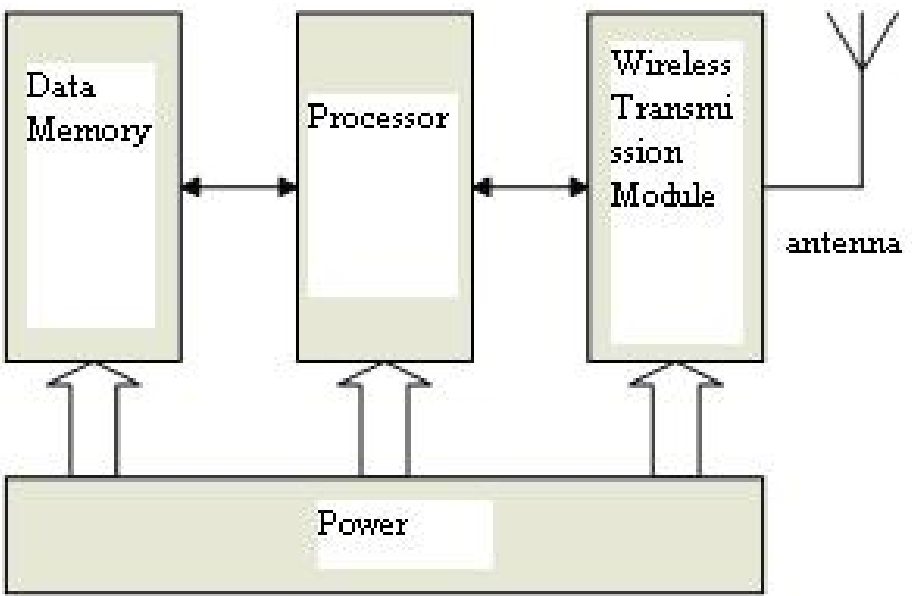
These nodes are the "eyes" of the system. They integrate a multi-parameter sensor suite with an ultra-low-power microcontroller (MCU).
- Sensors: PH, Dissolved Oxygen, Turbidity, and Ammonia Nitrogen.
- Power Management: Uses a rechargeable lithium battery and supports aggressive sleep-cycling to extend life from months up to 2 years.
2. Relay Nodes: Extending the Reach
To cover large-scale fisheries, Relay Nodes act as intermediaries. They implement self-organizing multi-hop routing algorithms, allowing the network to heal itself if one path is blocked and extending the communication range far beyond a single radio's limit.
3. Gateway Nodes: The Bridge to the Cloud
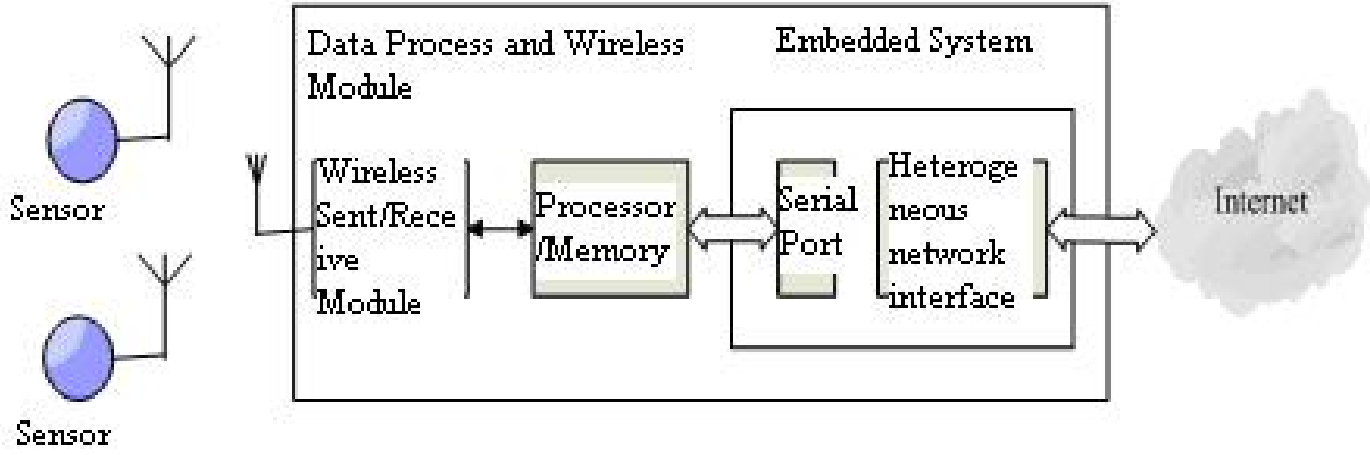
The Gateway is the most complex component. It bridges the Zigbee local network with the "logical world" via Ethernet or GPRS.
- Hardware: Built on the Atmel Mega128L and Chipcon CC1100.
- Function: It performs transparent data transmission, converting sensor packets into TCP/IP or UDP protocols for remote server analysis.
Experiments & Results
The field deployment validated several key performance metrics:
- Transmission Distance: Achieved >800m in open sight and >300m in typical aquaculture environments, which is sufficient for most industrial ponds.
- Throughput: A maximum data rate of 22.5 Kbytes/s, more than enough for low-frequency environmental telemetry.
- Reliability: The system demonstrated stable long-term operation under an "unattended" state, successfully providing SMS alerts and real-time data visualization on PC platforms.
Critical Analysis & Conclusion
Takeaway
The paper successfully demonstrates that WSN technology is no longer just theoretical for agriculture; it is a practical tool for Intensive Industrialization. The use of Zigbee provides a sweet spot between power consumption and networking flexibility.
Limitations
While the hardware is robust, the paper focuses less on the Data Mining aspect mentioned in the abstract. As sensor networks grow, the challenge shifts from "how to get data" to "how to interpret data" (e.g., predicting an oxygen crash before it happens). Furthermore, Zigbee’s 2.4GHz frequency may face signal attenuation in high-humidity environments compared to Sub-GHz solutions like LoRa.
Future Outlook
The integration of solar harvesting or vibration-based power (as suggested by the authors) will be the final step toward truly "set-and-forget" infrastructure, enabling sustainable, high-yield aquaculture for the next generation of smart cities.