
"Woe is Me": Decoding the Mental Models of Privacy in an Aging Digital World
"Woe is me": Examining Older Adults' Perceptions of Privacy
This paper presents a qualitative study of 20 older adults to elicit their "mental models" of privacy in both digital and physical contexts using diagrammatic sketching and semi-structured interviews. The researchers identified seven axial codes characterizing perceptions of privacy, uncovering significant themes of resignation, fear, and technological avoidance among the elderly demographic.
TL;DR
As the "silver tsunami" meets the digital age, a critical gap emerges: how do older adults actually perceive privacy? Using a unique drawing-based methodology, researchers from UMBC and USNA found that for many seniors, privacy isn't just a setting—it's a source of profound frustration and technological "resignation." While younger users might focus on data settings, older adults view privacy through metaphors of castle walls, shredders, and a sense of being personally targeted by an invisible, digital enemy.
Background: The Invisible Vulnerability
Privacy research often treats "users" as a monolith, or focuses on tech-savvy demographics. However, older adults (60+) face a unique intersection of cognitive shifts, varying technical backgrounds, and high-stakes isolation. This paper, presented at CHI '19, moves past "what they do" to "what they think," mapping the mental schemas that determine whether a senior clicks "Accept" or uninstalls an app entirely.
The "Art" of Privacy: Methodology
The researchers conducted one-on-one sessions with 20 participants, asking them to visualize privacy. This visual approach is powerful because mental models are often subconscious; a participant might not be able to define "encryption," but they can draw a "locked door" or a "black hole" representing lost data.
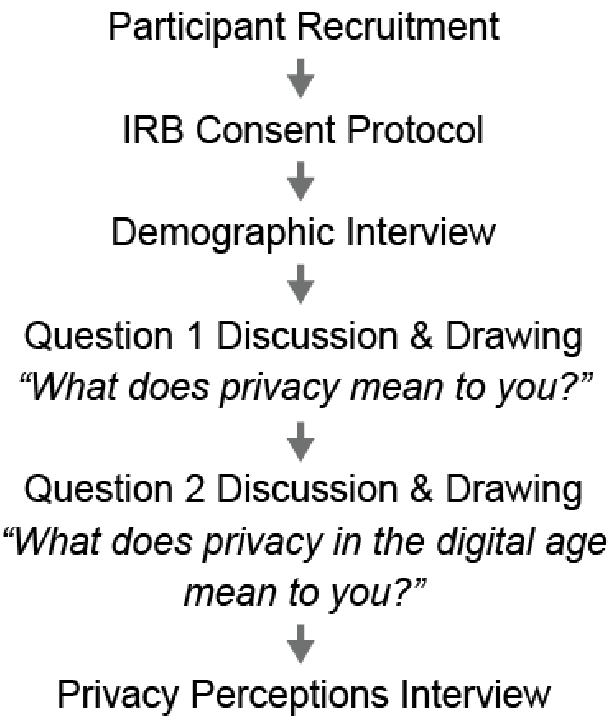 Figure 1: The dual-phase methodology combining graphical elicitation with semi-structured interviews.
Key Findings: Barriers, Fears, and Resignation
The study distilled the participants' mental models into seven axial codes. The results are a sobering look at the digital divide:
- The Burden of Fear (Code 5): A staggering 18 out of 20 participants depicted themselves as targets. One participant (P01) captioned her drawing "Woe is me," showing herself besieged by criminals and technology companies alike.
- The Physical Metaphor (Code 3): Older adults rely heavily on physical analogies—locks, walls, and bathroom stalls—to conceptualize digital safety.
- Avoidance as Protection (Code 2): For some, the only way to "win" the privacy game is not to play. This results in avoiding social media or online banking, further isolating this demographic from modern conveniences.
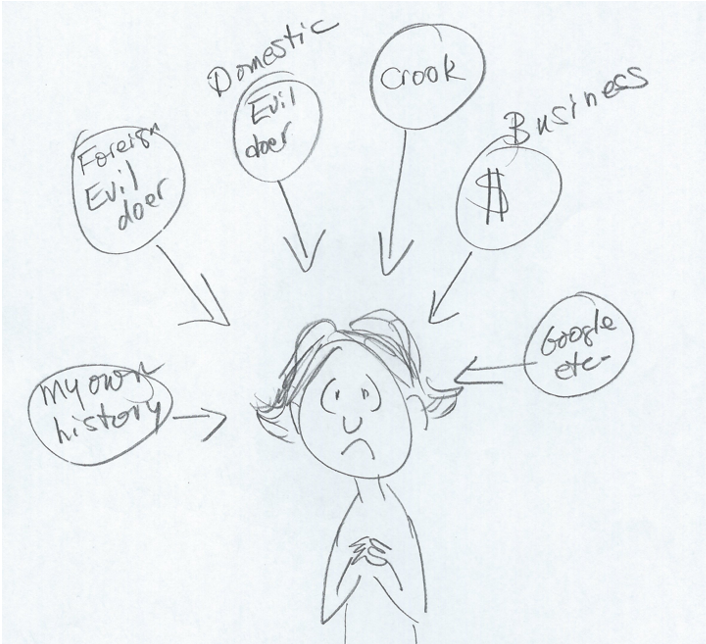 Figure 2: p01’s drawing titled “Woe is me,” illustrating the overwhelming sense of vulnerability and being surrounded by digital threats.
Analysis: Why "Usable Privacy" is Failing Seniors
The paper highlights a critical nuance: Resignation. Unlike younger demographics who might be "annoyed" by privacy prompts, older adults often feel a sense of hopelessness.
Participant 12’s insight—fearing she "might hit the wrong button and not be able to undo"—points to a lack of forgiveness in UI design. In the physical world, a paper shredded is gone; in the digital world, a "Delete" button feels like a trap. This leads to a preference for paper-based records (Code 4), which feel tangible and controllable.
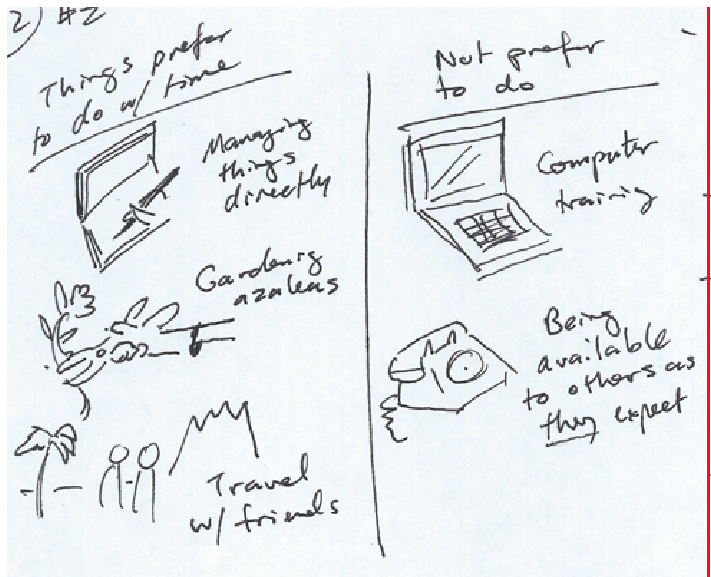 Figure 3: Participant 12’s mental model, separating the "joy" of gardening and paper checkbooks from the "fear" of technology.
Critical Insight & Future Outlook
This work serves as a call to action for UI/UX designers and privacy engineers. To bridge the gap, we must:
- Redesign Accountability: Systems need clearer "Undo" and "Safety Net" features to reduce the high-stakes fear of digital interaction.
- Tailored Education: Training must address the emotional weight of privacy, not just the technical steps.
- Transparency: If seniors view the internet as a "black box," designs must "show the plumbing" of where data goes and who actually sees it.
Conclusion: Privacy for older adults isn't just a technical requirement—it's an emotional barrier to digital citizenship. Unless we design for the fears and metaphors identified here, we risk leaving an entire generation behind in a "woe is me" state of digital exile.