
Digital Empowerment: How Social Media is Redefining Women’s Micro-Entrepreneurship in Qatar
Women Micro-Entrepreneurs in Qatar: Motivation, Challenges, and Social Media Opportunities
This research investigates the motivations and challenges of Qatari women micro-entrepreneurs, specifically focusing on the adoption of social media as a transformative tool. Utilizing a mixed-methodology approach, it aims to develop a conceptual model for female entrepreneurship within the unique socio-economic framework of Qatar National Vision 2030.
TL;DR
This study explores the intersection of gender, culture, and technology in Qatar. It analyzes why Qatari women turn to micro-entrepreneurship and how social media platforms act as vital tools to overcome traditional market barriers and socio-cultural constraints, aligning with the "Qatar National Vision 2030."
Background Positioning
While women's entrepreneurship is a recognized driver of socio-economic development globally, the Qatari context remains under-researched. This paper positions itself as a critical bridge between IT Adoption models and Gender Studies, moving beyond general entrepreneurship theories to address the "Gendered Phenomenon" of business in the Gulf region.
Motivation: The "Pull" Factor
Unlike many developing nations where women are "pushed" into business due to financial hardship, Qatari women are primarily "pulled" by:
- Self-Fulfillment: The desire for personal achievement.
- Financial Independence: Gaining agency within the household.
- Flexibility: Balancing professional ambitions with family obligations.
Challenges & The Social Media Intervention
The research identifies a "Gender Gap" in economic participation (60.9%) despite high literacy rates. Women face unique hurdles including:
- Patriarchal Norms: Traditional expectations regarding work-family balance.
- Market Barriers: Limited access to traditional networking spaces.
- Risk Avoidance: A documented fear of failure in formal business settings.
Social Media as the "Great Leveler": Social media (Instagram, WhatsApp, Snapchat) provides a low-cost, high-reach alternative to physical storefronts. Crucially, it allows women to circumvent cultural obstacles like gender segregation by enabling online contact with suppliers and customers, essentially "digitizing" the entrepreneurial journey to fit cultural boundaries.
Methodology: A Mixed-Lens Approach
The authors don't just rely on anecdotes; they apply a rigorous two-step validation process:
- Qualitative Exploration: 30 in-depth interviews to capture the "Why."
- Quantitative Confirmation: A 300-person survey analyzed via Structural Equation Modelling (SEM).
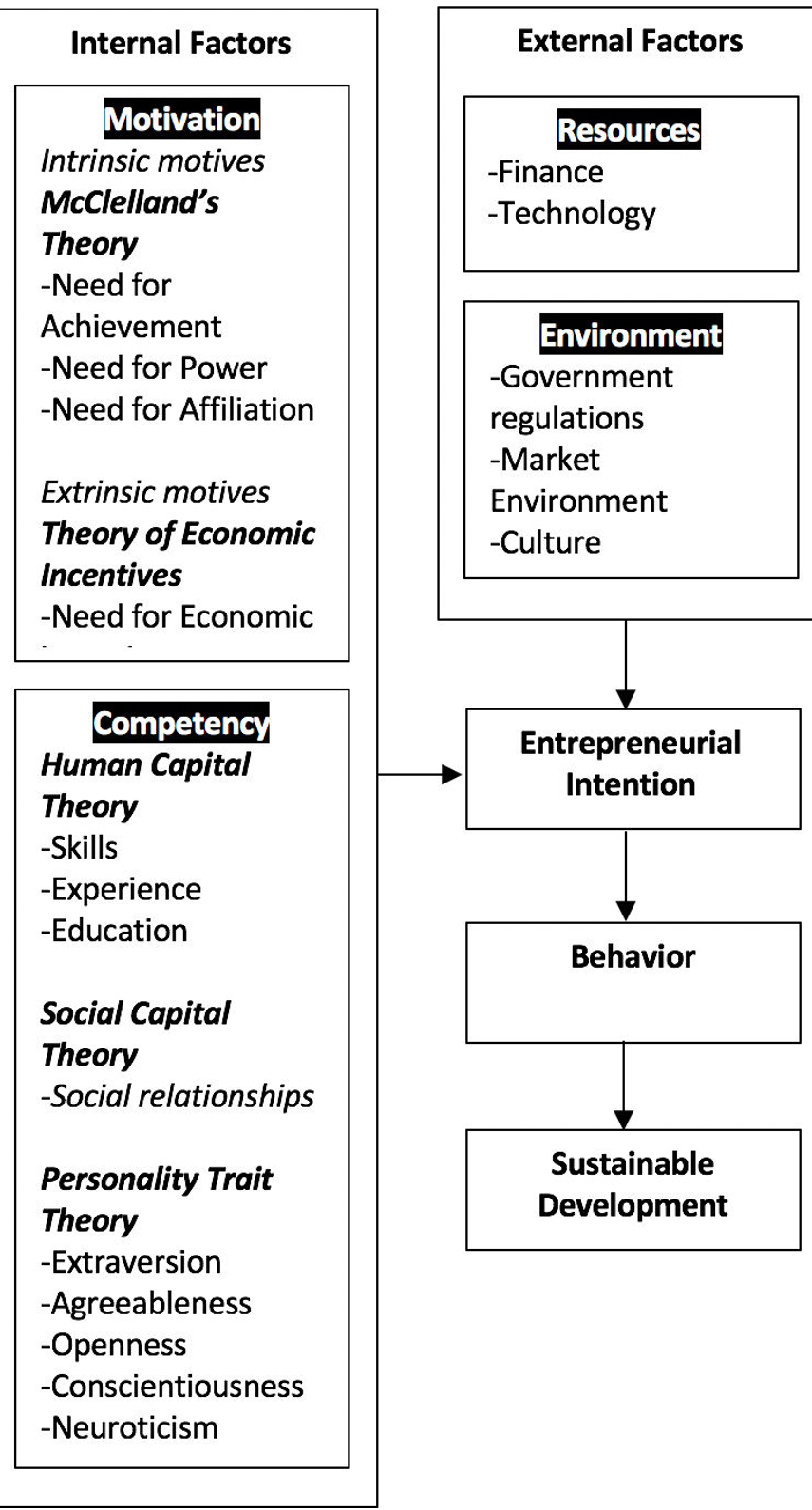 Note: The model focuses on the interplay between motivation, social media adoption factors, and sustainable development outcomes.
Critical Insight & Future Outlook
The core value of this work lies in its Inductive Method. By treating entrepreneurship as a "gendered phenomenon," the authors recognize that a woman's business journey in Doha is fundamentally different from a man's, or even a woman's journey in a Western context.
Limitations & Future Work: As an "in-progress" study, the full quantitative results are pending. Future iterations utilizing Partial Least Squares (PLS) will provide a much-needed predictive model for which social media features (affordability vs. ease of use) are the strongest predictors of business success in the region.
Conclusion
This paper serves as a roadmap for both academics and Qatari policymakers. By supporting social-media-based micro-enterprises, Qatar can bridge its economic gender gap and realize the diversification goals of its 2030 Vision.