
Smart Guard: Revolutionizing Women's Safety with IoT, ML, and ZigBee Mesh Networks
Women Safety Device Designed Using IoT and Machine Learning
This paper introduces an IoT-based wearable safety device for women that leverages Machine Learning (Logistic Regression) and ZigBee mesh networking to automate emergency alerts. Unlike manual systems, it monitors physiological signals—body temperature and pulse rate—to autonomously detect danger and transmit GPS locations even in environments without internet connectivity.
TL;DR
This research presents a wearable safety device that eliminates the "human factor" in emergencies. By using Logistic Regression to analyze real-time pulse and temperature data and ZigBee mesh networking for offline connectivity, the device autonomously detects danger and alerts emergency contacts with precise GPS locations, even when the user cannot reach their phone or has no internet.
The Critical Gap: Why Traditional Safety Apps Fail
Most current safety solutions—ranging from "one-touch" buttons to garments like SHE (Society Harnessing Equipment)—share a common fatal flaw: they require manual activation. In a high-danger situation, fear or physical restraint often prevents a victim from operating a device.
Furthermore, existing bio-monitoring devices often use rigid thresholds. For instance, if a device is set to trigger at a specific heart rate, it might cause a "false positive" while the user is simply exercising. The authors identify this lack of individualized pattern recognition as the primary barrier to effective automated safety tech.
Methodology: Personalizing Protection
The proposed system bridges the gap between hardware reliability and intelligent software.
1. The Intelligence: Logistic Regression
Rather than using a fixed heart rate limit, the researchers implemented a Logistic Regression model. The model is trained on the user’s specific biological data under various conditions (e.g., resting vs. running). The probability of danger () is modeled as: Where and represent pulse rate and body temperature. This allows the device to "learn" what a personalized danger state looks like compared to normal physical exertion.
2. The Infrastructure: IoT and Mesh Connectivity
The architecture follows the IoT World Forum Reference Model, utilizing six layers from physical sensors to cloud applications.
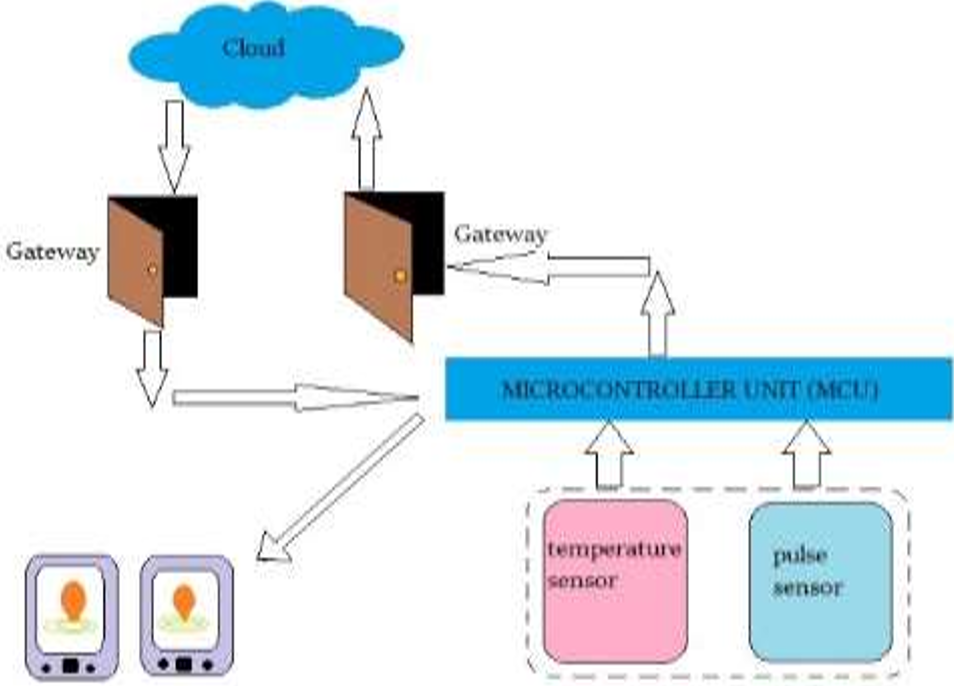
- Sensors: Pulse and LM35 temperature sensors collect real-time data.
- Connectivity (The ZigBee Advantage): To solve the "No Internet" problem, the device uses ZigBee S2C modules to create a mesh network. If the user is in a remote area, data can "hop" through other ZigBee nodes (Routers) to reach a central gateway (Coordinator).
Hardware Implementation
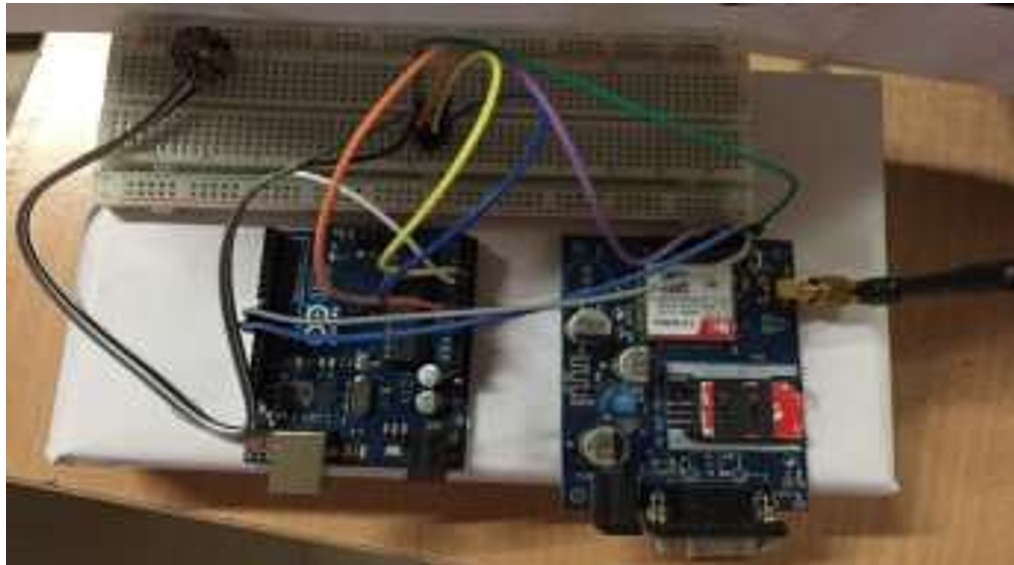
The prototype is built on an Arduino ATmega328 platform, integrating:
- GPS Module: To track latitude and longitude via MEO satellites.
- GSM SIM800 Modem: To execute voice calls and SMS alerts.
- ZigBee S2C: For low-power, multi-hop communication.
Experimental Results & Analysis
The researchers collected a dataset of 500 entries to train the ML model. The testing phase focused on the system's ability to distinguish between "High Pulse (Running)" and "High Pulse (Danger/Panic)."
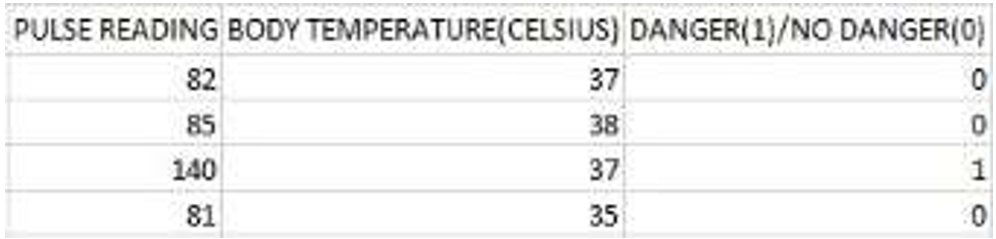
Key findings include:
- Accuracy: The Logistic Regression model effectively mapped the non-linear relationship between biological triggers and danger states.
- Responsiveness: Upon detecting danger, the system successfully initiated calls to two emergency numbers simultaneously while providing the exact GPS location link.
- Connectivity: The ZigBee mesh successfully extended the range of communication in areas where GSM/GPRS signals were weak but local mesh nodes were available.
Deep Insight & Conclusion
This paper’s true value lies in its personalized approach. By moving away from "one-size-fits-all" thresholds, the authors reduce false alarms—which are the bane of emergency services.
Future Outlook & Limitations: While the integration of ZigBee is brilliant for local "dead zones," its efficacy depends on the density of the mesh network (i.e., having enough routers nearby). Future iterations could benefit from Edge AI, where the Logistic Regression runs directly on a low-power microcontroller (like an ESP32 or ARM Cortex-M) rather than in the cloud, further reducing latency and dependency on the internet.
Ultimately, this work proves that for safety tech to be truly effective, it must be autonomous, customized, and resilient to the environments it is designed to protect.