
The Social Architecture of Sobriety: Mapping Latent Network Transitions in Women’s Recovery
Transitions of women’s substance use recovery networks and 12-month sobriety outcomes
This study utilizes Latent Profile Analysis (LPA) and Latent Transition Analysis (LTA) to categorize and track the Personal Social Networks (PSNs) of 377 women in early substance use recovery. It identifies three distinct network typologies—Highly Connected, Treatment-Related, and At-Risk—finding that women in the Treatment-Related type were 2.09 times more likely to maintain 12-month sobriety compared to the At-Risk group.
TL;DR
Recovery is rarely a solitary journey, yet we often fail to measure the structure of the worlds women return to after treatment. This study moves beyond simple "peer pressure" metrics to map the complex social architectures of 377 women in early recovery. By identifying three distinct "Latent Typologies"—Highly Connected, Treatment-Related, and At-Risk—researcher Meredith W. Francis demonstrates that the early six-month window is a high-flux period where shifting into a "Treatment-Related" network doubles the odds of long-term sobriety.
Problem & Motivation: Beyond Individual Metrics
Traditional substance use research often treats social factors as a checklist: Do you have friends who use? Do you have family support? However, this "atomistic" view ignores the Inductive Bias of social networks: the idea that the arrangement of people matters as much as their individual traits.
The author argues that women, who are uniquely influenced by social "alters" and often navigate recovery alongside histories of trauma, require a more holistic "Recovery Capital" framework. The central challenge was to understand why some networks reinforce sobriety while others, despite being "tight-knit," might actually facilitate relapse.
Methodology: The Latent Variable Approach
To solve this, the study utilized Latent Profile Analysis (LPA). Instead of looking at one variable at a time, LPA groups individuals based on a "latent" (unobserved) profile that explains the patterns in six key indicators:
- Alter Sobriety: Number of non-using associates.
- Sobriety Support: Availability of actual recovery help.
- Used With: Number of alters linked to past use.
- Treatment-Related: Peers from AA/NA or professional helpers.
- Density: How many of your friends know each other.
- Isolates: People connected only to the participant (potential "bridges" to new lives).
The Three Typologies
- Highly Connected (14.3%): Immersive, dense, family-centric networks. High sobriety, but very "closed."
- Treatment-Related (49.3%): Looser networks with "bridging" ties to treatment peers. This group proved the most resilient.
- At-Risk (36.3%): High numbers of "used-with" alters and low sobriety support.
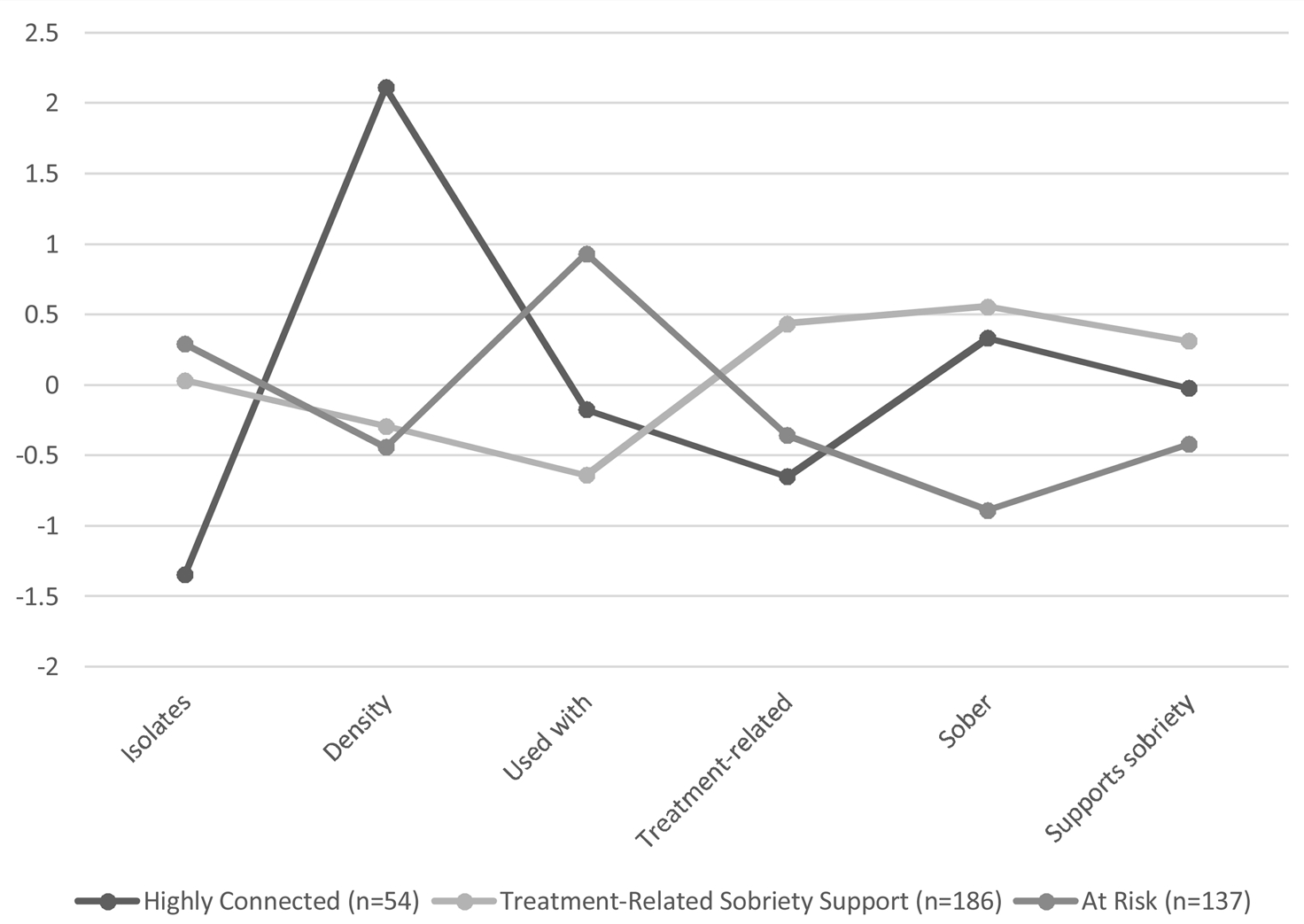 Figure 1: Graphical representation of the three PSN typologies showing how variables like density and treatment-related alters differentiate the groups.
Experiments & Results: The Six-Month Shift
The study’s second major component, Latent Transition Analysis (LTA), tracked how women moved between these types over 12 months.
Key Findings:
- The Mobility of Risk: Women in the "At-Risk" group had the highest probability of transitioning (P=0.55). Most movement occurred in the first 6 months.
- The Sobriety Multiplier: Women in the "Treatment-Related" typology were significantly more likely to maintain 12-month sobriety (OR = 2.09) compared to the At-Risk group.
- The Trauma Factor: Higher Trauma Symptom Checklist (TSC-40) scores were a significant predictor of starting in the "At-Risk" category, suggesting trauma destabilizes the ability to form recovery-supportive ties.
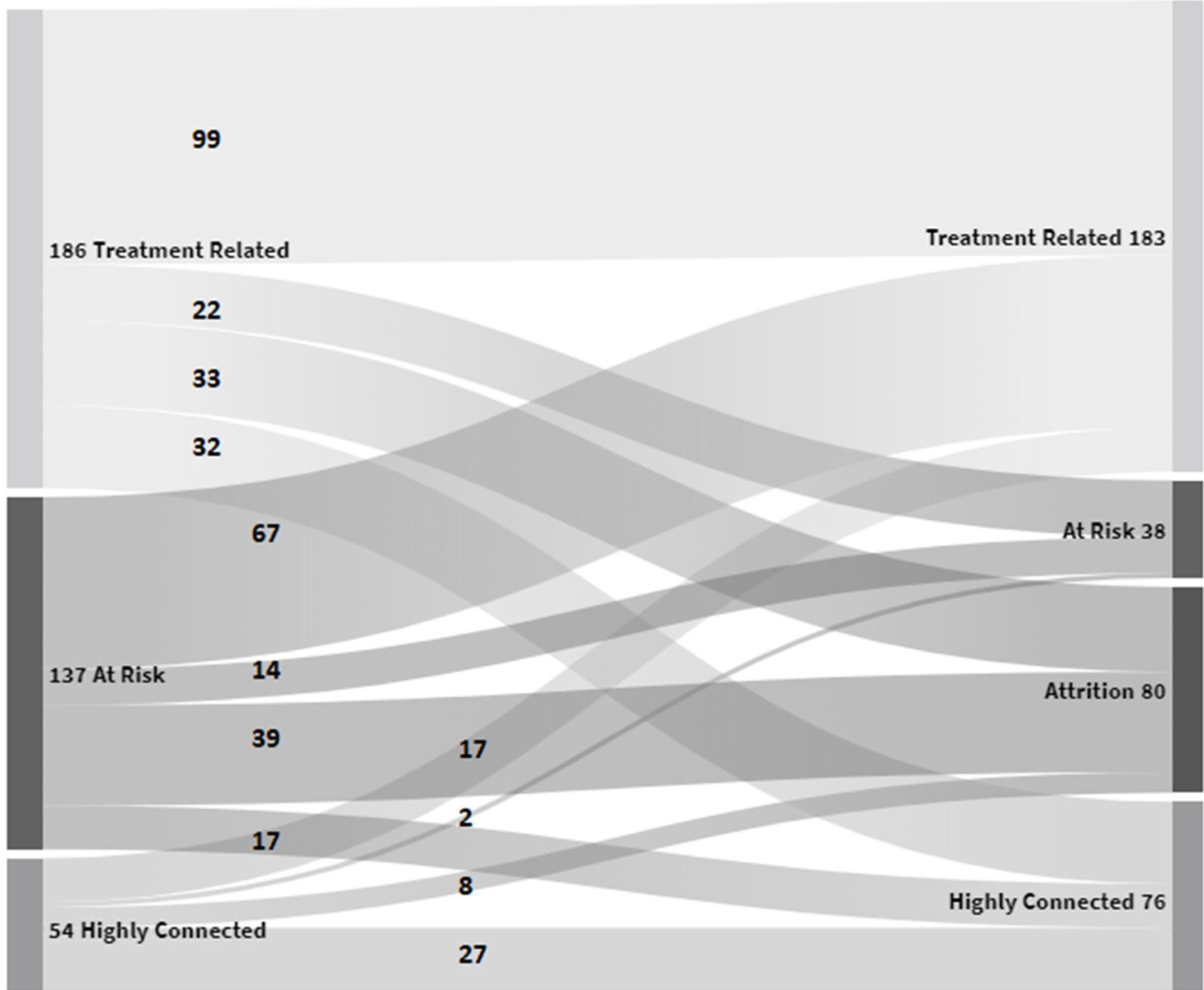 Figure 2: Flow diagram showing how participants transitioned between Highly Connected, Treatment-Related, and At-Risk states over time.
Deep Insight: Why "Highly Connected" Isn't Always Better
One of the most counterintuitive findings is that the Highly Connected (dense, family-heavy) group did not significantly outperform the At-Risk group in sobriety outcomes. This suggests that "High Density" can be a double-edged sword. If a network is too tightly knit, it can reinforce old messages or create an insular environment that lacks the "bridging ties" (new treatment friends) necessary to navigate the specific challenges of early recovery.
Critical Analysis & Conclusion
Takeaway
The success of the "Treatment-Related" group highlights the vital role of Network Diversification. For women in recovery, adding professionals and treatment peers—even if they are "isolates" who don't know the rest of the woman's family—provides a critical safety valve.
Limitations
- Attrition: 21.2% of the sample was lost by 6 months, primarily from the At-Risk group, potentially biasing the 12-month outcomes.
- Self-Report: Sobriety was measured via self-report rather than biochemical verification (e.g., urinalysis).
Future Outlook
This framework provides a roadmap for Targeted Intervention. Instead of a "one-size-fits-all" treatment, clinicians can use "ecomaps" to identify if a client is in an At-Risk network and prioritize the development of "bridging ties" specifically during the high-flux first six months of the recovery journey.