
Empowering University Enrollment: The Synergy of WOM, Social Media, and Brand Image
The Influence of Word of Mouth and Social Media Marketing on Students' Decision to Choose a University With Brand Image as a Mediating Variable (Case Study at …
This study investigates the determinants of university selection at Universitas Darunnajah, Indonesia, using a quantitative approach. It validates a structural model where Word of Mouth (WOM) and Social Media Marketing (SMM) significantly drive student enrollment decisions, with Brand Image acting as a critical mediating variable. The research utilizes Partial Least Squares (PLS-SEM) to confirm the positive impact of digital and interpersonal communication on institutional branding.
Executive Summary
TL;DR: This research decodes the decision-making process of prospective students at Universitas Darunnajah. By analyzing data from 222 students, the study proves that while Social Media Marketing (SMM) is a powerhouse for building Brand Image, the final "nudge" to enroll is most effectively delivered through Word of Mouth (WOM). The study positions Brand Image as the vital bridge that converts marketing noise into institutional trust.
Academic Positioning: This work serves as a strategic roadmap for "emerging brands"—specifically institutions transitioning from specialized identities (like Islamic boarding schools) to broader academic markets. It validates the use of Partial Least Squares (PLS-SEM) in assessing marketing ROI in the education sector.
The "Lived Experience" vs. The "Digital Facade"
Modern universities face a dual challenge: they must be digitally visible yet interpersonally trusted. The authors identify a gap in existing literature where Social Media and Word of Mouth are often treated as separate silos. In reality, a student's journey involves a feedback loop: they see an Instagram post (SMM), and then they ask an alum if it's actually true (WOM).
The core insight here is that Brand Image is not just a logo; it is a mediating variable that filters these external signals to generate the confidence required for a life-changing decision.
Methodology: Mapping the Student Mindset
The researchers utilized a causal relationship model, breaking down abstract concepts into measurable indicators. For instance, SMM was measured via engagement and credibility, while Brand Image focused on perceived institutional uniqueness.
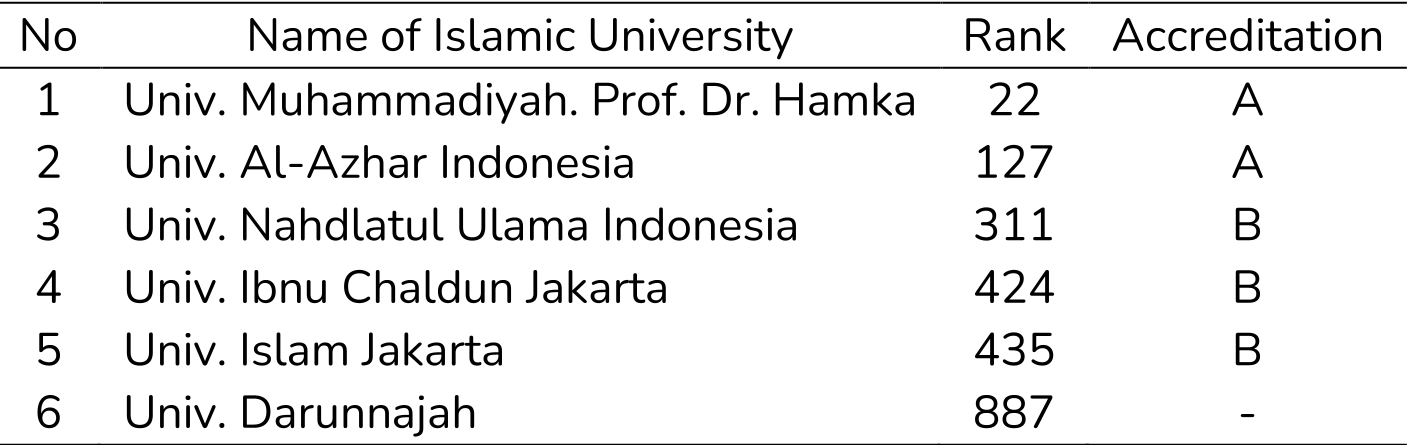 Figure 1: The competitive context showing Universitas Darunnajah's position and the necessity for strategic branding (Source: Kampus Republika, 2024).
The study utilized SmartPLS to evaluate:
- Outer Model: Ensuring all survey items (like WOM1-9 and SMM1-12) were valid (Loading Factors > 0.6) and reliable (Cronbach Alpha > 0.9).
- Inner Model: Determining the path coefficients to see which marketing lever pulls the hardest.
Key Results: Where Should Universities Invest?
The findings provide a clear hierarchy of influence:
- Building the Image: SMM is the king of branding. With a T-statistic of 7.452, social media activities like interactive posts and virtual tours are significantly more effective at shaping how the university is perceived from the outside.
- Closing the Sale: WOM maintains the direct lead. With a T-statistic of 5.878 for direct influence on student decisions, the "human factor"—testimonials from friends and family—carries more weight in the final commitment phase than a sponsored ad.
- The Mediation Effect: Brand Image successfully mediated both relationships. This proves that marketing efforts that fail to improve the brand image are essentially wasted; the image must be the vessel for the message.
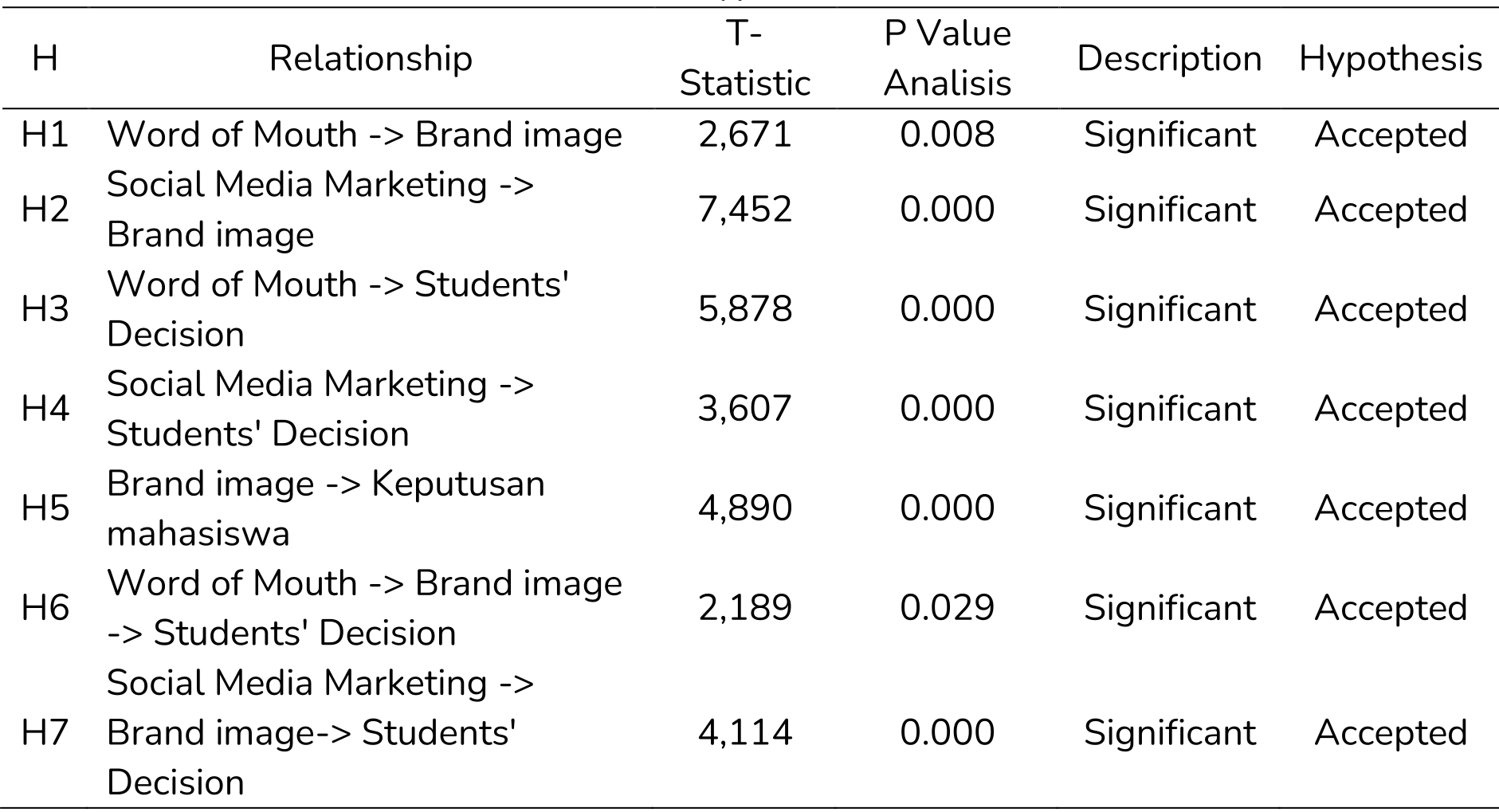 Figure 2: Statistical confirmation of all 7 hypotheses, illustrating the siginificant path from communication to decision (Source: Arief & Brabo, 2026).
Critical Analysis & Conclusion
Takeaway for Practitioners: Don't just post content; cultivate advocates. Universities should use SMM to create "sharable" success stories that empower current students and alumni to provide the positive WOM that actually drives enrollment.
Limitations & Future Work:
- Geographic Scope: The study is centered on a specific Islamic institution in Jakarta; results may vary in secular or purely vocational settings.
- Static Snapshot: As a cross-sectional study, it doesn't account for how Brand Image evolves after the student has enrolled.
- Missing Variables: Future models should integrate 'Academic Reputation' and 'Financial Incentives' to see if SMM can overcome price sensitivity.
Ultimately, this study reinforces that in the digital age, a university’s brand is a co-creation between its official media presence and the organic conversations of its community.