
MRA & W-DPSO: Orchestrating the Future of Platform-Centric Mobile Crowdsourcing
A worker-selection incentive mechanism for optimizing platform-centric mobile crowdsourcing systems
This paper introduces a dual-stage worker-selection incentive mechanism for platform-centric Mobile Crowd Sensing Networks (MCSN). It combines a Multi-attribute Reverse Auction (MRA) for dynamic candidate selection with a White-noise based Discrete Particle Swarm Optimization (W-DPSO) to determine the final winner set, aiming to maximize platform utility and social welfare.
TL;DR
To address the inefficiencies and lack of realistic constraints in current mobile crowdsourcing, this paper presents a hybrid framework: an online Multi-attribute Reverse Auction (MRA) for real-time candidate filtering, followed by an improved Discrete Particle Swarm Optimization with White Noise (W-DPSO) for final winner determination. This combination ensures high participation rates, maximizes social welfare, and prevents the "local optima" trap in worker selection.
Background & Motivation: Moving Beyond Price
Mobile Crowd Sensing Networks (MCSN) have transformed how we collect spatio-temporal data, from traffic monitoring to environmental sensing. However, the "heartbeat" of these systems—the incentive mechanism—is often oversimplified.
Most prior works treat crowdsourcing as a simple price-based auction. In reality, a platform cares about more than just the lowest bid:
- Distance: How far does the worker have to travel? (Affects carbon footprint and reliability).
- Trust: Has this worker provided high-quality data in the past?
- Privacy: How sensitive is the worker about their location data?
- Temporal Precision: Can they complete the task within the required window?
The authors argue that ignoring these factors leads to a "race to the bottom" where quality is sacrificed for cost, and unpopular areas remain data-sparse.
Methodology: The Two-Stage Selection Engine
The paper proposes a sophisticated architecture divided into an online phase and an offline optimization phase.
1. Multi-attribute Reverse Auction (MRA)
Instead of a static "pass/fail" threshold, the MRA algorithm dynamically adjusts the bidding score threshold () as workers arrive. This ensures the platform picks the "best available so far" without waiting for the entire pool to submit bids, crucial for real-time responsiveness.
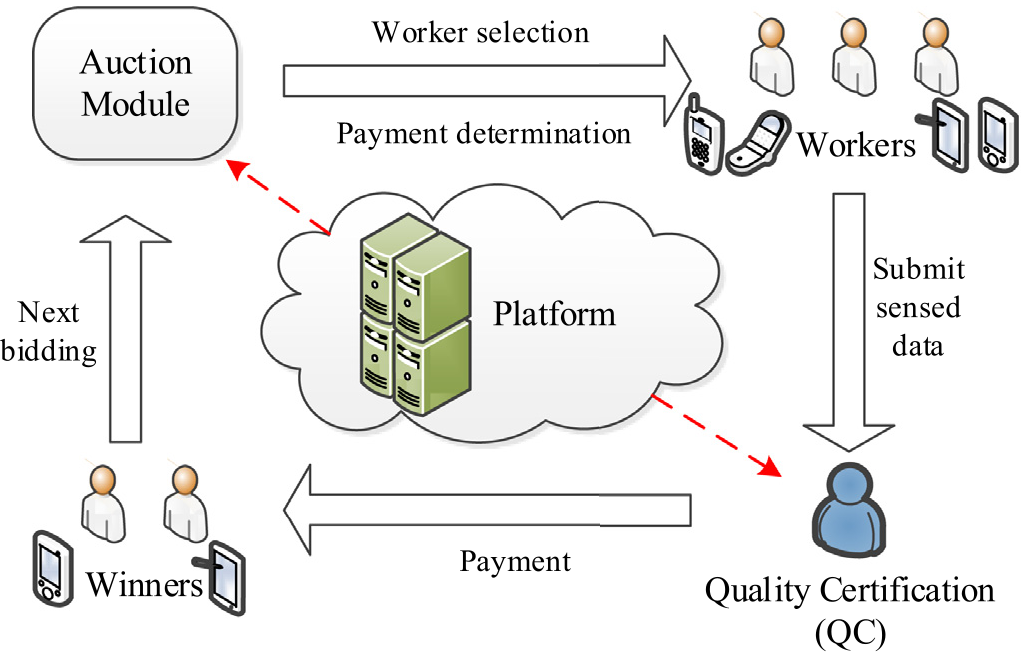 Figure 1: The dual architecture focusing on MRA for candidate selection and Quality Certification.
2. W-DPSO: Breaking Free from Local Optima
Once a candidate set is selected, the platform must solve a variation of the Knapsack Problem: which subset of workers maximizes total benefit without exceeding the budget ?
Standard Discrete Particle Swarm Optimization (DPSO) often converges too quickly on a sub-optimal solution. By introducing Gaussian White Noise, the authors allow the "particles" (potential worker sets) to jump out of local peaks in the search space, eventually finding a global optimum that offers higher utility.
Experimental Proof: Speed and Quality
The researchers tested their approach against classic methods like Improved Two-stage Auction (ITA) and standard Genetic Algorithms (GA).
Efficiency and Trust
As shown in the charts below, the dynamic MRA (MRA-D) consumes the budget and completes the selection process much faster than others. More importantly, it maintains a higher Trust Degree, ensuring the platform isn't just picking cheap, unreliable participants.
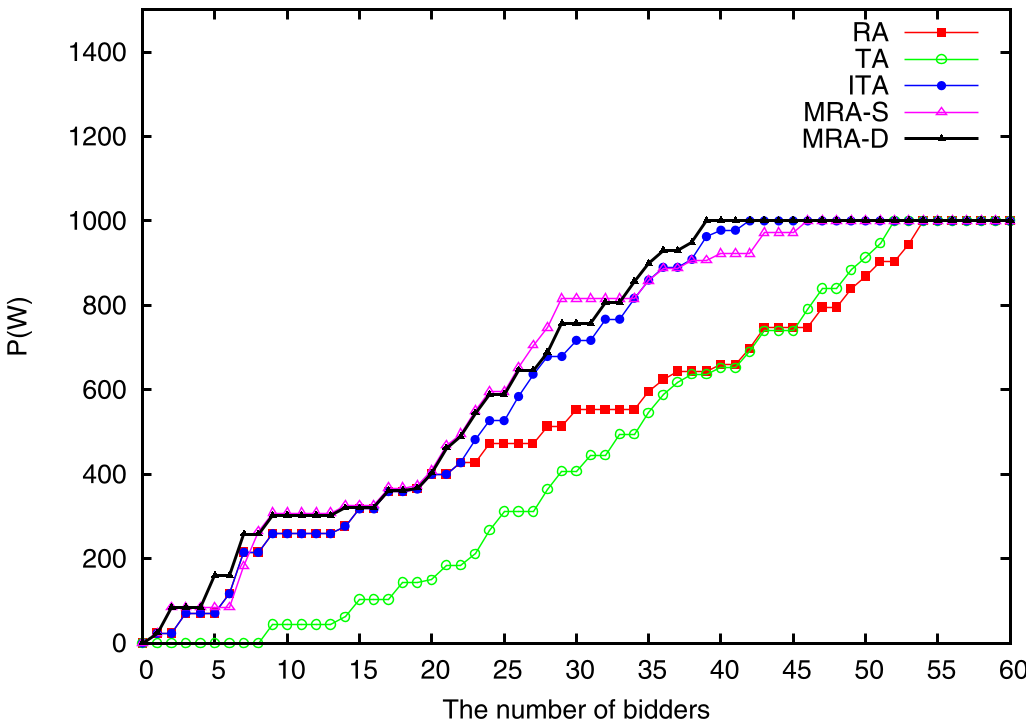 Figure 2: MRA-D reaches budget milestones significantly faster than RA or TA.
Welfare Maximization
On the Yelp dataset, the W-DPSO algorithm consistently outperformed standard DPSO and GA. Standard GAs were particularly prone to "premature convergence," failing to find the high-utility worker combinations that W-DPSO identified.
Critical Insight: The Value of "White Noise"
The most striking takeaway is the physical intuition behind using White Noise in discrete optimization. In a mobile environment where worker behavior is unpredictable, a "rigid" optimization algorithm fails. By injecting a controlled amount of randomness, the algorithm mimics the natural flux of the crowdsourcing market, leading to a much more robust and "rational" selection of winners.
Conclusion & Future Outlook
This work sets a new benchmark for platform-centric crowdsourcing by proving that computationally efficient algorithms don't have to be one-dimensional. Future research should integrate social relationship strengths (friendships between workers) to further refine how tasks are spread across a network.
As we move toward smarter cities, the ability to select the right worker—not just the cheapest—will be the defining factor in data reliability.