
Working Digital Money into a Cash Economy: The Collaborative Work of Loan Payment
Working Digital Money into a Cash Economy: The Collaborative Work of Loan Payment
This ethnographic study investigates the transition from cash-based to mobile money (Airtel Money) loan collections in India. It highlights how the usability of digital money for financially vulnerable auto-rickshaw drivers is achieved through a "collaborative achievement" within a trusted socio-technical ecosystem rather than just technical design.
TL;DR
The shift from cash to "Airtel Money" for Bangalore's auto-rickshaw drivers isn't just a technical upgrade; it's a social transformation. This paper reveals that the "usability" of digital payments depends less on the app interface and more on the trusted human ecosystem—the collectors who nudge, counsel, and negotiate with drivers to prevent them from defaulting.
Problem & Motivation: The Myth of the "Anytime, Anywhere" Transaction
Most Fintech solutions are designed with a "Global North" logic: efficiency, speed, and the elimination of human contact. Mobile money systems like Airtel Money promise to let users pay "anytime, anywhere."
However, for auto-rickshaw drivers earning 800-1200 rupees a day in cash, "digital money" doesn't actually exist until they find a physical shop to "recharge" their wallet. The authors argue that by treating payment as a simple transaction, we ignore the invisible social work provided by human collectors who ensure financially vulnerable people actually stay on track with their debt.
Methodology: The "Yellow Book" vs. The SMS
The research utilized deep ethnography, shadowing collectors from three different NGOs in Bangalore. They compared:
- The Cash Workflow: Centered around the "Yellow TWU Book," a physical artifact that provides a tangible, historical record of payment and fosters a sense of security.
- The Digital Workflow: Using USSD-based Airtel Money, which replaces face-to-face meetings with English-language SMS confirmations.
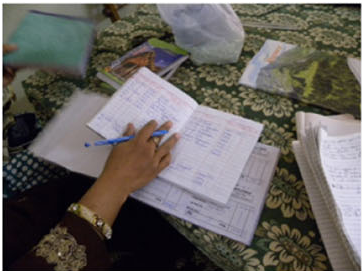 Figure: The manual cash collection process relies on multiple layers of receipting to build trust.
Key Insight: Payment as a Collaborative Achievement
The core finding is that loan payment is not an isolated act; it is collaboratively achieved. In cash systems, collectors perform "loan counseling":
- Accountability: Pushing drivers to pay 200 rupees instead of 100 when they are behind.
- Counseling: Advising families on how to manage their household budget to avoid defaulting.
- Flexibility: Negotiating a "buffer" when a driver has a family emergency.
When you switch to Airtel Money, this social layer disappears. While the organization (TWU) sees a reduction in cash-handling risks, the drivers lose the human nudge and the tangible record of the "Yellow Book."
Results & The Recharge Bottleneck
Contrary to the tech-optimist view, the study found that Airtel Money remains "time and place bound."
- The Recharge Struggle: Drivers often had to travel long distances to find a functional recharge center.
- Literacy Barriers: While drivers managed the 4-step USSD process, they struggled with self-service machines at recharge centers which were English-only.
- Trust Gap: Some drivers stopped using digital payments because they didn't trust the SMS. They preferred the physical signature in their loan book.
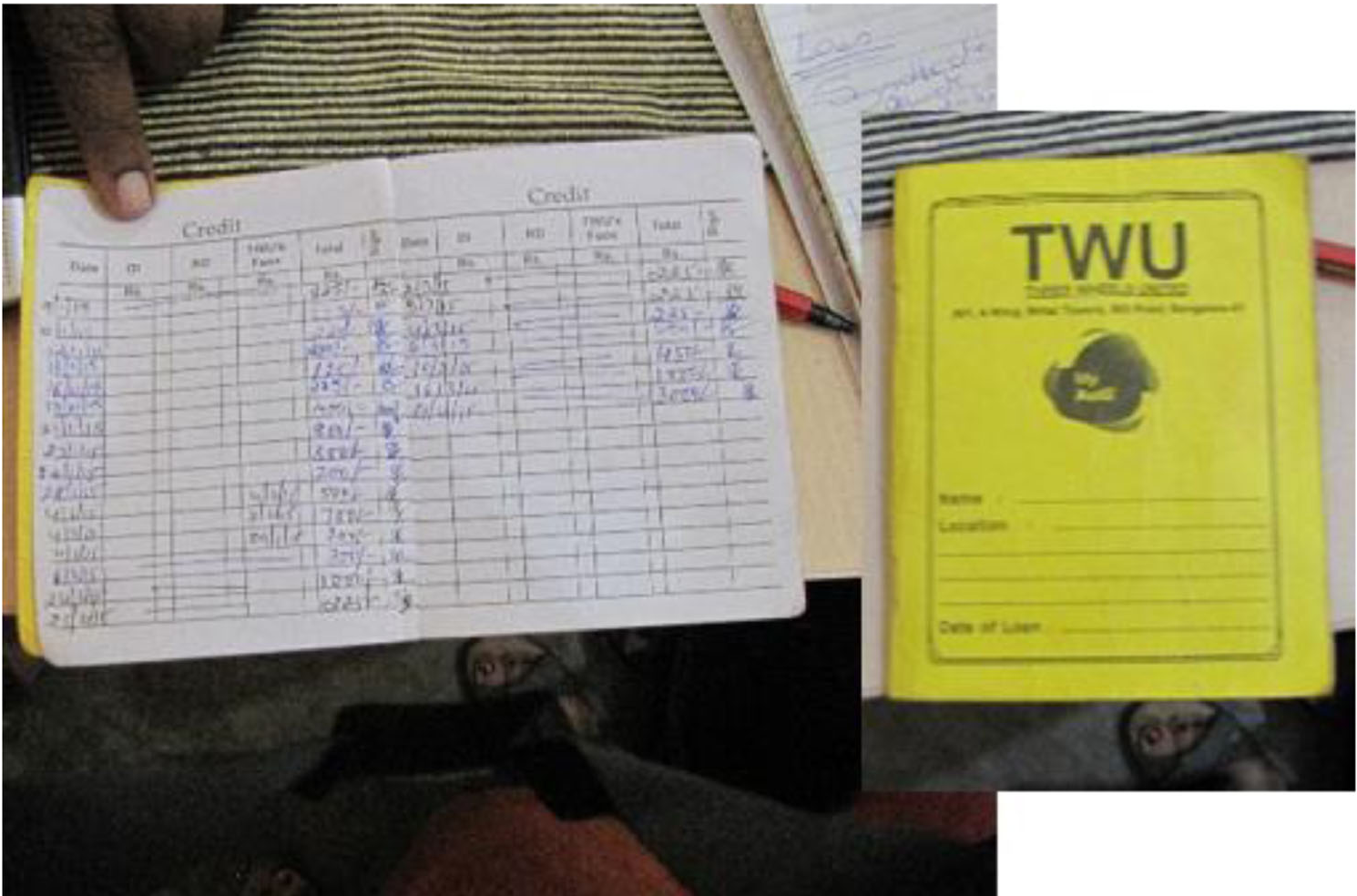 Figure: The "Yellow Book" acts as a totem of trust, providing a permanent record that an SMS cannot replace.
Critical Analysis: Bringing the "Social" back to Fintech
The paper concludes with a powerful critique: by digitizing everything, we are "designing out" the human elements that make financial systems resilient for the poor.
Key Takeaways:
- Interoperability Matters: The distance between "Cash in hand" and "Digital in wallet" is the biggest hurdle.
- Infrastructure isn't just Bits: Physical recharge networks are as important as the app's UI.
- Flexibility belongs in Code: If digital systems are to replace humans, they must find ways to replicate the "social work" of negotiation and financial counseling.
For designers and researchers in the Global North, this is a warning: Efficiency isn't always the goal. Sometimes, the "friction" of a face-to-face meeting is exactly what keeps a vulnerable person from falling into a debt spiral.