
Forensic Stylometry: Unmasking Authors in the Age of 140 Characters
Writer Identification Using Microblogging Texts for Social Media Forensics
2021-05-06
Summary
Problem
Method
Results
Takeaways
Abstract
This paper presents a robust framework for writer identification on Twitter, specifically targeting short messages (140-280 characters). By utilizing an extensive set of stylometric features, n-grams, and Twitter-specific metadata (hashtags, URLs, mentions), the authors achieve Rank-5 identification accuracy exceeding 80% with large training sets across thousands of authors.
## TL;DR
Can we identify a criminal based only on a handful of 140-character Tweets? Research from Halmstad University says **yes**. By combining traditional literary analysis with modern social media metadata (hashtags, mentions), researchers have built a system that can pick a needle out of a haystack of nearly 4,000 authors with high reliability.
## The Problem: The "Short Text" Hurdle
Authorship attribution is an old science (think identifying Shakespeare). However, digital communication has broken the traditional "rules" of stylometry:
- **Brevity**: Standard methods like "vocabulary richness" fail when a user only writes 15 words.
- **Noise**: Typos, slang, and "internet-speak" confuse traditional language parsers.
- **Scale**: In a real forensic case, you aren't choosing between two authors; you are searching through thousands of potential suspects.
## Methodology: Beyond Just Words
The authors didn't just look at *what* was said, but *how* it was packaged. Their pipeline follows a sophisticated four-stage process: Pre-processing, Feature Extraction (Lexical, Structural, Syntactic), Feature Comparison (using $\chi^2$ distance), and Identification.
### 1. The Power of Meta-Tags
One of the most profound "Aha!" moments in the paper is the use of **Twitter Meta-Tags**. Instead of ignoring URLs, hashtags, and mentions, the authors replaced them with tokens like `URLTAG` or `TRENDTAG`. They discovered that the *frequency* with which a user mentions others or uses hashtags is itself a powerful biometric signature.
### 2. The n-gram Advantage
The research heavily leans on **character n-grams** (sequences of $n$ characters). Unlike word analysis, n-grams are:
- **Language Independent**: They work even if the user switches languages.
- **Typo-Tolerant**: A misspelling of "Criminal" as "Criminnal" still shares most of its 3-grams.
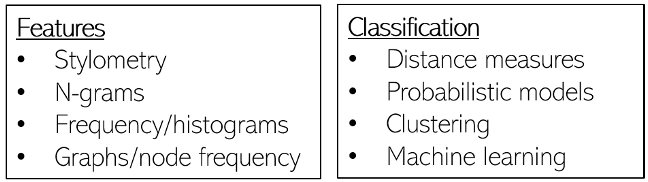
*Fig 1: The overarching workflow for identifying writers from micro-texts.*
### 3. Feature Selection (SFFS)
The authors used **Sequential Forward Floating Selection (SFFS)** to find the "sweet spot" in their 672-dimensional feature space. They found that while more data is generally better, a carefully selected group of ~239 features actually outperforms the full set by removing redundant noise.
## Experimental Results: Seeking the Needle
The team tested their approach on the **SMF Database** (3,957 authors) and the **ISOT Database** (93 influential tweeters).
- **Performance at Scale**: With 1,000 training tweets, Rank-1 accuracy is nearly perfect for small groups and remains high even as the author pool grows to nearly 2,000.
- **Data Scarcity**: Even with only 20 tweets available (standard for many forensic cases), the Rank-5 accuracy was enough to significantly narrow down a suspect list.
- **Speed**: The system processes a tweet in roughly **89ms**, meaning it could query a database of 1 million users in seconds.
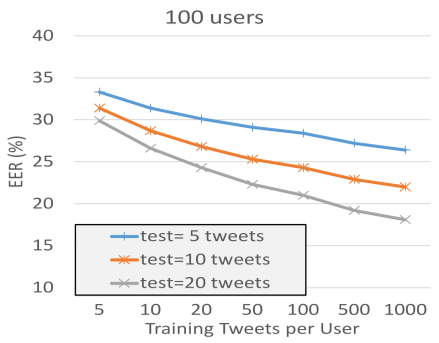
*Fig 2: Accuracy comparison of different feature types. Note the superior performance of n-grams and Uni-grams.*
## Deep Insight: Why Does This Work?
The paper reveals a fascinating "Biometric Menagerie" effect. It isn't just one feature that gives it away; it's the **complementarity**. While POS (Part-of-Speech) tags perform poorly on their own, they are highly valuable when combined with character counts. This suggests that while we can try to "shape" our words, our structural habits (sentence length, punctuation use) are often unconscious and uniquely ours.
## Limitations & The Forward Look
While the results are impressive, the authors acknowledge **time variability**. A person's writing style evolves over months or years. Future work must address "Temporal Drift" to ensure a suspect can still be identified from a tweet they wrote three years ago.
### Key Takeaway
For the digital investigator, this paper is a game-changer. It transforms "metadata" into "biometrics," proving that in the digital world, your "style" is a fingerprint you can't easily wipe clean.