
XSS-Secure: Protecting the Cloud-Based Social Web via Context-Aware Sanitization
XSS-secure as a service for the platforms of online social network-based multimedia web applications in cloud
The paper introduces XSS-Secure, a novel cloud-based security-as-a-service framework designed to detect and mitigate Cross-Site Scripting (XSS) worms within Online Social Network (OSN) multimedia applications. It achieves SOTA-level precision (up to 97% F-Measure) by utilizing a dual-mode system (training and detection) that enforces context-aware sanitization on untrusted JavaScript variables.
Executive Summary
TL;DR: XSS-Secure is a cloud-native framework that thwarts Cross-Site Scripting (XSS) worms by moving beyond simple "blacklist" filtering to a sophisticated dual-mode detection and context-aware sanitization system. By comparing runtime HTTP responses against pre-validated snapshots, it achieves a 97% F-Measure in identifying malicious code in platforms like WordPress and Joomla.
Background: Within the landscape of Web 2.0 and cloud-based Online Social Networks (OSNs), XSS remains a top-tier threat. This paper shifts the defensive paradigm from client-side filters (which are often bypassed) to an "As-a-Service" model integrated directly into the cloud's virtualized infrastructure.
The Core Problem: Why Traditional Filters Fail
Existing defensive methodologies, such as static taint analysis or basic regex filters (like XSS Auditor), often treat all untrusted data the same. However, JavaScript execution is context-dependent. A payload that is harmless in a simple HTML <div> can become lethal if injected into an onmouseover attribute or a <script> block.
The authors identify three critical gaps:
- Dynamic Evaluation: Web browsers parse strings recursively, making it hard to track the final execution context.
- Context-Insensitivity: Most frameworks apply "one-size-fits-all" sanitization.
- Cloud Integration: Existing tools are hard to deploy at scale within Virtual Machines (VMs).
Methodology: The Dual-Mode Defense
XSS-Secure functions through a two-stage process that ensures whatever the user sees has been "vetted" against a known safe state.
1. Training Mode (The Baseline)
In this phase, the framework crawls the application to generate Web Templates. It identifies hidden injection points and applies context-aware sanitizers to create a "Sanitizer Snapshot Repository." This acts as the "Ground Truth" for what a safe HTTP response (HRES) should look like.
2. Detection Mode (The Shield)
At runtime, the Sanitizer Variance Detector compares the live HRES with the stored snapshots. If a discrepancy is found—indicating a potential code injection—the system doesn't just block it; it passes the variable to the Variable Context Finder.
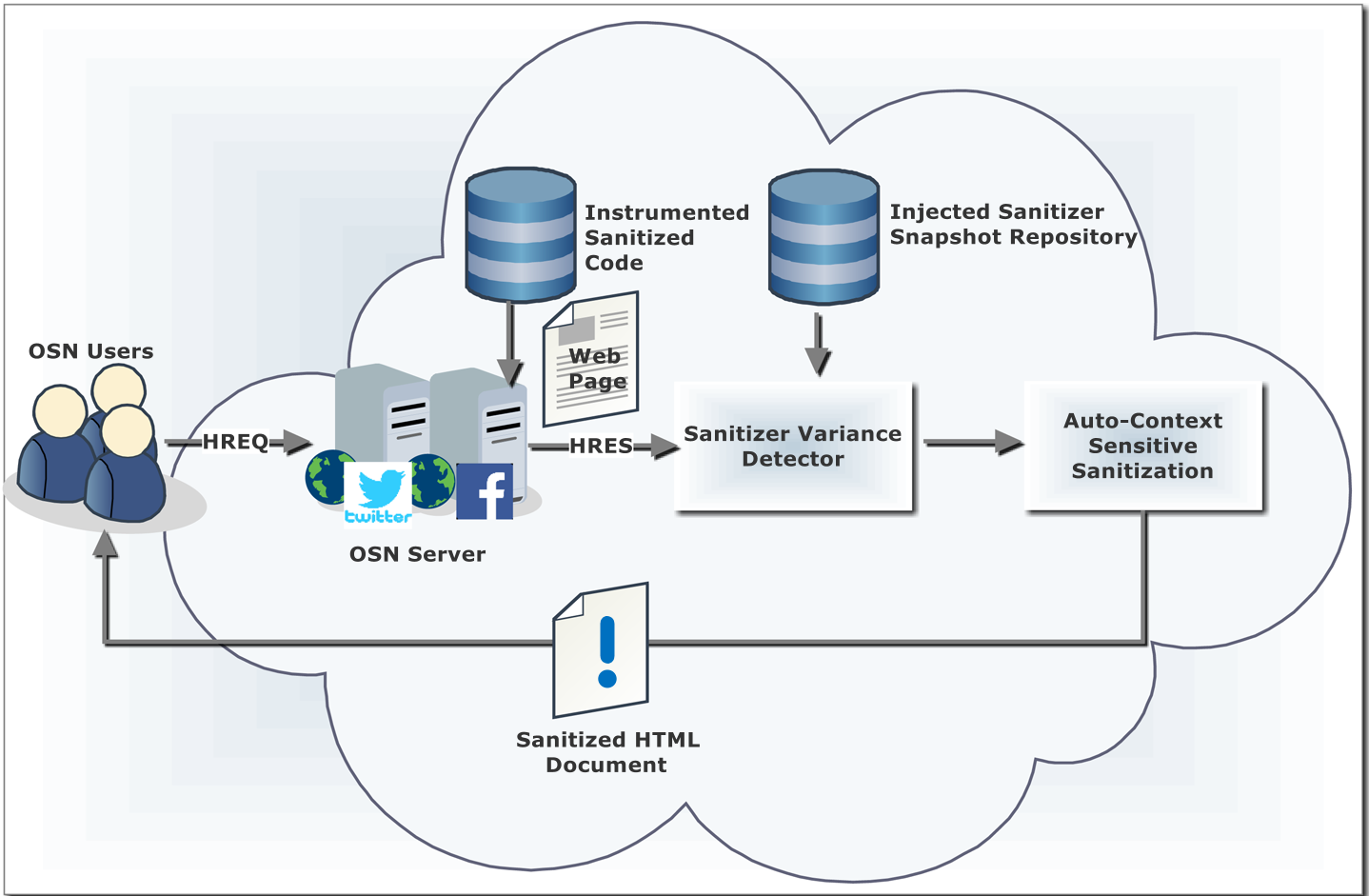 Figure 4: Abstract design view showing the flow from HREQ to the Context-Sensitive Sanitization component.
The Context-Aware Sanitization Logic
The framework categorizes variables into various contexts like REGEX, ATTRNAME, or Quoted URL. For each, it applies specific escaping codes (e.g., replacing < with <).
The Dynamic Parser constructs a DOM tree to determine if untrusted input is being promoted to an executable script node.
Experimental Results & SOTA Comparison
The authors tested XSS-Secure against five non-OSN (e.g., OsCommerce) and five OSN platforms (e.g., Elgg, Drupal).
Performance Highlights:
- High Precision: Successfully detected ~90% of TPs (True Positives).
- F-Measure Excellence: Platforms like Humhub and Joomla saw F-measures as high as 0.970, significantly higher than the standard Google Chrome XSS-Auditor.
- Cloud Efficiency: Response times were lower on cloud platforms (e.g., 1983ms for Humhub) compared to non-cloud environments, thanks to optimized virtualization resources.
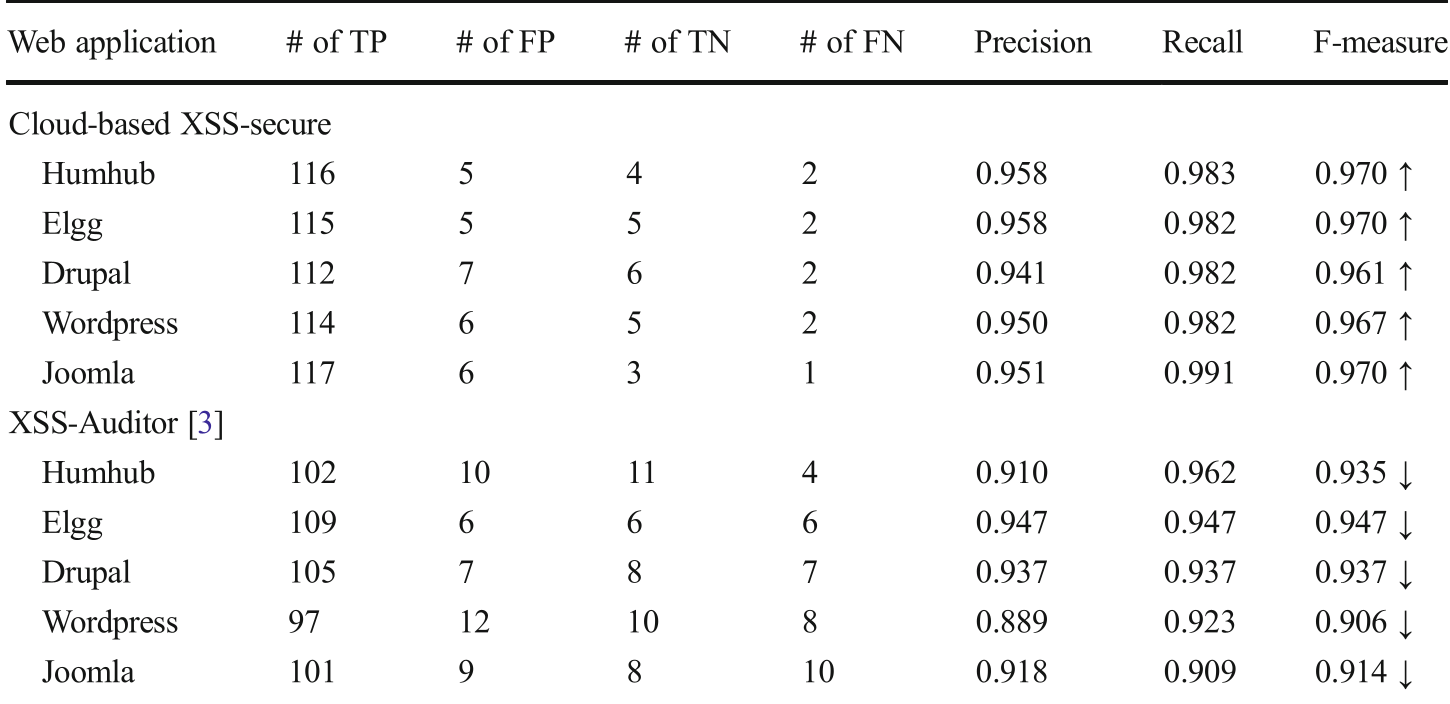 Table 21: Quantitative comparison showing XSS-Secure outperforming XSS-Auditor across all OSN metrics.
Critical Insight & Conclusion
The true value of XSS-Secure lies in its scalability. By deploying as a service within the cloud layer, OSN providers can protect users without requiring them to use specific "secure browsers" or extensions.
Takeaway: The move toward context-aware, snapshot-based security is essential for modern web apps. While the framework handles implementation-related false negatives well, future iterations must account for even more complex, multi-step mutation-based XSS that might evade static snapshots.
Future Work: The authors plan to expand the framework to cover a broader range of attack categories and integrate more diverse real-world OSN platforms for testing.