
Yelp Elite Events: The Hidden Engine of Rating Inflation
13919_Yelp Events Making Bricks Without Clay
Summary
Problem
Method
Results
Takeaways
This paper investigates the impact of "Yelp Elite Events" on local business ratings using a novel analytical tool called YelpEvents. By identifying abnormal spikes in positive reviews linked to these exclusive social events, the study demonstrates a significant, albeit short-term, inflation in business ratings.
## TL;DR
Have you ever noticed a sudden surge of 5-star reviews for a local restaurant, only to find the actual experience mediocre? This paper uncovers a systematic driver of this phenomenon: **Yelp Elite Events**. By correlating event data with review timestamps, the authors prove that these platform-organized social gatherings lead to an artificial, short-term spike in business ratings (average +0.7 stars), creating a "social coercion" effect that biases the platform's reliability.
## The Motivation: When Reviews Aren't Organic
Online reputation systems are the lifeblood of local commerce. However, the academic community has long been locked in a "cat-and-mouse" game with fake review at scale. Most current literature focuses on malicious actors—bots or paid "click farms."
This paper takes a different, more nuanced path. It investigates "Platform-Internal Bias." Yelp rewards its most active users with **Elite Status**, granting them access to exclusive, free events hosted by local businesses. The authors' insight is simple but powerful: If a business provides free food and a VIP experience to a group of influential reviewers, is the resulting 5-star review truly objective, or is it a form of social reciprocity?
## Methodology: The YelpEvents Framework
To prove this correlation, the authors built **YelpEvents**, a sophisticated data pipeline consisting of a scraper, a processor, and an analyzer.
### 1. Detecting "Bursts"
The core of the methodology revolves around **Burstiness**. The authors define an abnormal review frequency by looking at the concentration of positive reviews within a short window following a publicized event.
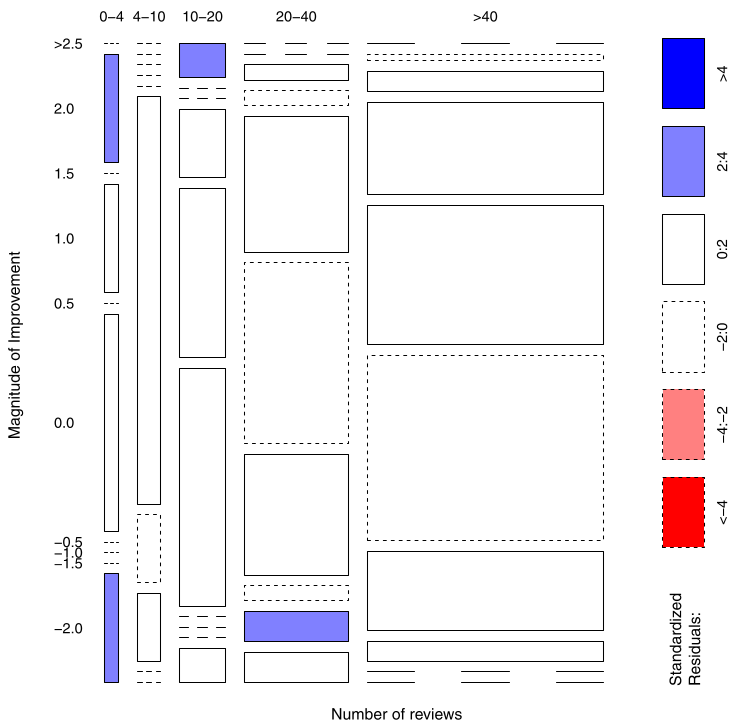
*Figure 1: The YelpEvents architecture, showcasing how event data is merged with user review history.*
### 2. The Statistical Smoking Gun
The authors applied the **Chi-squared test ($\chi^2$)** to determine the independence between the "Event" and the "Rating." By comparing the observed distribution of Elite reviews against a baseline of regular reviews, they found a high level of significance ($p < 0.00001$). This confirms that the ratings weren't just high; they were *abnormally* high compared to the business's standard performance.
## Experiments & Results: The "Elite Power"
The dataset was massive: **101,000 users**, **18,000 businesses**, and **1.4 million reviews** across 60 major U.S. cities.
### Key Findings:
* **Immediate Inflation**: Businesses saw an average rating increase of **0.7 stars** during the "Elite week."
* **The 25% Rule**: Roughly 25% of all businesses hosting Elite events showed statistically significant "abnormal" rating spikes.
* **Short-term vs. Long-term**: The good news for consumers is that this effect is transient. After the event "buzz" dies down, regular users tend to pull the rating back toward its true mean.
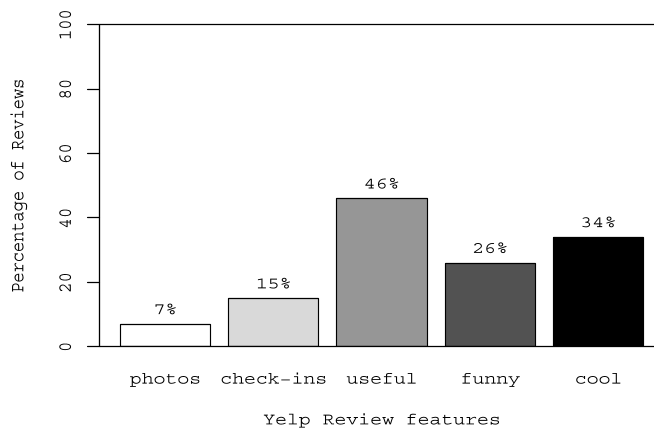
*Figure 2: Distribution showing the density of reviews and the distinct "burst" patterns identified by the YelpEvents tool.*
## Critical Insights: Is Yelp Compromising Its Own Value?
The most profound takeaway from this work is the critique of **incentive design**. By creating the Elite program, Yelp has fostered a community of "super-reviewers" who are socially incentivized to be positive to maintain their status and access to perks.
### Limitations
While the study is robust, it primarily uses a **stratified sampling** approach (via Zipf's law) which might over-represent certain urban centers. Furthermore, it assumes that all spikes following an event are causative, though the correlation found is remarkably strong.
## Conclusion
This research provides a necessary lens for understanding the "Social Bias" in AI and data mining. Algorithms that aggregate ratings must begin to treat "Elite" reviews differently—perhaps by weighting them less during high-frequency bursts. For the average user, the takeaway is clear: **be wary of the "Elite" badge during the week a business hosts a party.**
### Takeaway for Researchers
* **Inductive Bias**: Use temporal features to weight reviews.
* **Future Work**: Investigating if these Elite events lead to a long-term "halo effect" that discourages negative reviews from regular users.