
Beyond Keywords: Leveraging the Reviewer Social Network for YouTube Recommendations
A Recommender System for Youtube Based on its Network of Reviewers
The paper introduces the YouTube Recommender Network (YRN), a graph-based recommendation system that links videos based on the co-occurrence of reviewers. By leveraging complex network analysis, YRN achieves SOTA diversity in recommendations compared to traditional text-based or profile-matching methods.
TL;DR
Researchers have moved beyond simple text-matching to propose the YouTube Recommender Network (YRN). By mapping videos as nodes and shared commenters as links, this system captures the "wisdom of the crowd" to suggest videos that are socially relevant and highly diverse, bypassing the limitations of static tags and sparse user profiles.
The Problem: The "Tag Silo" Limitation
Most recommendation engines function on a basic premise: if you watch a video with the tag "Classical Music," you must want more "Classical Music." This creates a filter bubble.
The authors argue that this metadata-driven approach is fundamentally flawed because:
- Tags are static and non-standardized: They don't capture evolving user interests.
- Profiling is intrusive: Many users opt out of creating profiles, leaving traditional collaborative filtering blind.
- Missing Latent Links: A user who likes classical music might also enjoy specific physics lectures or woodworking, but there is no "textual" bridge between these topics.
Methodology: Building the YRN
The core innovation lies in the construction of the YouTube Recommender Network (YRN). Instead of looking at what a video is (tags), they look at who interacts with it.
- Nodes: Individual YouTube videos.
- Edges: An edge is formed between two videos if at least one user has commented on both.
- Weight: The more unique users that comment on both videos, the stronger the connection.
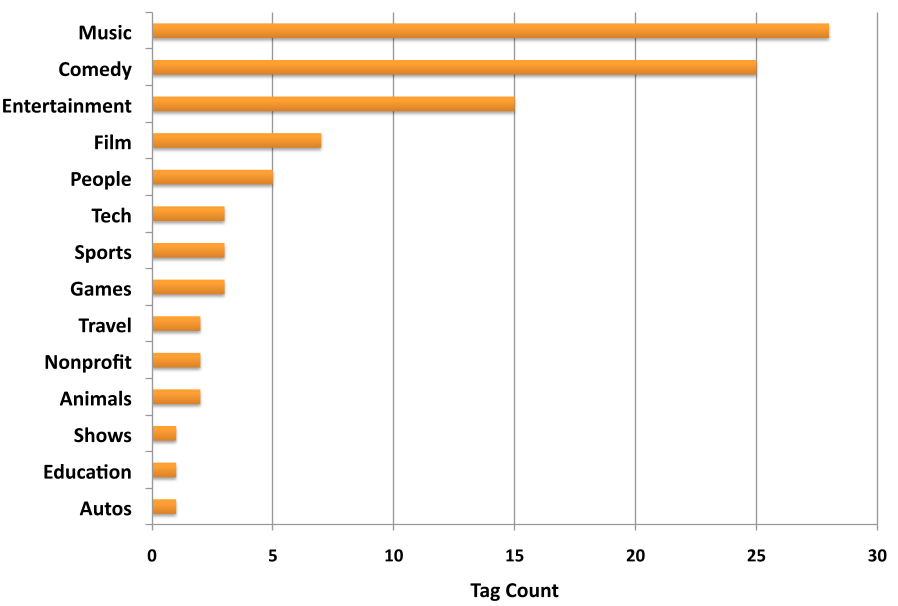 Fig 1. The YRN follows a power-law distribution (λ=2.3), proving it is a Scale-Free network where a few "Hub" videos act as central connectors.
The Two-Tier Recommendation Strategy
- Global Recommendation (The Hub Approach): The system calculates a Utility Value based on a node's degree. High-degree nodes are "hubs" that attract diverse audiences, making them safe and popular global recommendations.
- Local Recommendation (The Neighborhood Approach): When a user watches a specific video, the system looks at its immediate neighbors in the graph. By ranking these neighbors by edge weight (shared reviewers), the system provides contextually relevant but diverse suggestions.
Experiments & Results
The study analyzed the YRN properties and found a Small-World effect (average path length of 2.61), meaning users are never more than ~3 clicks away from highly relevant but structurally distant content.
Community Diversity
Using the Clique-Percolation Algorithm, the researchers identified clusters of videos. Crucially, they found that these communities were highly diverse in terms of tags. A single "commenter community" might contain a dozen different tags, proving that users associate these videos even if the uploaders did not.
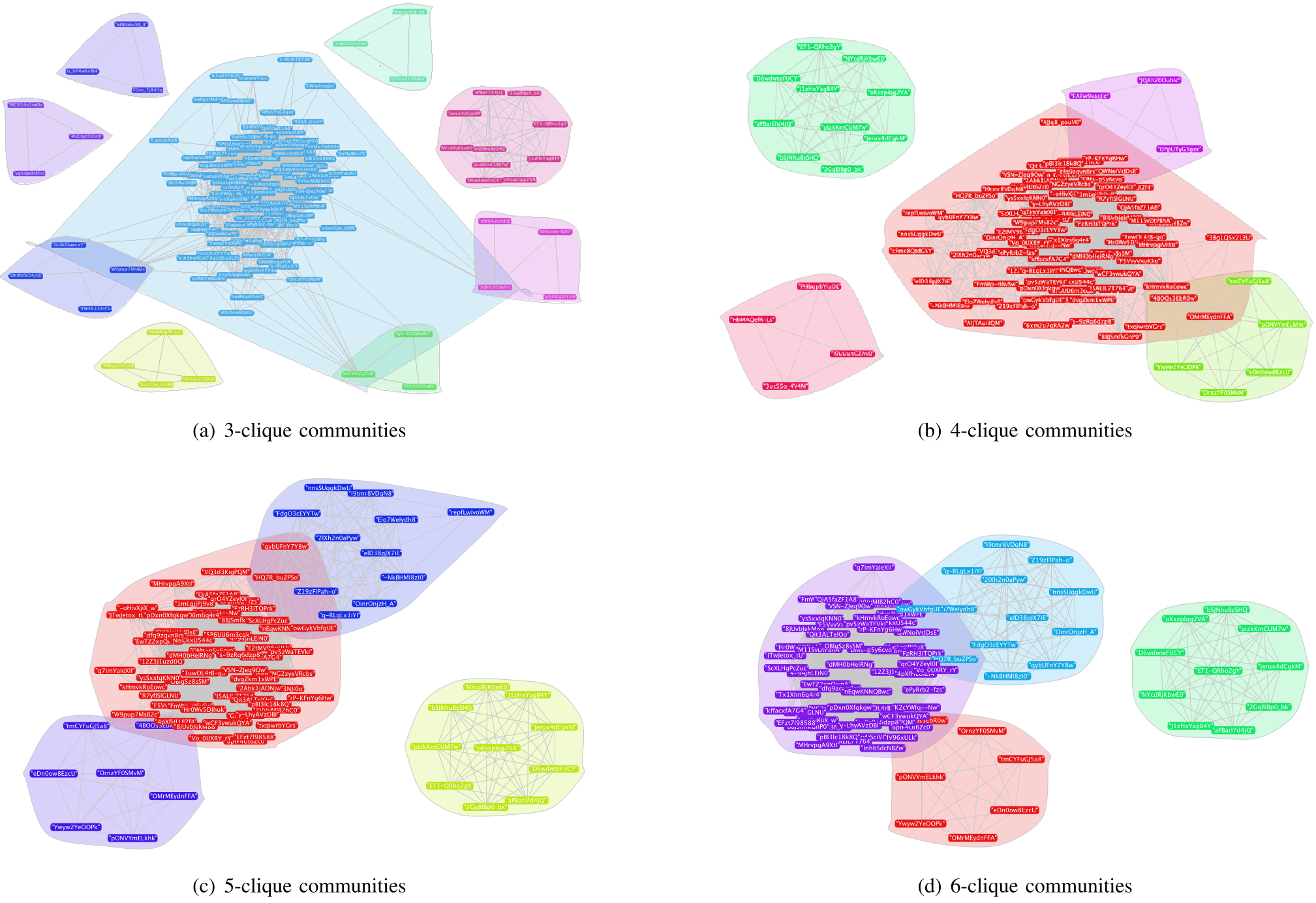 Fig 2. Communities identified through overlapping cliques (3 ≤ k ≤ 6), showing dense interaction pockets.
Utility vs. Popularity
The researchers compared their YRN Utility ranking against YouTube's native metrics (Most Viewed, Top Rated). Interestingly, the YRN Rank 1 video ("Charlie bit my finger") was not necessarily the #1 in all other categories, suggesting the YRN captures a unique dimension of "Social Connectivity" that traditional view counts miss.
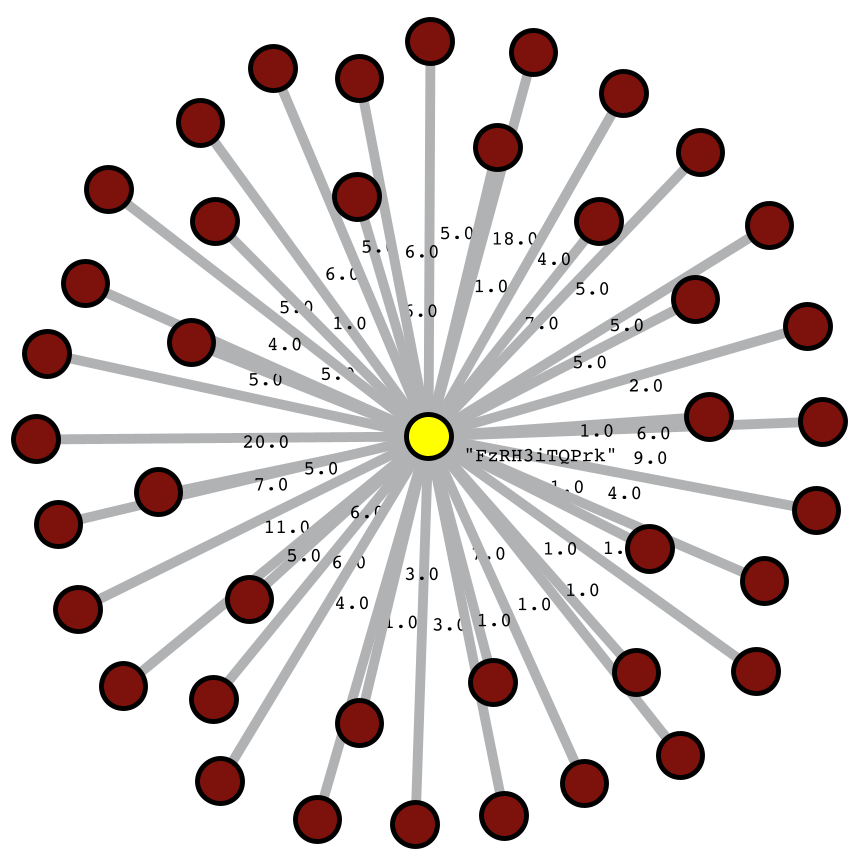 Fig 3. A local subgraph showing how a single video (yellow) is linked to a diverse ecosystem of related content through shared reviewers.
Critical Analysis & Conclusion
The Takeaway: The YRN proves that social behavior (commenting) is a more robust indicator of content relation than textual metadata. It allows for serendipitous discovery—finding the "unobvious" link between two topics.
Limitations:
- Data Sparsity: The YouTube API limited the study to 25 comments per video, likely underrepresenting the true density of the network.
- Cold Start: New videos without comments cannot be integrated into the YRN until a social footprint is established.
Future Work: The authors aim to scale this to datasets involving millions of videos (like the Cha et al. dataset) and develop automated metrics to measure "recommendation satisfaction" without relying on subjective user surveys.