
This systematic literature review analyzes 88 publications to define and evaluate Foundation-Model-Based Industrial Agents. It establishes a working definition bridging conventional automation standards with the FM paradigm, revealing that most current systems operate at TRL 4–6 and achieve SOTA improvements in human interaction (+37%) and uncertainty handling (+35%) compared to traditional rule-based agents.
Executive Summary
TL;DR: The industrial world is moving away from rigid, rule-based Multi-Agent Systems (MAS) toward flexible, Foundation-Model-Based (FM-based) agents. This systematic review of 88 papers reveals that while these new agents are far better at talking to humans and handling messy data, they currently struggle with the hard negotiation and deterministic planning that defined the previous generation of automation.
Positioning: This is a landmark meta-analysis that provides the first "Unified Working Definition" for industrial FM-agents, positioning itself as the bridge between classical VDI/VDE automation standards and the modern generative AI explosion.
The "Intelligence" vs. "Reliability" Paradox
For decades, industrial agents were essentially complex "if-then" machines. They were great at Negotiation (using protocols like the Contract Net Protocol) but terrible at understanding a human operator's frustrated maintenance log.
The authors identify a massive functional shift:
- Pro: New FM-agents show a +35% increase in dealing with uncertainty.
- Con: They show a -39% drop in negotiation capabilities.
The "Why" is simple: FMs trade the mathematical certainty of symbolic logic for the probabilistic flexibility of neural networks. This makes them excellent assistants but risky controllers.
Methodology: What Makes an "Industrial Agent"?
The authors propose a rigorous three-part test for any system claiming to be an FM-based industrial agent:
- Industrial Context: It must act within an industrial system (factory, grid, supply chain).
- Autonomous Action: It cannot just "chat." It must select and execute actions (e.g., calling an API to slow down a conveyor belt).
- Foundation Model Core: The FM must be the "brain" responsible for interpreting context and planning the next move.
The Architecture of Autonomy
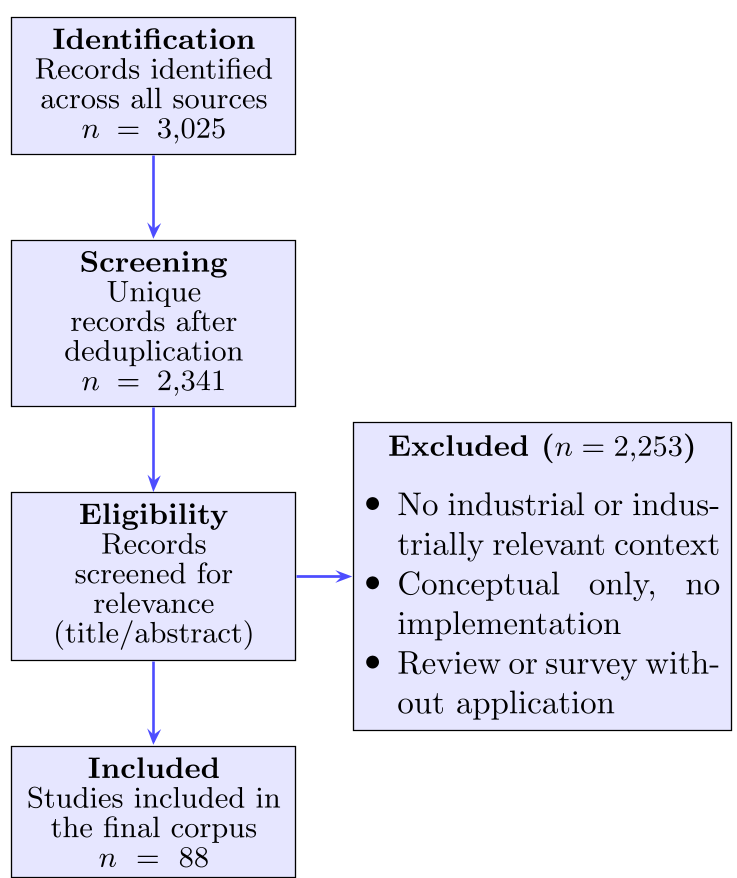 The PRISMA workflow used to distill the state of the art from over 2,000 potential studies.
Key Results: Where Are We Now?
The maturity analysis shows we are in the "Prototype Valley."
- 75% of systems are at TRL 4-6 (Lab validation/demonstration).
- Only 9.1% have reached TRL 7-9 (Actual operational deployment).
Capability Shift: LLMs vs. Traditional MAS
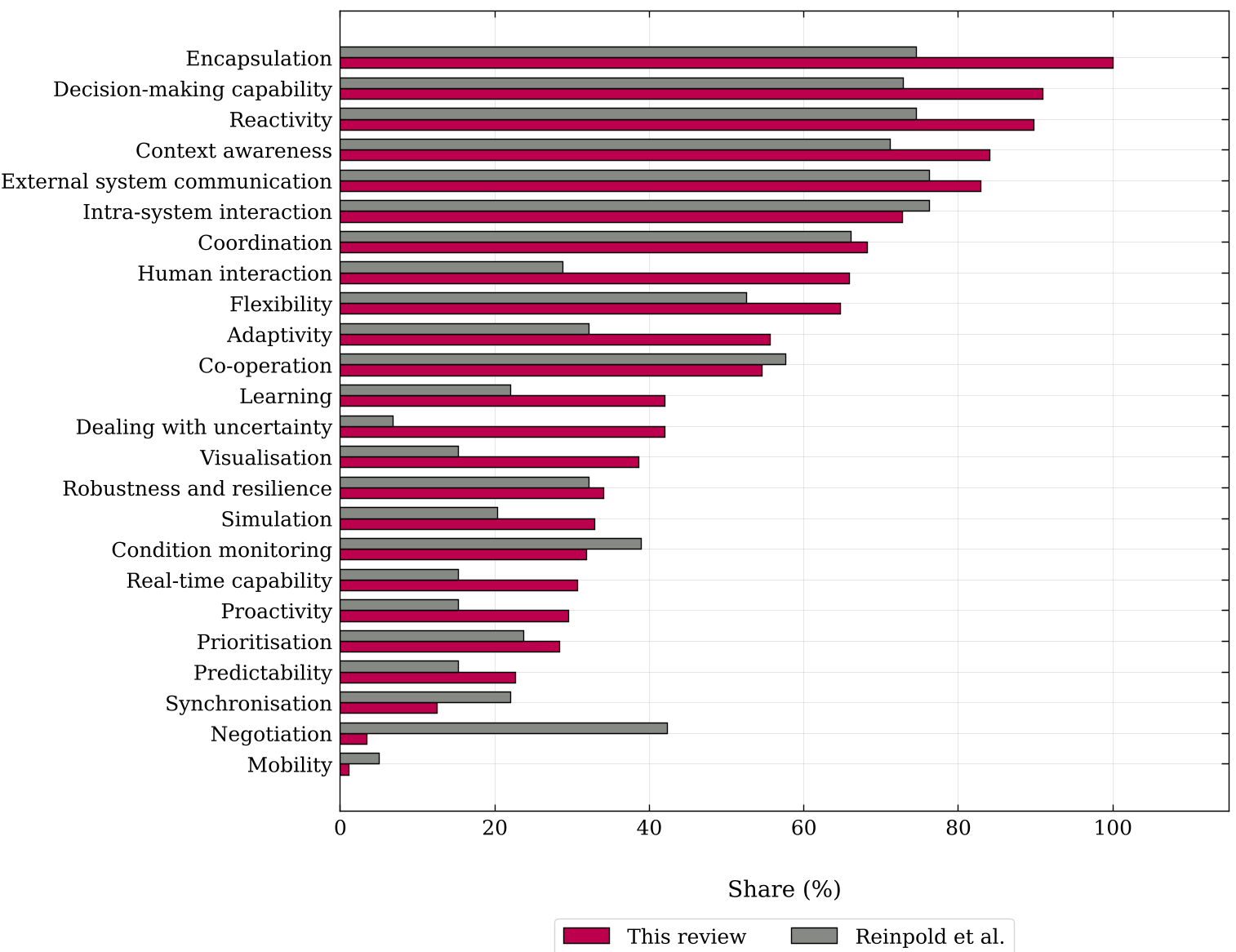 Figure 5: Note the massive spikes in "Human Interaction" and "Learning," contrasted with the drop in "Negotiation."
The data suggests that FM-agents are increasingly being used as Digital Twin (DT) interfaces. Instead of writing SQL queries, an operator asks the agent, "Why is the throughput low?" and the agent uses RAG (Retrieval-Augmented Generation) to query the twin and provide an answer.
The Roadblocks: Hallucinations and Latency
If the technology is so capable, why isn't it running every factory? The review identifies several "industrial-grade" dealbreakers:
- Hallucination & Instability (10.7%): Agents generating non-executable code or "forgetting" safety constraints.
- Latency & Cost (9.43%): In a high-speed production line, waiting 5 seconds for an LLM inference is an eternity.
- Data Scarcity: Unlike general-purpose AI, industrial AI lacks massive open-source datasets of "factory failure modes."
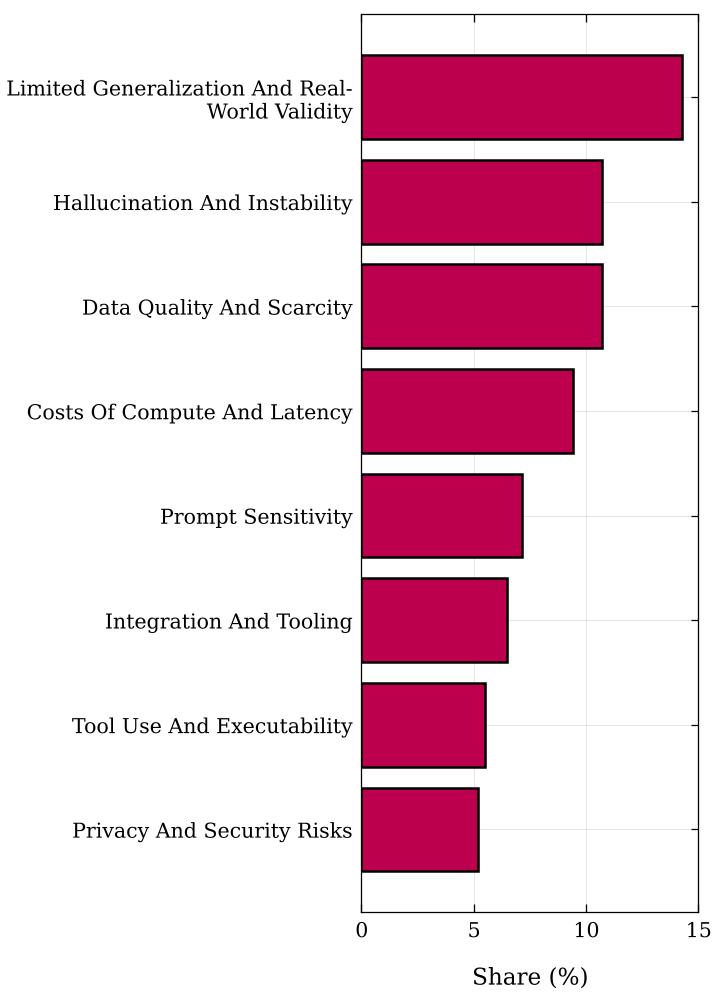 Figure 7: Data and Hallucinations remain the primary barriers to entry.
Critical Insight: Hybrid Is the Future
The authors conclude with a vital insight: We should not replace classical algorithms with FMs. Instead, we need Hybrid Architectures. Let the FM handle the "Interpretive" tasks (talking to humans, understanding manuals) and delegate "Computational" tasks (path planning, scheduling) to established, deterministic domain algorithms.
The "Autonomous Agent" of 2026 won't be a single LLM; it will be an orchestrator that knows when to "think" and when to "calculate."
Takeaway for Practitioners
If you are building industrial AI today, focus on Model Context Protocol (MCP) and Tool-Use. The value isn't in the model's ability to write poetry, but in its ability to reliably translate a human's high-level intent into a low-level, executable, and verified command.