
This paper explicitly constructs the mapping cone Thom form for the de Rham mapping cone cochain complex induced by a smooth closed 2-form. Utilizing the Mathai-Quillen formalism and the Berezin integral of pairs, the author proves the form is closed under mapping cone differentiation and satisfies the fundamental transgression formula.
Executive Summary
TL;DR: Hao Zhuang provides the first explicit analytic construction of the mapping cone Thom form. By synthesizing the Mathai-Quillen formalism with the algebraic structure of the de Rham mapping cone cochain complex, the paper defines a form that is closed and integrates to unity over the fiber, effectively providing the "missing link" for analytic studies in mapping cone Morse theory.
Background: In modern geometry, especially symplectic topology, the mapping cone complex associated with a closed 2-form $\omega$ is a central object for calculating primitive and filtered cohomology. While the topological existence of a Thom isomorphism was known, this paper moves the field into the analytic domain, providing the specific differential forms needed for heat kernel and index theory calculations.
2. Motivation: Why a "Mapping Cone" Thom Form?
The classical Thom form is a fundamental tool in algebraic topology used to represent the cohomology class that is "dual" to the zero section of a vector bundle. However, in the presence of a background 2-form $\omega$ (like a symplectic form), the standard de Rham complex is often replaced by a mapping cone complex.
The pain point here is that the standard Mathai-Quillen construction—which uses superconnections to build a Gaussian-like form—does not natively "see" the $\omega \wedge \beta$ coupling that defines the mapping cone's differential $d^\omega$. To study characteristic classes or Morse theory in this context, we need a Thom form that is compatible with this specific differential.
3. Methodology: Berezin Integrals and Skew-Adjoint Bianchi Identities
The paper defines a Mapping Cone Covariant Derivative $\mathbb{A}$ acting on pairs of forms: $$ (\alpha, \beta) \mapsto ( abla \alpha + \omega \wedge \beta, \Phi \alpha - abla \beta) $$
Core Innovation: The Curvature Pair
The author constructs a pair $\mathcal{A}$, which acts as a "generalized curvature" for the mapping cone. It consists of the norm of the tautological section and terms $Q_{ ilde{\mathbb{A}}}$ and $S_{ ilde{\mathbb{A}}}$ which represent the second-order and first-order curvature components of the mapping cone connection.

The Berezin Integral of Pairs
To collapse the vector bundle information into base manifold forms, the author extends the Berezin integral to pairs. The resulting Thom form $\mathcal{U}$ is an exponential of the curvature $\mathcal{A}$: $$ \mathcal{U} = (- 1) ^ {n (n + 1) / 2} \left(\frac {1}{2 \pi}\right) ^ {n / 2} \int^ {B} e ^ {- \mathcal {A}} $$
This is a beautiful "Gaussian Distribution" on the bundle, where the "variance" is dictated by the connection's curvature and the 2-form $\omega$.
4. Key Results & Theorems
Theorem 1.2: Validity of the Thom Form
The author proves that the constructed pair is $d^\omega$-closed. The verification of the integration along the fiber is the crucial test: $$ \int_{E/M} \mathcal{U} = (1, 0) $$ This result confirms that the construction successfully captures the topological property of the Thom class within the specific algebraic structure of the mapping cone.
Theorem 1.3: Transgression and Independence
The paper shows that the Thom form is robust. If one changes the connection $
abla_t$ or the endomorphism $\Phi_t$, the resulting forms are related by a "transgression formula":
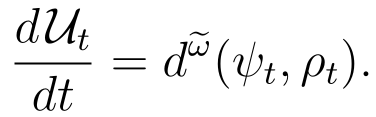 This ensures that the Mapping Cone Thom Class is a well-defined topological invariant, independent of the specific geometric choices (metric/connection) used to represent it.
5. Critical Insight: The Connection to Morse-Bott Theory
In the conclusion, Zhuang provides a profound insight: in mapping cone Morse theory, the zeros of a vector field behave more like isolated circles than isolated points. This explains why the mapping cone complex is intrinsically linked to Morse-Bott theory (where critical points are manifolds rather than points).
Limitations and Future Work
- Dimensional Constraints: The current construction focuses on the case where the Euclidean connection and the endomorphism $\Phi$ are skew-adjoint.
- Application: The immediate next step is applying this Thom form to the "Instanton construction" of the mapping cone Thom-Smale complex, which would bridge the gap between analytic geometry and dynamical systems.
Conclusion
Hao Zhuang's work is a rigorous piece of mathematical engineering. By explicitly writing down the Thom form for mapping cones, he has provided the necessary instrumentation for the next generation of researchers to explore the depths of Symplectic Morse Theory and refined gauge theory functionals.
If you are interested in the intersection of Berezin integrals and de Rham cohomology, this paper provides a Masterclass in how to extend classical results to modern topological structures.