
This paper proposes a mapping between the Transformer architecture and the cortical column, treating the laminar microcircuit as a functional "module" that implements context-dependent multiplicative routing. It moves beyond simple layer-to-layer analogies to position the biological column as a substrate for Multi-Head Attention, achieving SOTA-level conceptual alignment between AI and systems neuroscience.
TL;DR
For decades, the "layer" in deep learning was a crude abstraction of the brain's cortex. This paper argues that the Transformer architecture, specifically its Multi-Head Attention mechanism, provides a remarkably precise blueprint for the laminated microcircuitry of the cortical column. By mapping Queries, Keys, and Values onto specific cortical layers (L2/3, L4, L5), the authors suggest that the brain doesn't just process signals—it dynamically routes them using the same mathematical motifs that power GPT-4.
Perspective Shift: Beyond Homogeneous Layers
In standard Deep Learning, a "layer" is a uniform slab of identical units. In biology, the neocortex is a highly structured 6-layered apparatus. Previous models (like CNNs) largely ignored this vertical complexity.
The authors argue that this was a mistake. They propose that the Cortical Column—the vertical unit of the brain—is a self-contained Transformer Module. This module doesn't just "detect" a feature; it uses context (from other columns and top-down feedback) to decide which information is currently relevant, effectively performing a dot-product attention operation in real-time.
Methodology: The Laminar Mapping
The core of the paper is a detailed "walkthrough" of how the equations of a Transformer block might be physically instantiated in the brain's "hardware":
- Input Embedding (Thalamic Drive): Sensory signals from the Thalamus hit Layer 4 (L4). This provides the "Values" (V)—the raw content available for routing.
- Queries & Keys (L2/3 and L5): The "routing instructions" come from horizontal connections (lateral context) and feedback from higher areas. These act as the Queries (Q) and Keys (K).
- The Multiplicative Gate (Dendritic Integration): How does the brain "multiply" Q and K? The authors point to apical dendrites of L5 pyramidal neurons. These act as biophysical coincidence detectors: when top-down "Queries" meet bottom-up "Keys," the neuron fires a burst, "gating" the signal through.
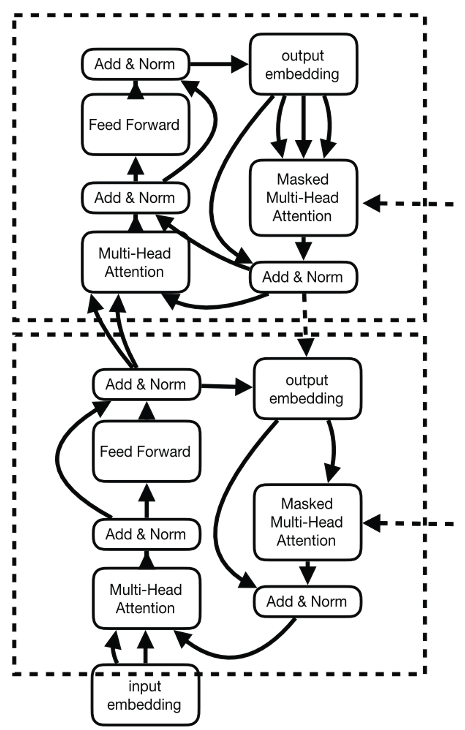 Figure 1: The mapping of Transformer components (Q, K, V) onto the biological circuitry of the cortical column.
Why Stacking and Recurrence Matter
Unlike the static "forward pass" of an AI Transformer, the brain is recurrent. The authors suggest that Neural Oscillations (brain waves) provide the "Temporal Scaffolding" to discretize this continuous flow:
- Gamma (30-80 Hz): Associated with the Encoder (L2/3), processing feedforward sensory "packets."
- Alpha/Beta (8-30 Hz): Associated with the Decoder (L5), carrying top-down predictions and contextual constraints.
This spectral segregation prevents "signal interference" between what we see (bottom-up) and what we expect to see (top-down), a biological solution to the autoregressive masking problem in AI.
Experimental Evidence & SOTA Comparison
The paper cites "functional scatter"—the fact that neurons in the same column often have slightly different response properties—as evidence for Multi-Head Attention. In AI, different "heads" attend to different relationships (e.g., syntax vs. semantics). In the brain, these heads allow a single column to participate in multiple parallel routing schemes simultaneously.
 Table: Specific, testable predictions arising from the Transformer-Brain mapping.
Crucial Insights:
- Softmax via Inhibition: Competitive normalization (Softmax) is implemented by local inhibitory interneurons (Parvalbumin-positive cells) that enforce a "winner-take-all" dynamic.
- Learning: Instead of global backpropagation, the brain uses Burst-Dependent Plasticity, where the coincidence of apical and basal inputs (Q meets K) strengthens the routing policy locally.
Deep Insight & Conclusion
This paper represents a "convergence" moment. It suggests that the success of Transformers in AI isn't just an engineering fluke but a rediscovery of the fundamental computational principle of the mammalian cortex: Context-Dependent Multiplicative Routing.
Limitations: The authors admit this is a "structured hypothesis." Real brains have neuromodulators (Dopamine, etc.) and subcortical structures (Basal Ganglia) that act as "global gates," which aren't fully captured by current Transformer blocks.
Takeaway: If the brain is indeed a "Biological Transformer," our next generation of AI may move away from massive matrices and toward "Laminar Architectures" that use oscillation-like dynamics to handle context more efficiently.