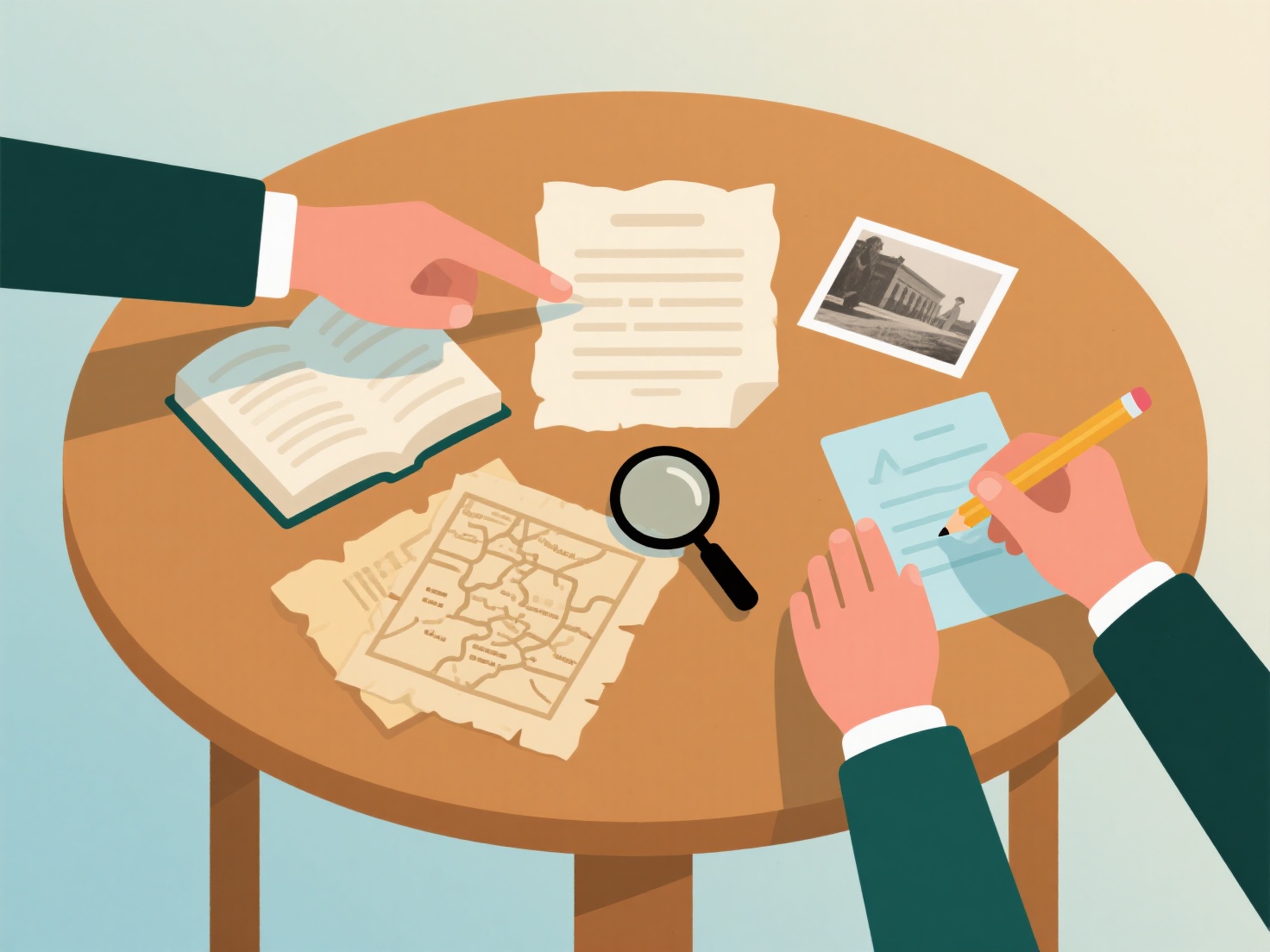
To collaborate on primary sources effectively, establish a centralized digital repository where your team can jointly store, annotate, and analyze original documents using a standardized framework.
Working with primary sources—such as historical documents, interview transcripts, or raw research data—presents unique challenges for collaborative research. Because these materials require deep reading and careful interpretation, keeping your team aligned is crucial to avoid duplicated efforts, lost files, or conflicting analyses.
1. Centralize Your Archival Research
The foundation of any joint project is a single source of truth. Avoid scattering PDFs, scanned manuscripts, and raw data across messy email threads or disjointed cloud folders. Instead, establish a shared digital workspace. If you are working with textual documents, WisPaper’s My Library acts as a Zotero-style manager where you can organize your uploaded primary sources and even use AI to chat directly with your own documents to quickly locate shared themes.
2. Create a Shared Annotation System
When multiple researchers are reading the same historical texts or qualitative data, you need a unified way to take notes. Develop a standardized coding system or tagging framework before you begin. Agree on specific color codes for highlighting (e.g., yellow for key events, blue for author biases) and create a shared glossary of tags so everyone categorizes information consistently.
3. Divide the Analytical Workload
Primary source analysis is incredibly time-consuming. To maximize efficiency, divide the workload based on your team’s strengths or the structure of the archives. You might assign team members to specific time periods, particular authors, or distinct thematic elements within the documents. Ensure everyone has clear objectives for what data or quotes they need to extract from their assigned materials.
4. Synthesize and Verify Findings
Collaboration doesn't end at the reading phase. Schedule regular synthesis meetings to discuss the insights you’ve uncovered from your respective documents. This is the time to cross-reference findings, debate differing interpretations of complex texts, and begin outlining your methodology. Always ensure your group traces its conclusions back to the exact page or paragraph in the original text to maintain academic rigor and prepare for accurate citation.
By organizing your materials in one place, standardizing your notes, and communicating regularly, your team can turn a daunting mountain of primary evidence into a cohesive, well-supported research paper.