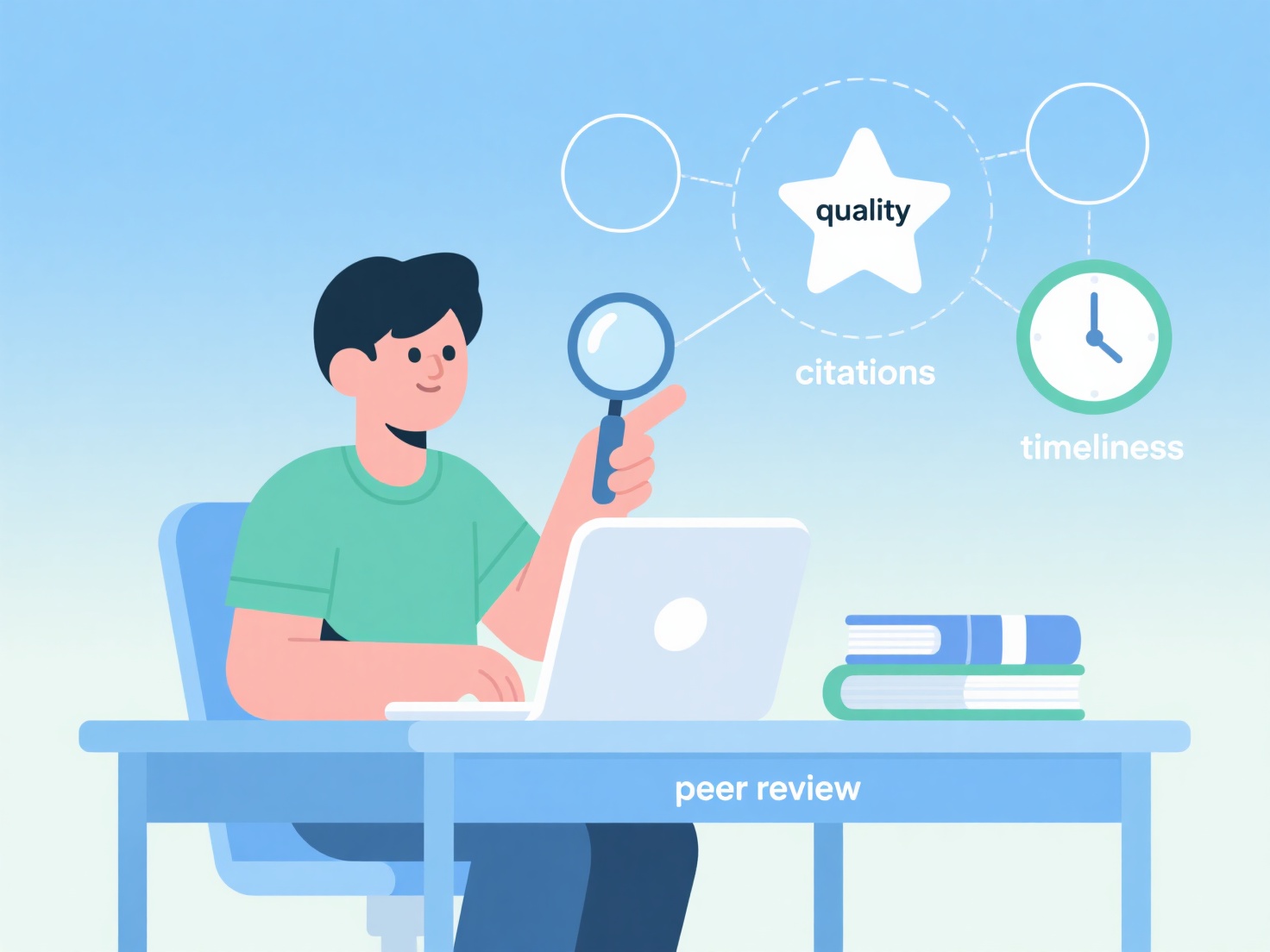
To evaluate journal quality, students should verify the journal's indexing in reputable databases, review its impact metrics, assess its peer-review process, and watch out for warning signs of predatory publishing.
Publishing in or citing from high-quality academic journals is crucial for building a strong foundation for your research. With thousands of publications available, knowing how to separate rigorous academic journals from low-quality ones can save you time and protect your academic credibility.
Here are the most effective ways to evaluate a journal's quality:
1. Check Reputable Indexing Databases
A reliable journal is almost always indexed in major multidisciplinary or subject-specific databases. Look for the journal in recognized academic databases like Web of Science, Scopus, PubMed, or IEEE Xplore. Being indexed in these systems means the journal has met specific quality and publishing standards. If a journal claims to be international but isn't indexed in any recognized academic search engine, it requires closer scrutiny.
2. Understand Journal Metrics
While not the only measure of quality, citation metrics give you a sense of a journal's influence in its field. The most common metric is the Journal Impact Factor (JIF), which calculates the average number of citations its published articles receive. You can also look at the SCImago Journal Rank (SJR) or the journal's h-index. Keep in mind that acceptable metrics vary wildly across different disciplines, so you should only compare a journal's metrics against others within the exact same field of study.
3. Watch Out for Predatory Journals
Predatory journals exploit the open-access model by charging publication fees without providing legitimate peer review or editorial oversight. Red flags to watch out for include unsolicited spam emails asking for paper submissions, promises of guaranteed or impossibly fast publication times, and hidden Article Processing Charges (APCs). You can use resources like the Directory of Open Access Journals (DOAJ) to verify legitimate open-access publications.
4. Evaluate the Editorial Board and Peer Review Process
High-quality journals are completely transparent about their editorial processes. Check the journal's "About" page to ensure they clearly outline a rigorous blind or double-blind peer-review system. Additionally, look at the editorial board—it should consist of recognized experts, active researchers, and professors from established universities in your specific research area.
Evaluating every single journal manually can quickly lead to information overload. When you are actually conducting your literature search, using tools like WisPaper's Scholar Search can help streamline the process by understanding your research intent and filtering out 90% of the noise, ensuring you spend your time reading relevant papers from credible sources rather than sifting through questionable publications.