
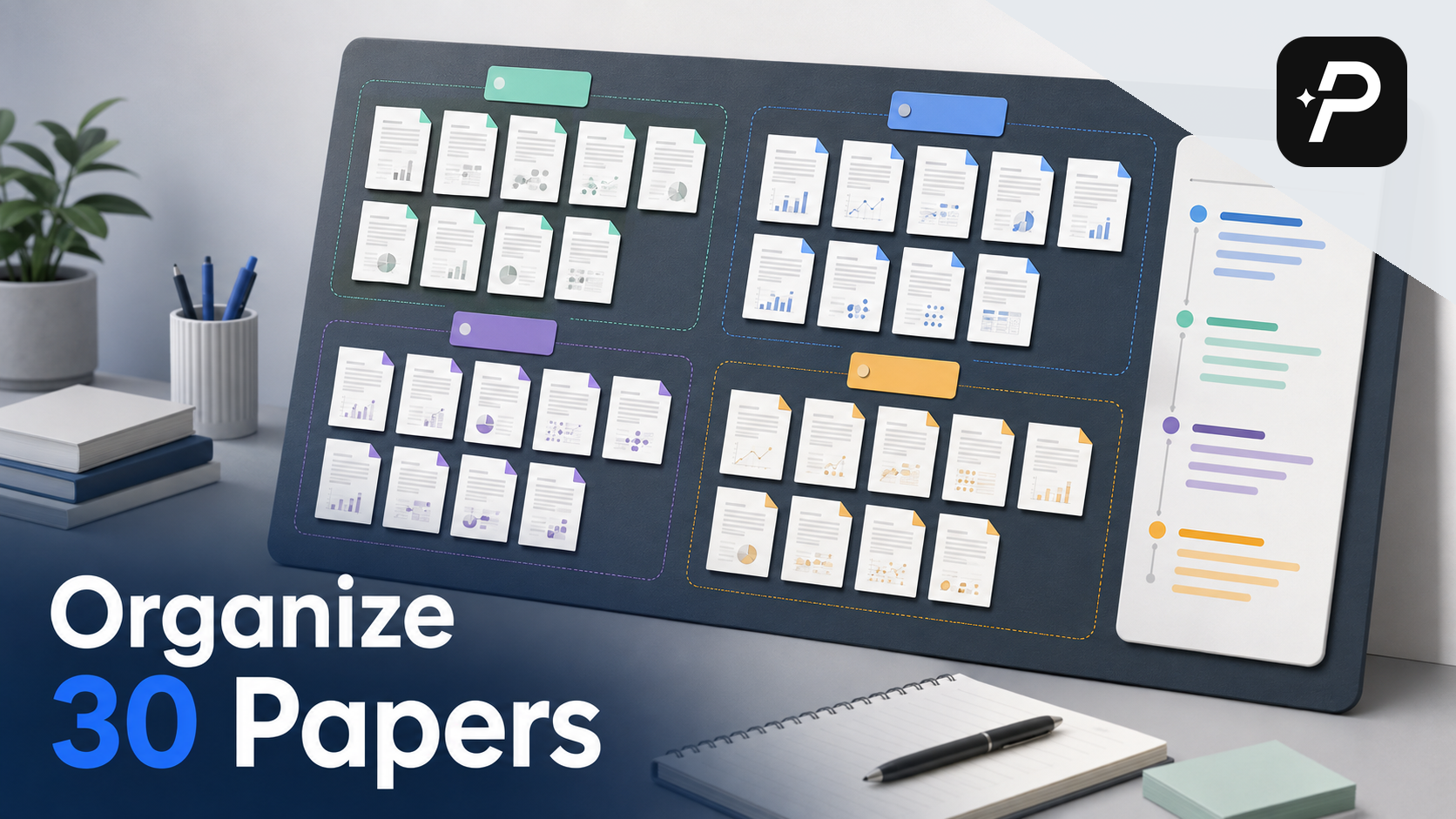
You have 25 papers. They are sitting in a folder, a reference manager, or a stack of PDFs. Your supervisor wants a draft chapter next week, and you have realized the difference between a collection of sources and a literature review. That difference is organization.
Organizing 20-30 papers for a literature review is not the same as collecting 200 papers for a systematic review, and it is not the same as summarizing five key studies. At this scale, you need a workflow that shows you the shape of the field without burying you in detail. This guide walks through a concrete process for turning a pile of PDFs into a structured, argument-driven literature review.
Why 20-30 Papers Changes How You Work
Most undergraduate and master's-level literature reviews require between 20 and 40 sources. A PhD thesis chapter might use more, but the organizing principles stay the same. The number matters because it shapes your strategy.
With 20-30 papers, you cannot read every word of every paper in depth. You also cannot rely on memory to track who argued what. You need a middle path: efficient screening, structured note-taking, and theme development.
This scale also gives you enough papers to identify patterns, contradictions, and gaps. With fewer than ten papers, you are summarizing. With more than 50, you are doing a systematic review. At 20-30, you are synthesizing.
The goal is not organization for its own sake. The goal is to build a map of the scholarly conversation so you can write a review that argues something instead of listing what other people said.
Step 1: Screen Your Papers Before You Organize Them
Before you think about themes or matrices, decide which papers actually belong in the review. Many students skip this step and try to organize everything they downloaded. That is a mistake.
Read the abstract, introduction, and conclusion of each paper. Ask three questions:
- Does this paper directly address my research question?
- Does it represent a key contribution in the field, even if it is older?
- Does it provide context, methodology, or a counterargument that I need?
If a paper fails all three, move it to a "maybe" folder. You can return to it later. For a 20-30 paper review, aim for a working set of 25-35 papers. This gives you room to drop a few after deeper reading.
This screening step is where AI tools can help. WisPaper's Deep Search can take your research question and return relevant academic literature, saving you from manually scanning hundreds of titles. But you still need to apply your own judgment about relevance and quality.
Step 2: Create a Paper Inventory
Once you have your working set, create a master list. This is a single document or spreadsheet where every paper gets a row. Do not skip this step. It is the backbone of your entire organization process.
Your inventory should include:
- Full citation (author, year, title, journal)
- One-sentence summary of the main argument
- Methodology (qualitative, quantitative, theoretical, etc.)
- Key findings or contributions
- How it relates to your research question (supports, contradicts, provides context)
- A code or tag for the theme you think it belongs to
You can build this in Excel, Google Sheets, or a reference manager with notes. The format matters less than the consistency. You are creating a searchable record of your thinking about each paper.
WisPaper's paper cards can help here. They show source labels, summaries, publication details, and preview information, which makes the initial inventory faster. You can then save relevant papers to My Library and add your own notes.
Step 3: Read for Argument, Not Only Content
The biggest mistake students make when organizing papers is reading for content instead of argument. Content is what the paper is about. Argument is what the paper claims and how it proves it.
When you read a paper for your literature review, you are looking for:
- The research question the authors asked
- The gap they identified in previous research
- Their theoretical or conceptual framework
- Their methodology and its limitations
- Their main findings and conclusions
- What they say about future research
This is different from reading to understand a topic. You are reading to position the paper within a conversation. You need to know what the paper says and how it relates to other papers in your set.
This is where a synthesis matrix becomes useful. A synthesis matrix helps you compare papers across common dimensions. You can see how different authors approached similar questions and where they agree or disagree.
Step 4: Group Papers Into Provisional Themes
Now you have your inventory and your notes. The next step is to group papers into themes. This is the step most students find difficult because it feels like you are imposing structure on the literature rather than discovering it.
Start with your research question. What are the major subtopics or debates within your question? Write down five to seven provisional themes. These do not need to be final. They are starting points.
For example, if your research question is about the impact of remote work on team collaboration, your provisional themes might be:
- Communication tools and their effectiveness
- Trust building in virtual teams
- Work-life balance and burnout
- Managerial strategies for remote teams
- Comparison of remote versus in-person collaboration
Now assign each paper in your inventory to one or more themes. Some papers will fit multiple themes. That is fine. You will refine the boundaries later.
If you find that one theme has ten papers and another has two, you need to rebalance. Either your theme is too broad, or you are missing literature. This is a signal to search for more sources or to split the theme.
Step 5: Build a Synthesis Matrix for Your Core Papers
A synthesis matrix is a table where rows are papers and columns are key dimensions of your analysis. The dimensions depend on your research question, but common ones include:
- Research question or objective
- Theoretical framework
- Methodology and sample
- Key findings
- Strengths and limitations
- How the paper relates to your argument
You do not need to put all 30 papers in one matrix. That becomes unmanageable. Instead, build a matrix per theme. For a theme with five to eight papers, a matrix is perfect. For a theme with two papers, you can write a short comparison paragraph instead.
The synthesis matrix is not the final product. It is a thinking tool. It helps you see patterns, contradictions, and gaps. When you write your literature review, you will use the matrix to structure your paragraphs.
If you want a detailed walkthrough of this technique, see our guide on how to build a synthesis matrix for a literature review. It covers the exact columns to use and how to avoid common pitfalls.
Step 6: Move From Themes to an Argument Structure
Themes are not the same as arguments. A thematic organization is a starting point, but your literature review needs to make a point. Your organization should support that point.
After you have grouped papers into themes, ask yourself: What is the story here? What do these papers collectively tell us about the research question? Where do they agree, where do they conflict, and where are the gaps?
This is the step that separates a good literature review from a mediocre one. A mediocre review says, "Theme one has these papers, theme two has these papers." A good review says, "The literature on this topic has evolved from X to Y, but there is a persistent disagreement about Z, and my research addresses that gap."
To move from themes to argument, try writing a one-sentence summary of each theme. Then write a one-sentence summary of how the themes relate to each other. This becomes the skeleton of your literature review chapter.
For example:
- Theme 1: Early studies focused on the technical aspects of remote collaboration tools.
- Theme 2: Later research shifted to social and psychological factors like trust and belonging.
- Theme 3: Recent work examines hybrid models, but findings are mixed.
- Main argument: The literature has moved from a technical to a social focus, but lacks consensus on how hybrid arrangements affect long-term team cohesion.
This argument structure will guide how you order your sections and paragraphs.
Step 7: Use Your Organization to Write
Once you have your themes, your matrix, and your argument structure, you are ready to write. The organization you built should make writing faster and clearer.
For each theme, write a section that:
- Introduces the theme and why it matters
- Discusses the key papers and their contributions
- Compares and contrasts different findings
- Identifies gaps or unresolved questions
- Connects the theme to your main argument
Do not write a paper-by-paper summary. Your reader wants to see the conversation, not a list of participants. Use your synthesis matrix to find points of comparison and contrast.
If you get stuck, return to your matrix. It will remind you of what each paper argued and how it relates to others. This is much easier than trying to remember 30 papers from memory.
Step 8: Manage the Overload With Digital Tools
Organizing 20-30 papers is manageable with a spreadsheet and careful reading. But digital tools can make the process faster and more reliable.
WisPaper's Library QA is useful when you have saved papers to My Library. You can ask questions about the papers in your library and get answers based on the actual content. This is helpful when you need to verify a claim or compare findings across multiple papers.
The Inspiration Discovery feature can help when your topic is too broad or too narrow. It surfaces related angles you might not have considered. This can be useful when you are stuck on how to frame your themes.
However, be careful not to outsource your thinking. AI tools are assistants, not replacements. You still need to make the judgment calls about which papers matter and how they relate.
For a more detailed discussion of avoiding overload, see our guide on how to avoid source overload in a literature review. It covers practical strategies for keeping your scope manageable.
Step 9: Prepare for Your Supervisor Meeting
Your organization work helps with writing and with talking about your research. Supervisors want to see that you understand the literature, rather than only that you have read it.
Before your next supervisor meeting, prepare a one-page summary of your organization. Include:
- Your research question
- Your provisional themes
- The key papers in each theme
- The main debates or gaps you have identified
- Your proposed argument structure
This shows your supervisor that you have moved from collecting to synthesizing. It also gives them something concrete to respond to. They can point out missing literature, suggest different groupings, or challenge your argument.
If you want a structured workflow for this, see our guide on how to prepare for a supervisor meeting with an AI literature review workflow. It walks through a step-by-step process from search to meeting prep.
Step 10: Iterate and Refine Your Organization
Organizing papers is not a one-time task. It is an iterative process. As you write, you will discover that some themes do not work, some papers do not fit, and some arguments need more support.
Plan to revisit your organization at least twice during the writing process. The first pass is before you start writing. The second pass is after you have a draft of one or two sections. A third pass after receiving feedback from your supervisor is also common.
When you revise your organization, do not feel like you failed. This is normal. The literature is complex, and your understanding deepens as you write. The organization is a tool, not a commitment.
If you find that your themes are too shallow or that you are just describing papers without synthesizing, see our guide on thematic synthesis with AI: how to avoid shallow themes. It addresses the specific problem of surface-level organization.
FAQs
Keep Reading
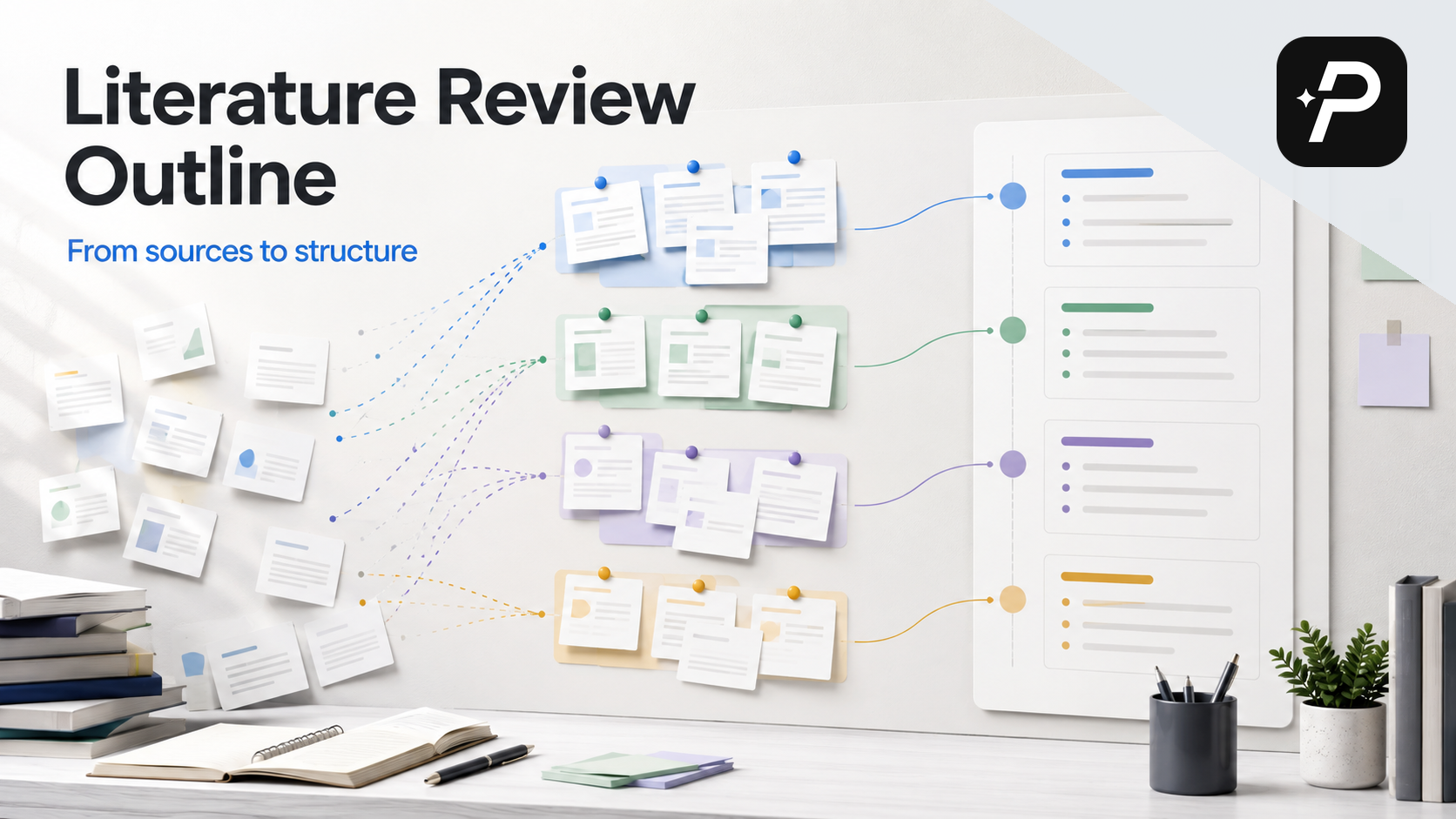
How to Build a Literature Review Outline From Your Sources
A literature review outline is supposed to make writing easier. Instead, many students find themselves stuck at the outline stage itself, staring at dozens of highlighted papers and wondering how to turn them into someth
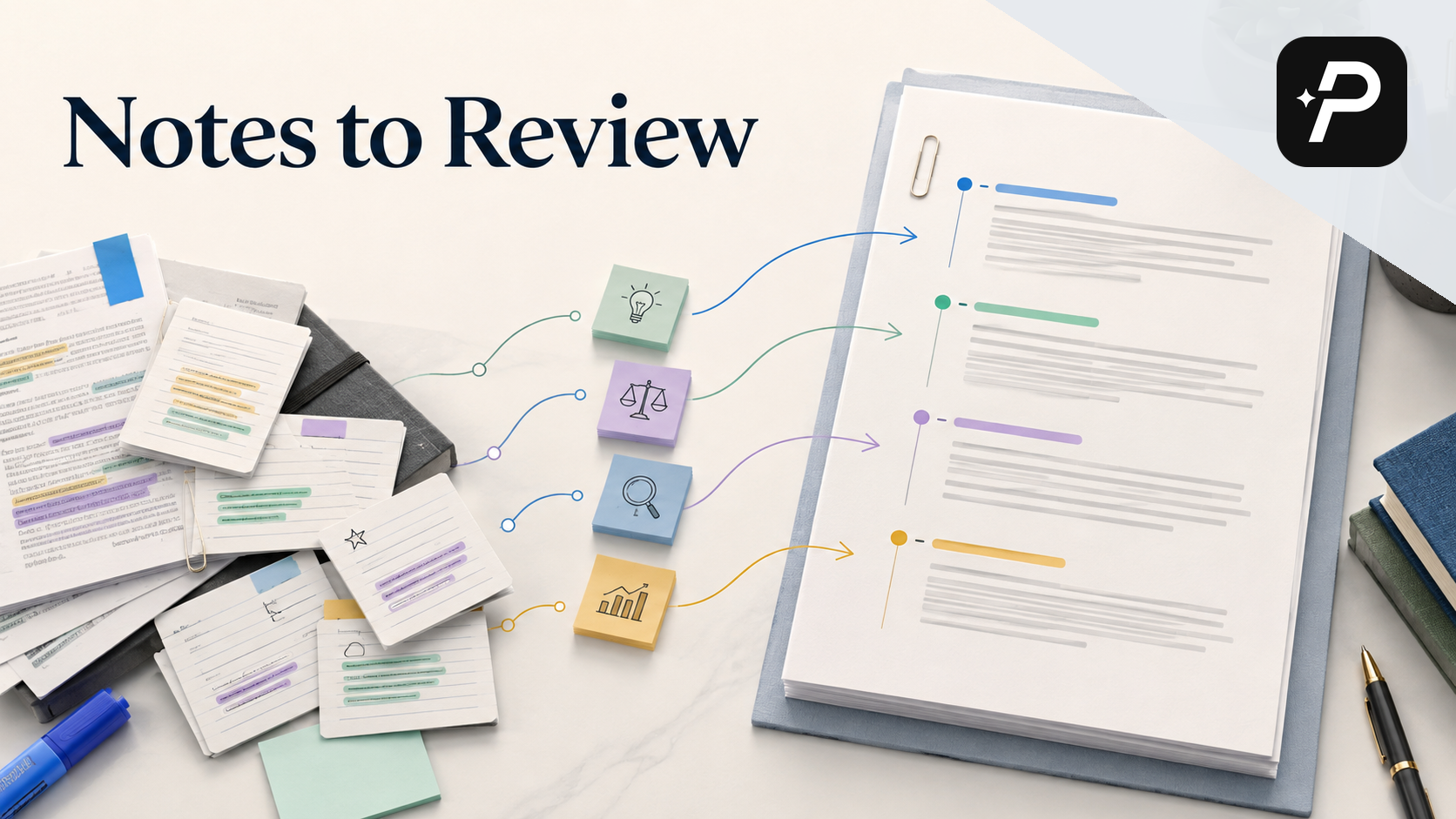
How to Turn Research Notes Into a Literature Review
You have read twenty papers. You have highlighted key passages, jotted down definitions, and copied quotes into a document. Now you are staring at a blank page, wondering how to turn research notes into a literature revi
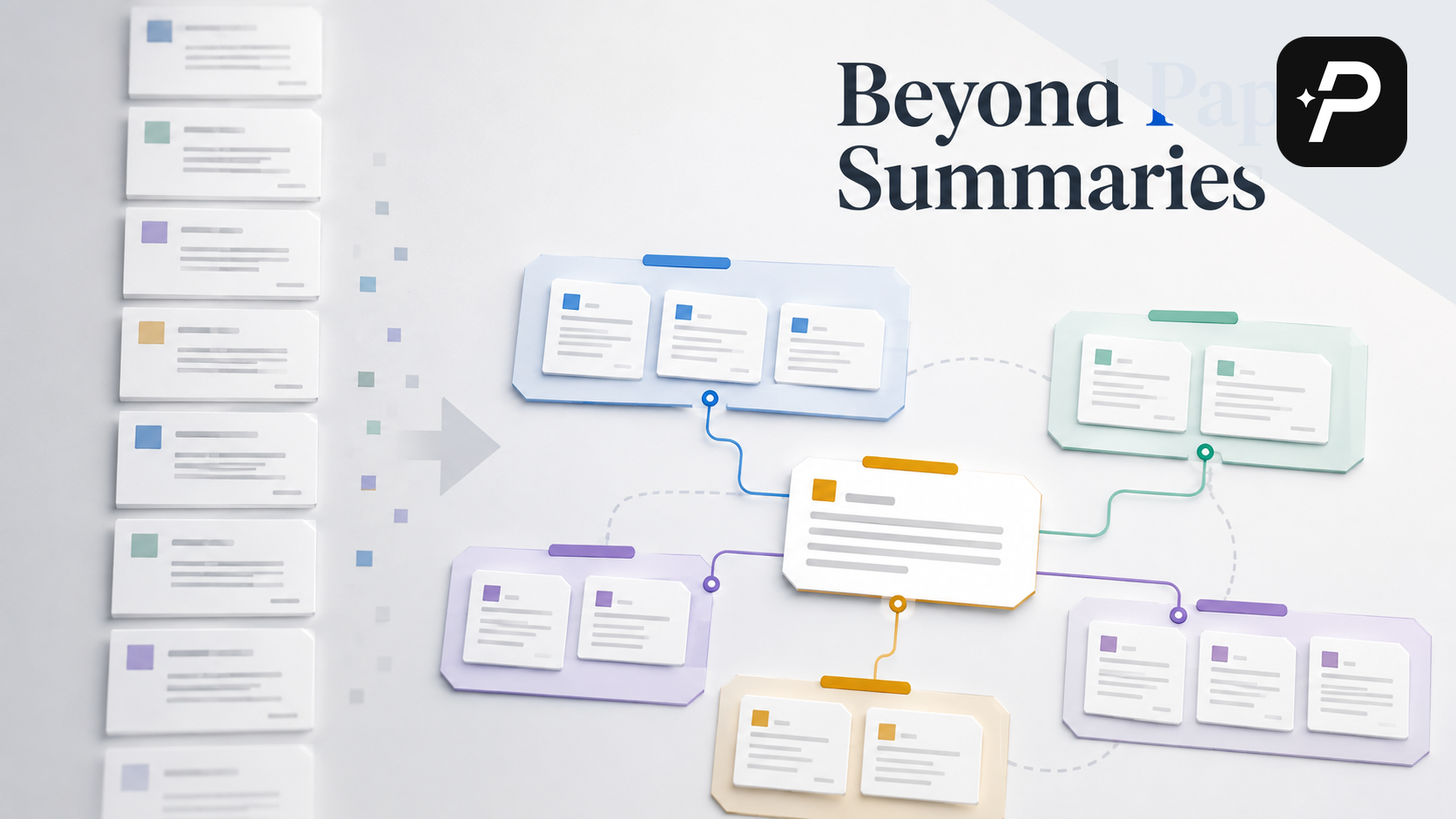
Why Your Literature Review Feels Like a List of Paper Summaries
You have read the papers. You have taken notes. And now your literature review draft reads like a sequence of book reports: "Smith (2021) found that... Jones (2022) argued that... Patel (2023) concluded that..." If this