
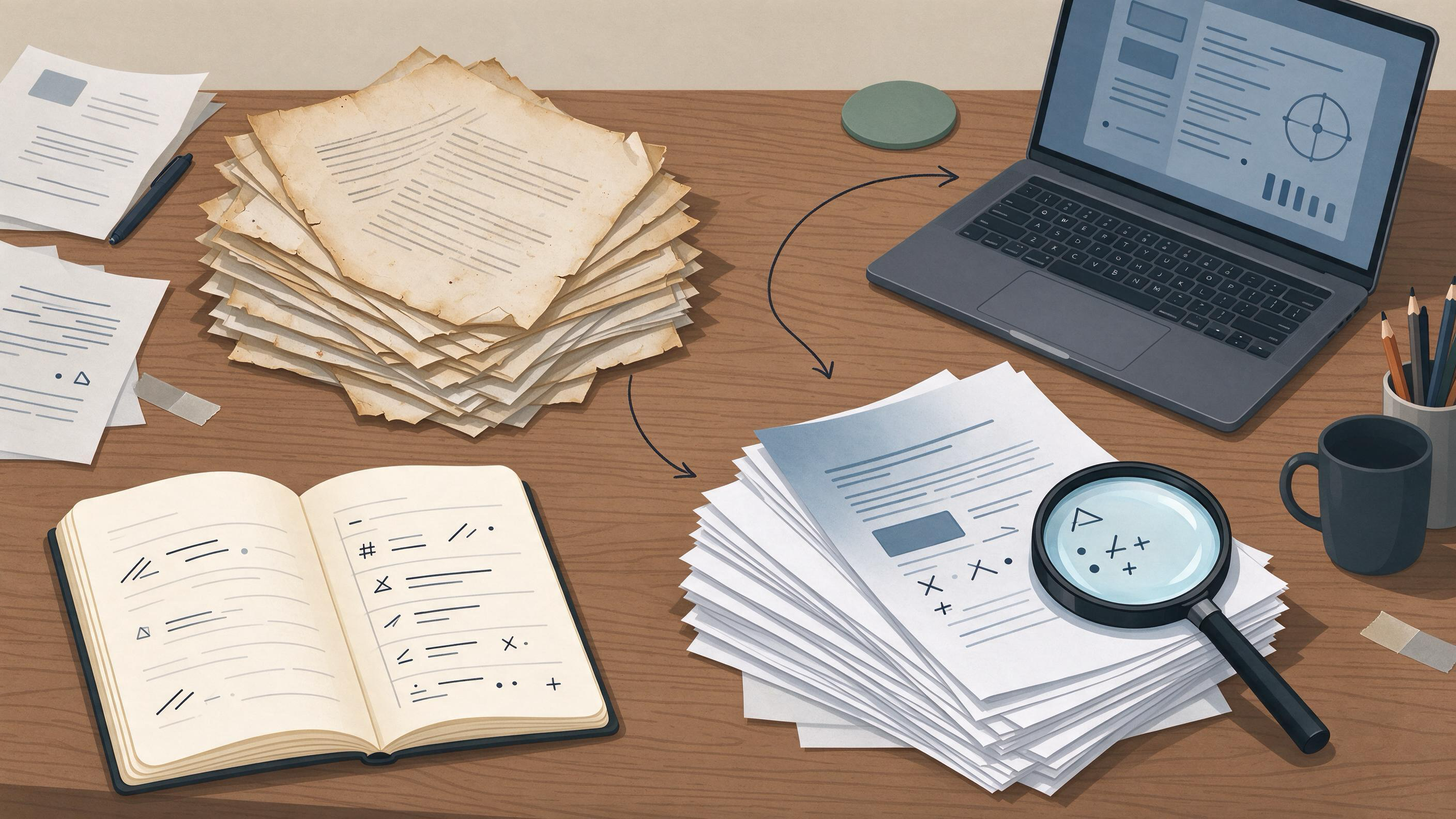
Read the landmark paper first when you need the field's founding question, its core method, or the vocabulary that later work assumes. Read recent papers first when you need the current state of a fast-moving subfield, the latest methods, or the framing a reviewer will expect. For most manuscript revisions, literature reviews, and lab handoffs, the reliable answer is neither extreme: start with a small set of recent review or synthesis papers to map the terrain, then go back to the landmark papers those works cite, and finish by checking the newest primary studies against your eligibility criteria.
The choice is not really about age. It is about what you are trying to produce: a defensible background section, a reproducible search, a method you can reproduce, or a citation list you can audit. This guide compares both reading orders on the same task, shows where each fails, and gives a decision table plus a combined workflow you can document.
Diagnose your starting state before you choose
Before you open a single PDF, name the artifact you need to finish. The reading order follows from it.
- You are writing or revising a manuscript introduction. You need the founding problem and the vocabulary the field uses, plus enough recent work to show the current state.
- You are closing a project or handing off a lab. You need the method lineage: which paper introduced the protocol, which papers changed it, and which recent papers your successor should read next.
- You are starting a systematic review. You need eligibility criteria first, then a documented search across multiple sources, with records deduplicated and screened in stages.
- You are checking a reference list. You need to confirm that each citation exists and matches a real record before submission.
Cochrane's guidance on searching for and selecting studies is a useful anchor here: plan searches from eligibility criteria, use multiple sources, combine free-text terms with subject headings, document the process, deduplicate records, screen in stages, link multiple reports of one study, and rerun searches before publication. That sequence implies you cannot decide landmark-versus-recent in the abstract. You decide it per question, and you record why.
Compare both options on the same task
Take one concrete task: drafting the background section of a manuscript on a method your lab has used for years. Run both reading orders against the same criteria.
| Criterion | Landmark-first | Recent-first |
|---|---|---|
| Founding question and vocabulary | Strong: original framing and terms | Weak: later papers assume the terms |
| Current state of the field | Weak: may miss later corrections | Strong: captures recent methods and framing |
| Method lineage | Strong: shows the original protocol | Mixed: shows current practice, not origin |
| Reviewer expectations | Partial: reviewers also expect recent work | Strong: matches what reviewers cite |
| Search reproducibility | Weak if you only follow citations | Stronger if you build from criteria and sources |
| Time to a defensible draft | Slow if you read landmark papers exhaustively | Fast to a map, slow to depth |
Neither column wins outright. Landmark-first gives you the intellectual skeleton but can leave you citing a method that later work revised. Recent-first gives you the current conversation but can leave you unable to explain why the problem exists. The combined workflow below resolves this by using each order for the job it does best.
Where landmark-first fails
Landmark-first fails when the field has moved and you have not noticed. A founding paper may define a problem in terms that later work replaced, and a background section built only on it can read as dated. It also fails as a search method: following citations backward from one paper gives you that paper's ancestry, not a systematic sample of the literature. Cochrane's emphasis on multiple sources and documented search steps is the corrective. If your only method is "read the classic and its references," you have a reading list, not an auditable search.
Landmark-first also fails on time. Foundational papers are often long, and reading several in full before you know which subfield matters wastes effort. Use recent synthesis to decide which landmark papers deserve a full read.
Where recent-first fails
Recent-first fails when recency is mistaken for importance. A flood of recent papers can bury the one older work that established the method everyone now uses. It also fails when you need to reproduce a protocol: the newest paper may describe a modified version without the original detail. And it fails on framing: a background section that cites only the last few years can leave readers without the problem statement the field grew from.
Recent-first has a second failure mode: coverage. A single database or a single sort order is not a search strategy. PubMed supports field tags, phrase searching, filters, Advanced Search, saved searches, Similar Articles, citation lookup, and links to full text when available, and its search details reveal how terms were translated and combined. Google Scholar documents searching by author and title, date sorting and date limits, Cited by and Related articles, citation export, library access links, email alerts, and ways to locate alternative versions. Both are useful, and both are partial. Combining them, and recording what you ran, is what makes the result defensible.
A combined workflow you can document
This workflow produces an auditable trail: a record of what you searched, what you kept, and why. It works for a manuscript revision, a review, or a lab handoff.
Step 1: Write eligibility criteria first
State what counts as in-scope before searching. Cochrane's guidance starts here for a reason: criteria drive the search terms, the sources, and the screening decisions. Write them in a shared document with a date.
Step 2: Map the terrain with recent synthesis
Search for recent reviews or synthesis papers in your subfield to learn the current vocabulary and the debates. Use WisPaper search to find academic papers through the scholarly search interface, and keep the queries you ran. If you prefer a public entry point, the WisPaper Scholar Search page explains how to find academic papers.
Step 3: Trace backward to landmark papers
From the synthesis, identify the works it treats as foundational. Read those in full, and note the original terms and the original method. This is where landmark-first earns its place: you are reading selectively, guided by the map you just built.
Step 4: Trace forward to recent primary studies
Use Cited by and Related articles in Google Scholar, and Similar Articles in PubMed, to move from the landmark papers to current work. Apply date limits where the question is about the current state, and record the limits you used.
Step 5: Save and organize what you keep
As you screen, save the papers you retain. My Library lets you save or upload papers and organize them in the WisPaper library, which gives you one place to hold the set you will cite. Keep a screening log alongside it: record, decision, reason.
Step 6: Ask questions against your retained set
Once your library holds the papers you kept, you can query them directly. Library QA supports asking questions based on papers uploaded to My Library or added from search results. Use it to check what your retained set actually says about a specific claim before you write that claim into the manuscript.
Step 7: Verify the citation list
Before submission, check that every reference in your BibTeX matches a real record. TrueCite checks BibTeX against real academic databases to flag hallucinated references. Run it on the final reference file, not an early draft.
Step 8: Rerun the search before you submit
Cochrane recommends rerunning searches before publication. Put a date on the rerun and note any new records you added. This is the step that keeps a review current between drafting and acceptance.
Build the artifacts that make the trail auditable
A reading order is only as good as the record it leaves. Keep four artifacts in one project folder:
- Eligibility criteria, dated and versioned.
- Search log: each source, each query string, each filter, and the date run. PubMed's search details help here because they show how terms were translated and combined.
- Screening log: each record, the decision, and the reason, with duplicate records removed and multiple reports of one study linked.
- Citation file: the BibTeX you will submit, checked against real records.
If you are coordinating with coauthors, keep these in a shared project space. Research Projects is the WisPaper area for creating a new project and holding project work. For a longer literature task, Scholar Agent fits WisPaper's literature review, inspiration, or reproduction use cases.
Worked example: a lab handoff with a reproducible search
Suppose a postdoc is leaving and a new student must continue a methods paper. The handoff package should let the student rerun the search and reach the same retained set.
- The postdoc writes eligibility criteria and a search log covering PubMed and Google Scholar, with query strings, filters, and dates.
- The postdoc reads the founding method paper in full and notes the original protocol, then reads the two or three recent papers that modified it.
- The retained set goes into My Library, and the screening log records why each excluded record was excluded.
- The student reruns the searches from the log, compares the new record count to the old one, and adds anything new.
- Before the methods paper is submitted, the BibTeX is checked with TrueCite, and the search is rerun once more.
The student can now answer "why is this paper in the set?" for every entry. That is the readiness test.
Know when the result is ready
The result is ready when you can answer these questions without opening a new tab:
- Can you state the founding question in the field's original terms and in current terms?
- Can you name the landmark papers your recent sources treat as foundational, and say what each contributed?
- Can you point to the recent primary studies that define the current state, with dates and sources recorded?
- Can a coauthor rerun your search from your log and reach the same retained set?
- Does every reference in your BibTeX match a real record?
- Have you rerun the search since your last draft?
If any answer is no, you have a reading list, not a finished evidence trail. The fix is usually a missing artifact, not more reading.
FAQs
Keep Reading
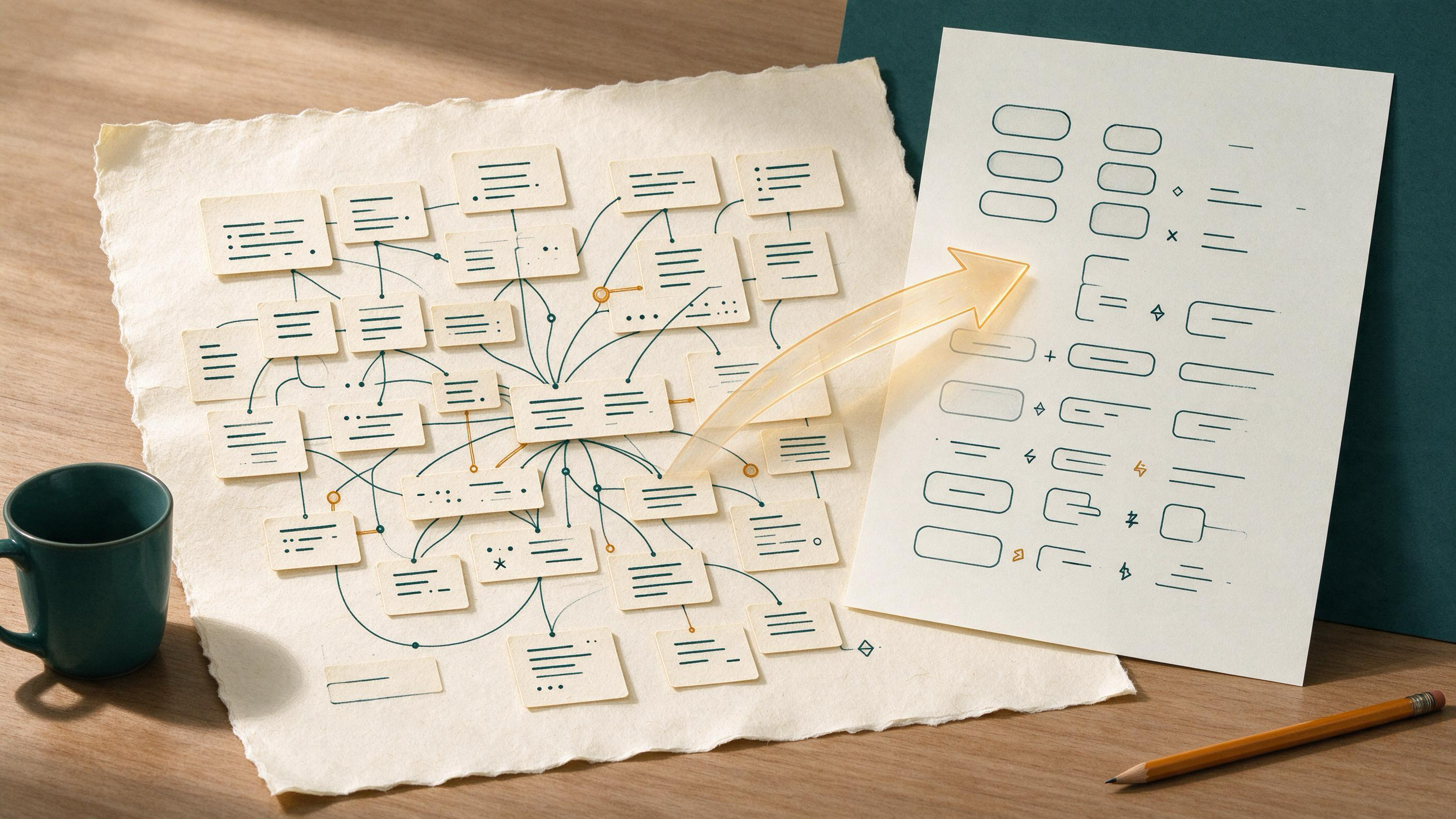
Literature Map vs. Traditional Outline: Which Should You Build First?
Build the literature map first when your problem is coverage and relationships: you need to know which studies exist, how reports connect to the same study, and where the evidence is thin. Build the traditional outline f
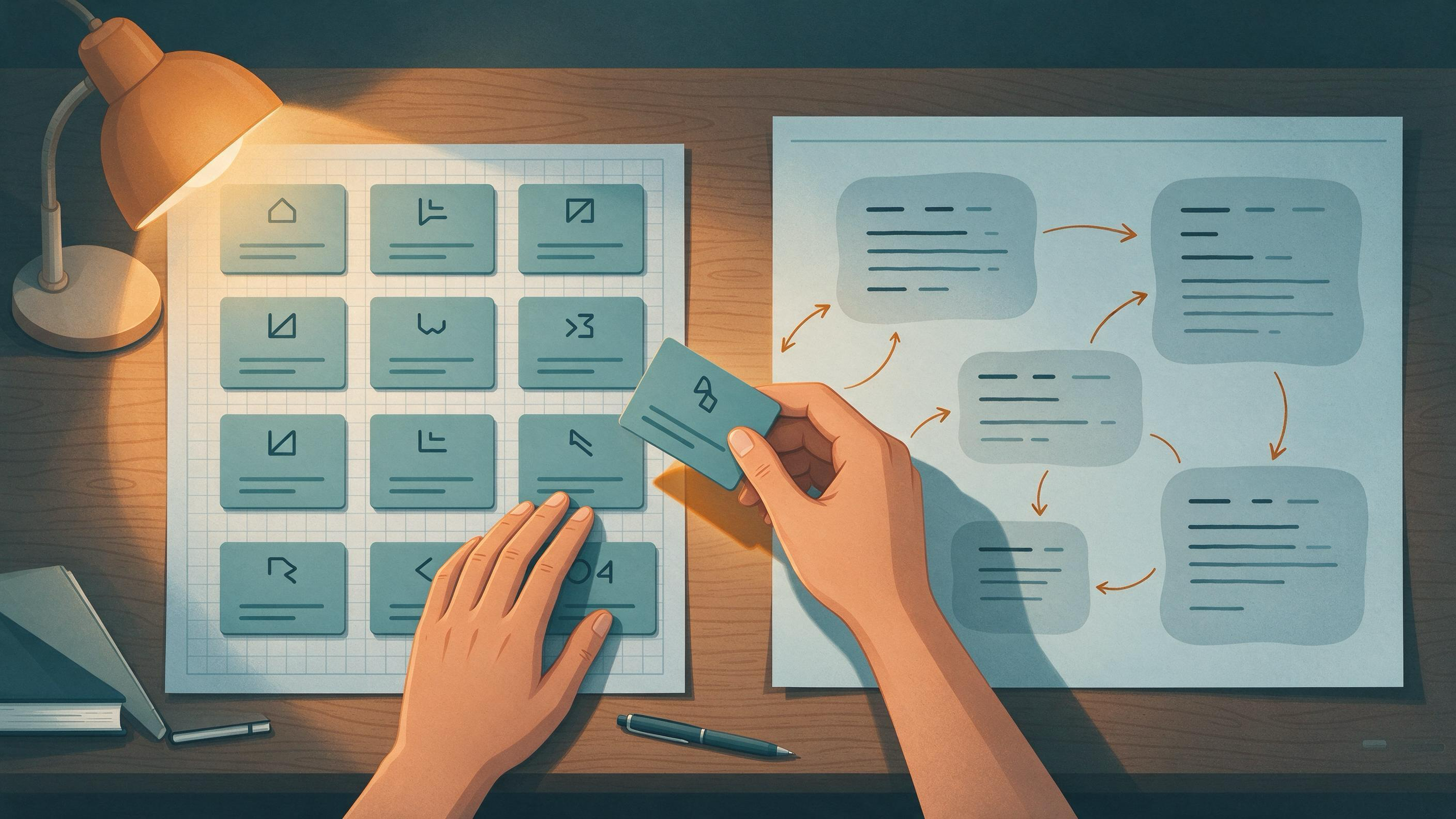
Literature Review Table vs. Narrative Research Memo: Choosing the Right Artifact for Your Next Project
You have a folder of PDFs, a stack of notes, and a deadline. The question is not whether to read the literature — you have already started — but how to turn what you have read into something you can actually use. Two art
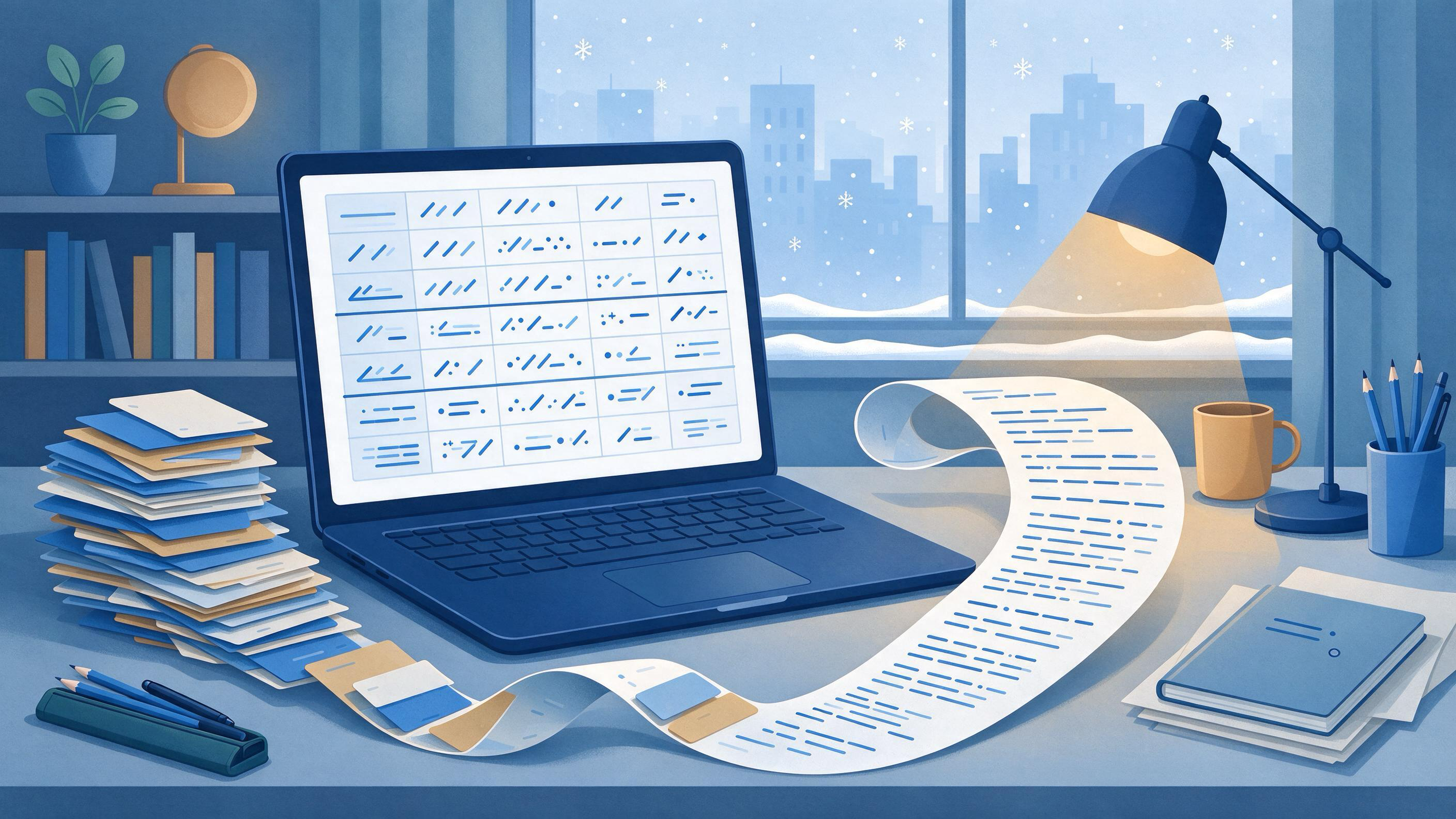
Literature Review Writing: From Notes to Synthesis
A literature review becomes writable when your notes stop being a pile of summaries and start answering a question. The practical move is to convert reading into a small set of decisions: what counts as eligible evidence