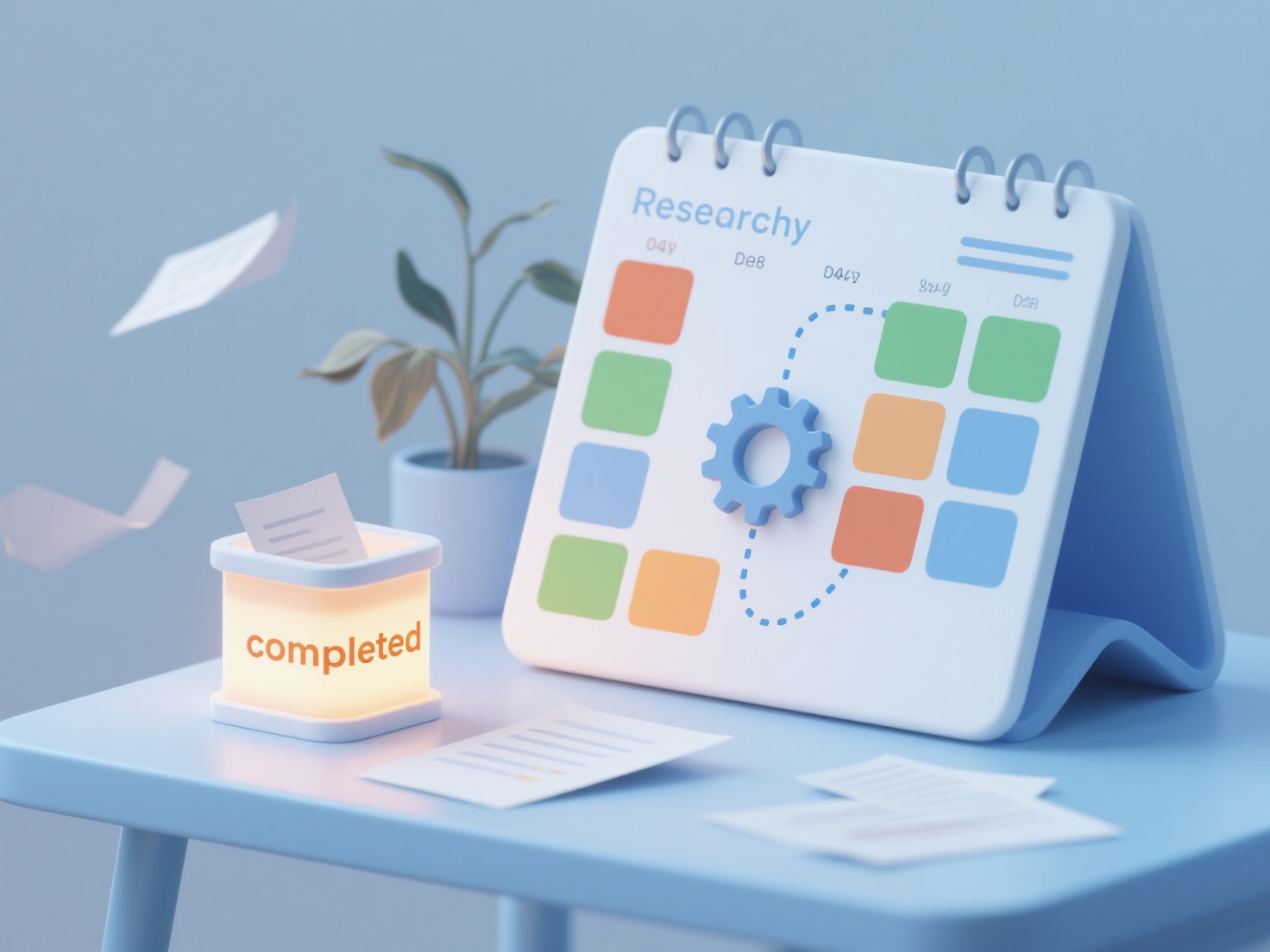
To automate daily research goals and reduce procrastination, you need to break your workload into micro-tasks, use scheduling tools to create recurring time blocks, and set up automated alerts for literature discovery to eliminate decision fatigue.
Procrastination in academia usually stems from feeling overwhelmed rather than a lack of motivation. When your to-do list simply says "write literature review," the task feels too massive, and your brain naturally avoids it. By automating your research workflow, you remove the friction of deciding what to do next, making it much easier to build consistent daily momentum.
Here are the most effective ways to put your academic productivity on autopilot:
1. Create Recurring Micro-Tasks
Instead of setting vague daily goals, use task management tools like Todoist, Notion, or Trello to set up recurring daily micro-goals. Program your app to automatically assign you tiny, manageable tasks every morning, such as "read one abstract," "format three citations," or "write 200 words." When the goals are small and pre-decided, you bypass the anxiety that triggers procrastination.
2. Put Literature Discovery on Autopilot
A major procrastination trap is spending hours mindlessly searching for relevant papers instead of actually reading them. You can eliminate this friction by having the research delivered directly to you. For instance, using WisPaper's AI Feeds gives you a daily push of new papers matching your exact research interests, meaning you can start your day immediately reviewing relevant literature instead of getting lost in endless database searches.
3. Use Automated Time Blocking
Relying on willpower to start working rarely works for graduate students and early-career researchers. Connect your task manager to your digital calendar to automatically block out specific hours for deep work. Smart calendar tools can automatically schedule your research tasks into open slots in your day. Pair this with an automated Pomodoro timer that launches at a set time to force you into a rhythm of 25 minutes of focused work followed by a short break.
4. Set Up Digital Accountability
Automate your focus by using website blockers. Schedule these applications to automatically lock you out of social media, news sites, and distracting platforms during your designated research hours. You can also join automated virtual co-working sessions where you are prompted to log in and share your daily academic goals with other researchers, providing instant, low-effort accountability.
By building these automated systems, you shift your mental energy away from planning and worrying, allowing you to channel it directly into doing the actual research.