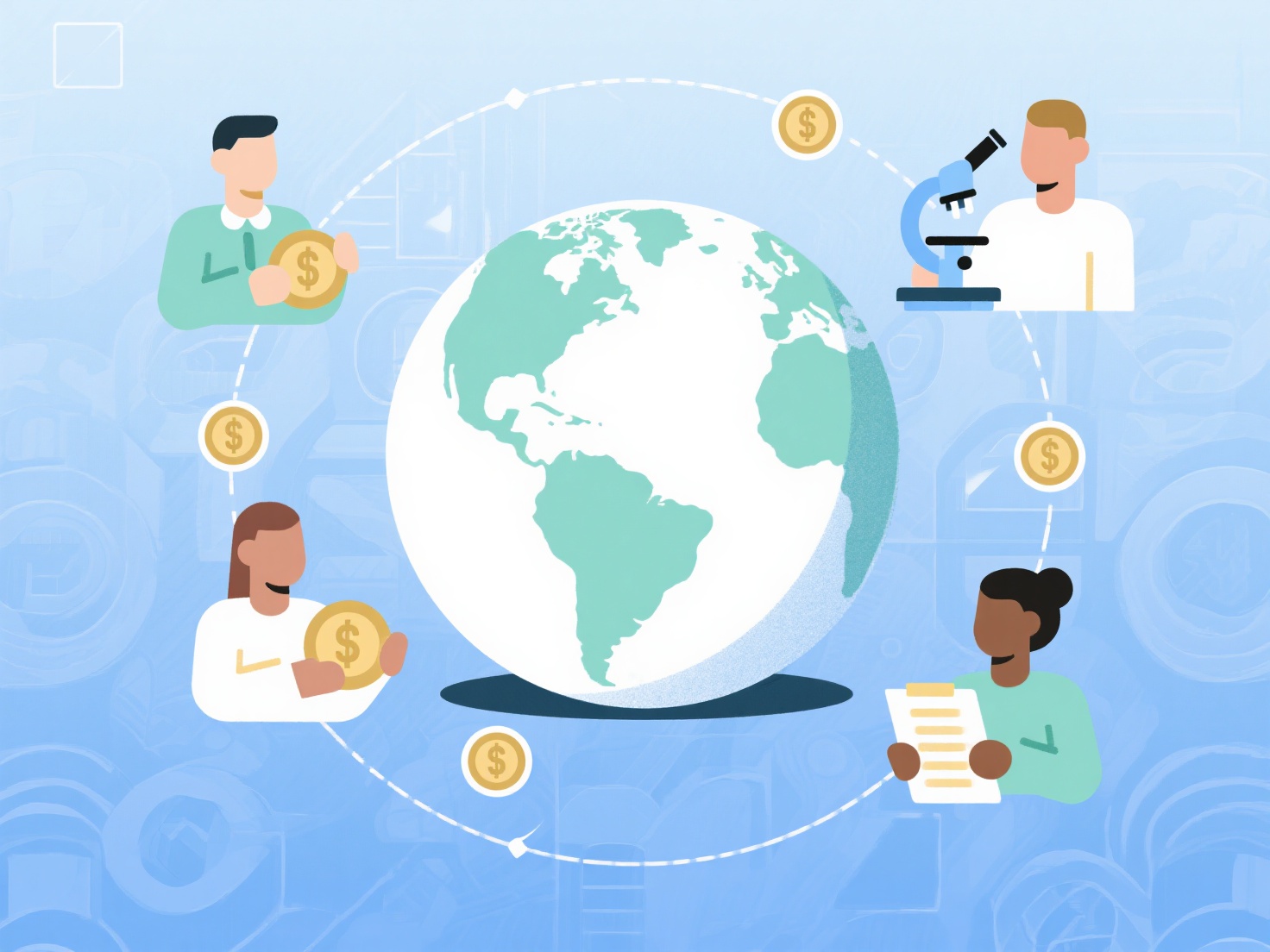
To share research funding abroad as a non-native speaker, you must identify international collaborative grants, align your proposal with the host country's priorities, and leverage translation or editing tools to overcome language barriers. Securing and managing cross-border research grants is highly rewarding but requires careful planning to navigate both administrative differences and linguistic challenges.
Here is how you can successfully manage and share international research funding.
1. Target Joint Funding Opportunities
Start by looking for bilateral or multilateral funding schemes designed specifically for cross-border collaboration. Programs like Horizon Europe, the National Institutes of Health (NIH) in the US, or specific country-to-country agreements often require or heavily encourage international co-investigators. Your university’s grant office can help identify which foreign agencies have existing memorandums of understanding (MoUs) with your home country, making the application process smoother.
2. Partner with Native-Speaking Collaborators
Sharing the grant-writing workload with a partner from the target country is one of the most effective strategies. A local co-investigator can handle the nuanced language of the proposal, ensure cultural alignment with the funding agency's goals, and navigate local administrative requirements. This collaborative approach allows you to focus on the core scientific methodology, experimental design, and data analysis.
3. Leverage AI Tools to Bridge Language Gaps
Writing a compelling grant proposal in a second language can be overwhelming, especially when reviewing foreign literature or deciphering dense funding guidelines. To make this easier, tools like WisPaper's AI Copilot can translate full papers and complex documents, helping you understand foreign research contexts and rewrite your notes into clear, professional English. Always draft your core ideas first, use smart tools to refine the academic tone, and consider a final review by a professional academic editor before submission.
4. Clearly Define the Budget Split and Compliance
International funding agencies have strict rules on how money crosses borders. Ensure your proposal clearly outlines how the funds will be shared between institutions. You must account for currency exchange rates, international transfer fees, and differing institutional overhead rates. Be completely transparent about which team is purchasing equipment versus which team is funding personnel to avoid compliance issues later.
5. Emphasize the Global Impact
Grant reviewers want to know exactly why this project requires international funding. Clearly articulate how the cross-border collaboration provides unique access to resources, diverse data sets, or specialized facilities that wouldn't be available in a single country. Highlighting this synergy focuses the reviewers on the scientific value of your global partnership rather than minor language imperfections in the proposal.