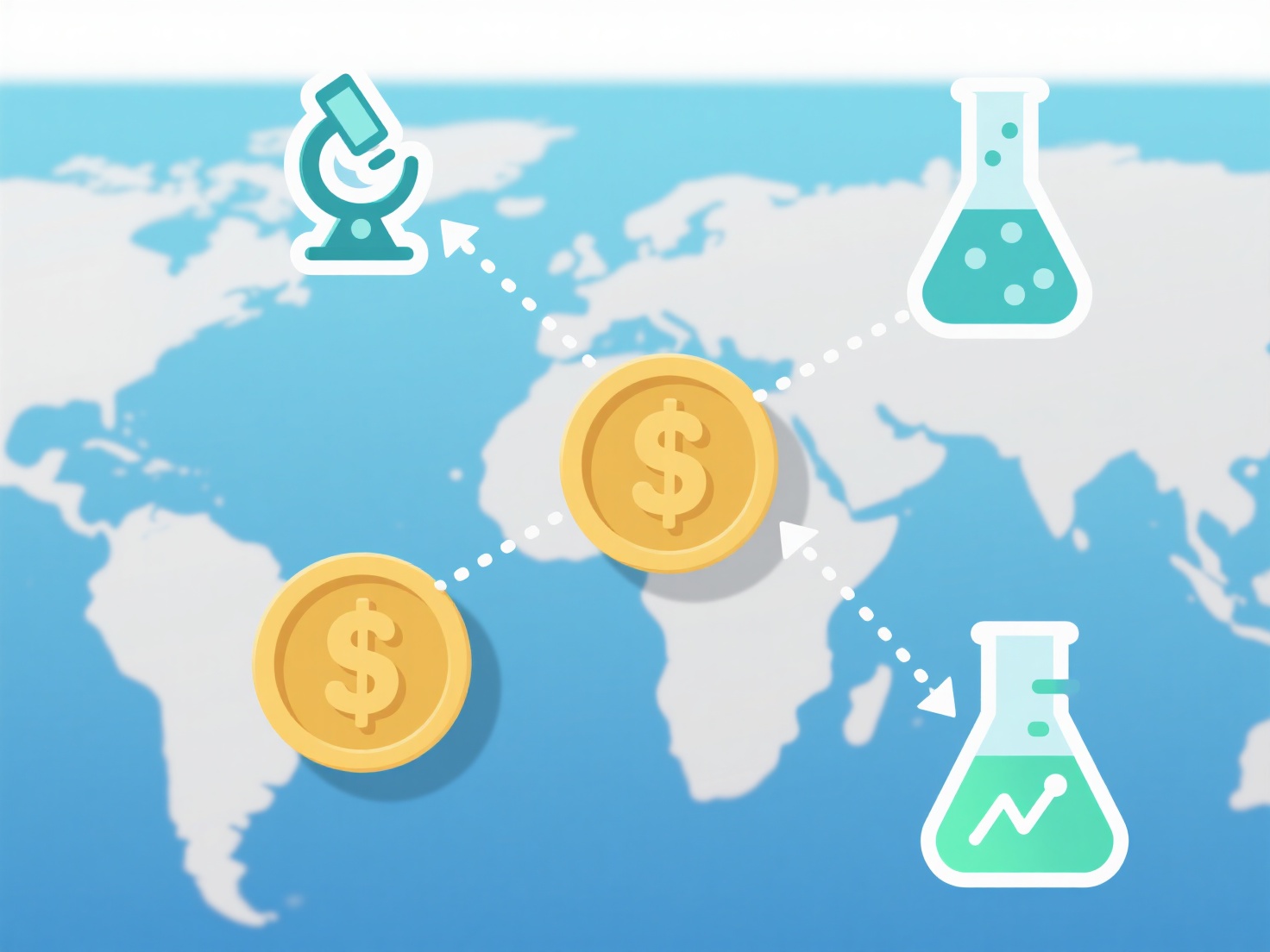
To share research funding abroad accurately, you must establish a formal subaward agreement that strictly complies with your primary funder's international regulations, export control laws, and both institutions' financial policies.
Collaborating with international researchers is a fantastic way to broaden the impact of your work, but transferring grant money across borders isn't as simple as wiring funds. Whether you are managing government grants from agencies like the NIH and NSF or working with private foundations, cross-border funding requires meticulous administrative oversight to ensure legal and financial compliance.
Here is how to structure and share your international research grants accurately.
1. Identify and Approve "Foreign Components"
Before promising any funds to an international partner, check if your grant actually permits international spending. Many federal funding agencies require explicit prior approval for a "foreign component"—defined as any significant scientific element of the project performed outside your home country. You will need to submit a justification explaining why the foreign institution or researcher is uniquely equipped to handle this specific portion of the research.
2. Draft a Detailed Subaward Agreement
The standard method for sharing funding abroad is through a formal subaward or subcontract. This legally binding document must outline a clear statement of work, a detailed budget, and a strict payment schedule based on project milestones. Always work directly with your university’s Office of Sponsored Projects (OSP) or grants management office. They will ensure the contract includes all mandatory "flow-down" clauses, which legally bind your international partner to the same rules imposed by your primary sponsor.
3. Bridge Language and Compliance Barriers
International collaborations often involve navigating unfamiliar ethical guidelines, foreign data-sharing policies, and localized literature. If you need to review a foreign partner's methodology or previous publications to ensure they align with your grant's rigorous requirements, WisPaper's AI Copilot can translate full papers and complex texts, helping you understand the exact research context without getting lost in translation. Furthermore, you must ensure that any international human or animal subject research complies with your home country's ethical standards, requiring equivalent IRB or IACUC approvals.
4. Plan for Currency Fluctuations and Taxes
When budgeting for an international subaward, you must account for currency exchange rate fluctuations and international wire transfer fees. It is generally best practice to write the subaward contract in your home currency to protect your primary grant budget from unexpected shortfalls. Additionally, be aware of local tax laws; some countries levy a Value Added Tax (VAT) on research equipment and services, which must be factored into the foreign institution's budget accurately.