

More PDFs improved coverage in my test, but only until the added papers stopped answering the same question. After that, the answer became broader and smoother while the main comparison became harder to see.
I built three source sets about digital sleep interventions for students: one highly relevant randomized trial, three student intervention studies, and ten search results that also included reviews, commentaries, and studies from other populations.
What changed from one paper to three?
With one paper, the answer was precise but fragile. It could describe the intervention, active control, completion, and result. It could not say whether the finding was typical.
With three directly relevant studies, the answer improved. It could compare delivery by website or email, active versus lighter controls, and different sleep outcomes. It also exposed an apparent disagreement that required closer inspection.
This was the largest useful gain. The extra papers changed the question from “What did this trial find?” to “Why do these trials look different?”
What happened when the set grew to ten?
The ten-paper set contained more vocabulary and background, but several sources were not comparable. Some involved different populations; others were reviews or commentary. Unless the prompt required source typing, the answer blended them into one narrative.
The result sounded more comprehensive while becoming less exact. More context had increased the number of claims the AI could make, not necessarily the number of claims supported by comparable evidence.
How should you add PDFs?
Add sources by role:
- core studies that directly answer the question
- contrasting studies that test the boundary
- reviews that map the field
- methods or background papers used for explanation
Tell the AI which role each paper has. Do not ask it to “use all sources.” A paper can be useful background without deserving equal weight in the conclusion.
Then ask two questions:
Which new claim became possible after adding these papers?
Which sources are not directly comparable to the core studies, and why?
If the tool cannot answer the second question, adding more files may only add narrative noise.
Organize source roles in WisPaper
Keep the working set in My Library. Ask Library QA first to classify papers by population, design, and role, then ask the synthesis question against the relevant subset.
The best source set is not the largest one. It is the smallest set that contains the evidence needed for the claim, a meaningful counterexample, and enough context to interpret both.
FAQs
Keep Reading
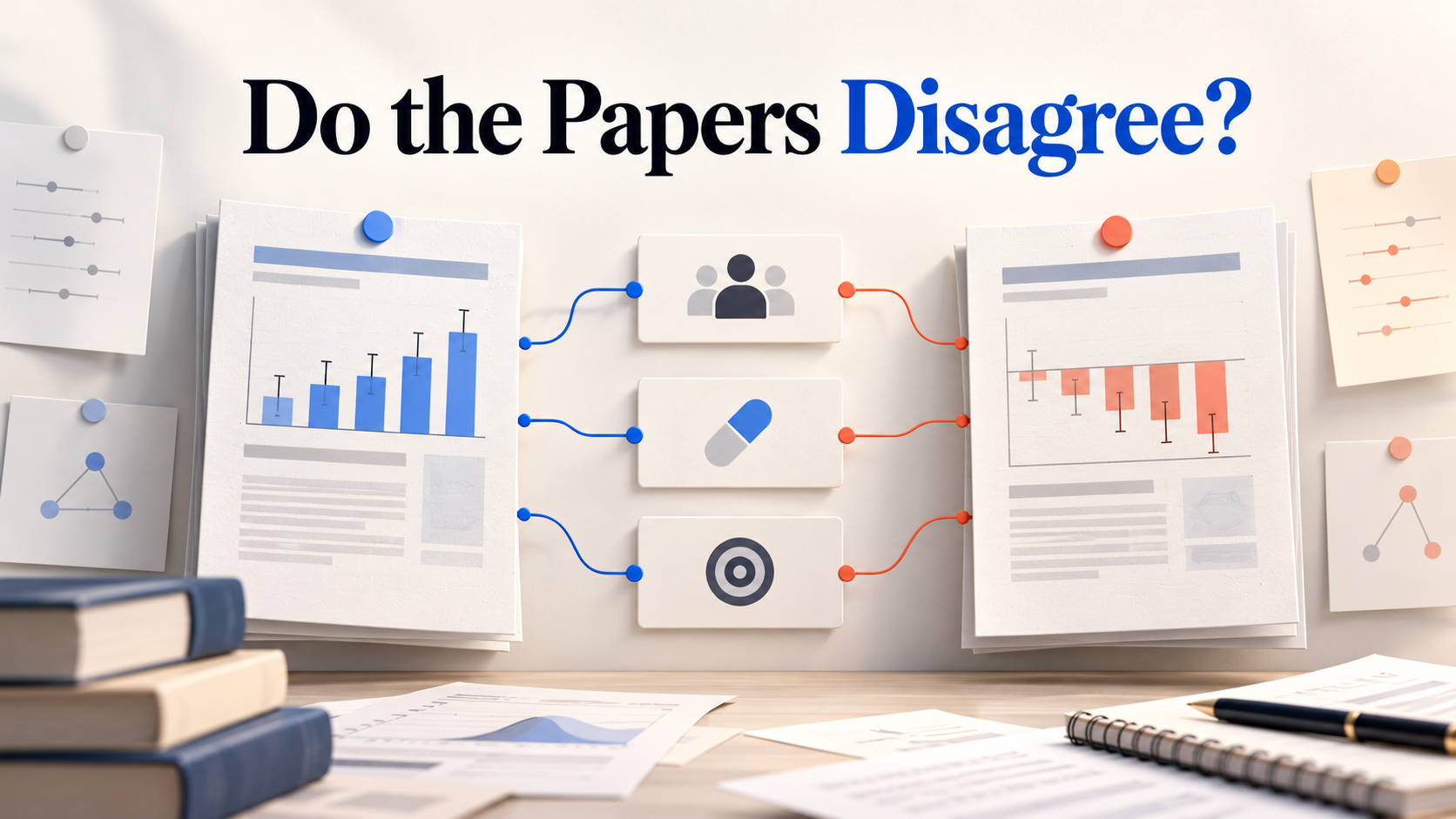
How to Tell Whether Two Papers Actually Disagree
Test whether two papers truly disagree by comparing population, intervention, comparator, outcome, time point, and uncertainty.

Does Giving AI a Seed Paper Improve Its Literature Search?
Learn how a seed paper improves AI literature search through vocabulary and citations while avoiding anchor bias and narrow coverage.
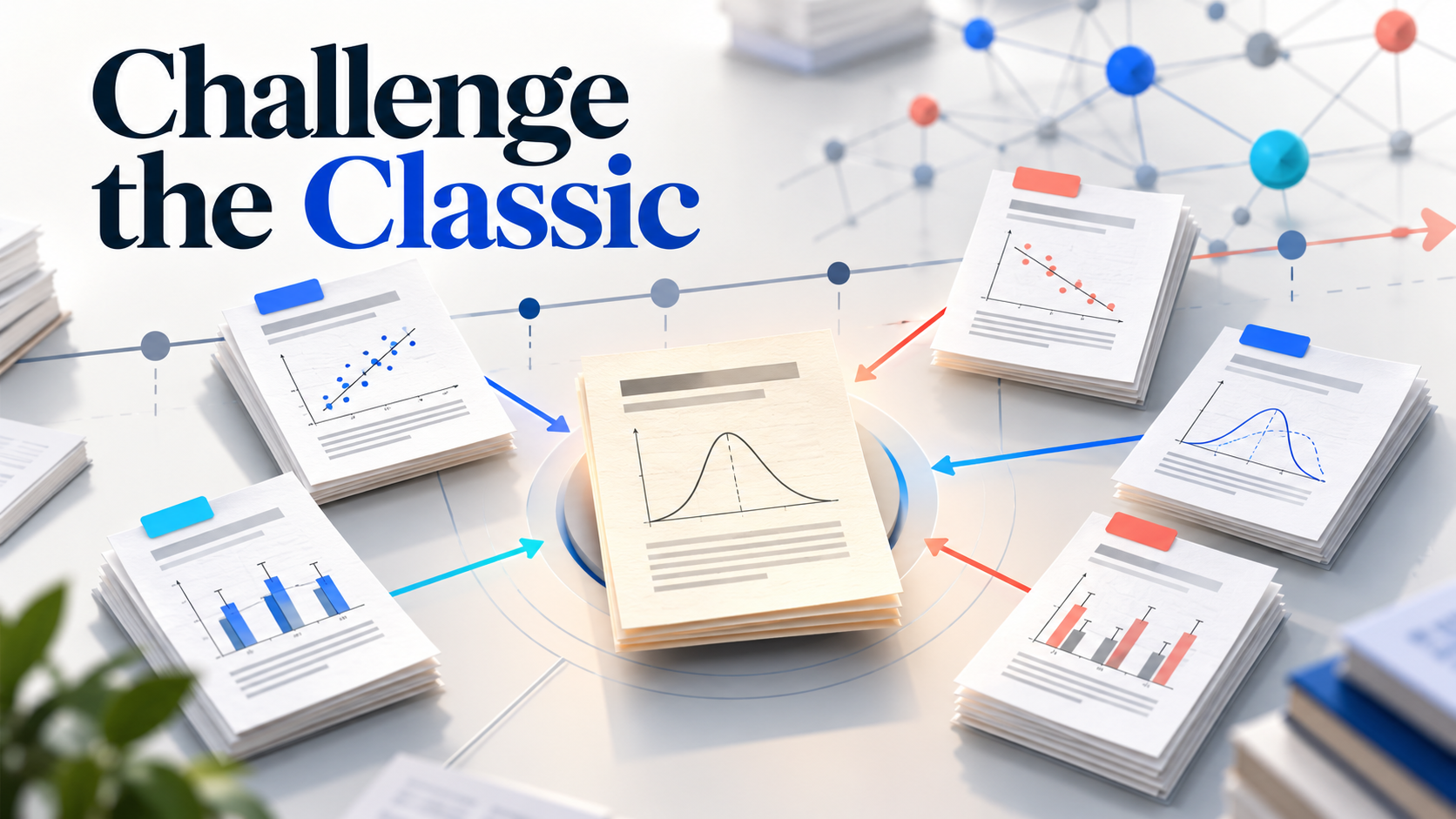
How to Find Recent Papers That Challenge a Classic Study
Find recent papers that test, revise, or challenge a classic study using citation chasing, new terminology, and status checks.