
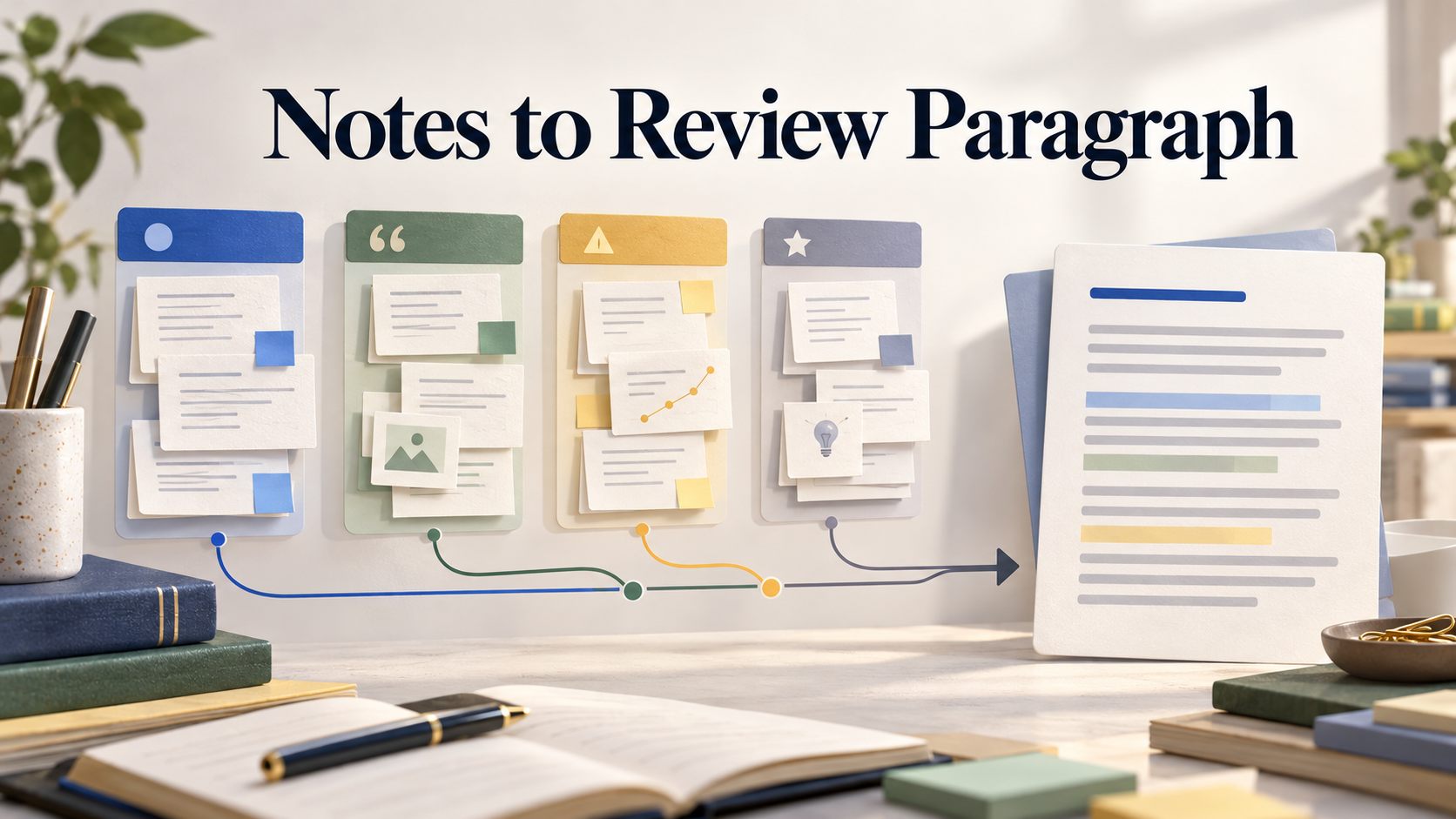
You have pages of notes: Paper A found X, Paper B found Y, Paper C used a different method. The problem is not a lack of material. The notes are organized by paper, while a literature-review paragraph needs to be organized by a claim.
Give the paragraph one job
Finish this sentence: “This paragraph should show that…” The answer might be that measurement differences explain conflicting results, or that evidence is strong in adults but weak in adolescents.
If the sentence contains two unrelated jobs, write two paragraphs.
Re-sort notes by role
Create four columns:
- claim or pattern
- supporting evidence
- exception or limitation
- why the relationship matters
Move notes out of paper folders and into these roles. One paper may appear in several rows; one row may use several papers.
Write relationships, not a summary parade
Avoid: “Smith found X. Lee found Y. Chen found Z.”
Try this sequence:
- state the pattern
- compare the strongest evidence
- explain a difference or exception
- say what the comparison means for your question
For example:
Short-term studies generally report improved revision quality after automated feedback, but the effect weakens in longer classroom studies. The difference may reflect implementation: supervised studies require students to act on feedback, whereas field studies often measure whether feedback was available rather than used. Evidence therefore supports immediate revision assistance more clearly than durable writing improvement.
Each sentence has a role, and the paragraph ends with an interpretation rather than the last paper read.
Use AI after you choose the claim
Give AI the selected notes and ask it to map evidence, not invent the paragraph's argument:
Group these notes by agreement, difference, and limitation. Preserve source labels. Suggest two possible paragraph claims, and identify which notes support or weaken each. Do not add information outside the notes.
Choose the claim yourself, draft the paragraph, then ask for a check that every citation supports the sentence beside it.
Build the evidence set in WisPaper
Save the paragraph's papers in My Library and ask Library QA the exact comparative question the paragraph must answer. Use WisPaper Search only when the draft exposes a missing role, such as no contradictory study or no long-term evidence.
The paragraph should make the relationship among papers visible. WisPaper helps retrieve the evidence; the relationship is your analytical work.
FAQs
Keep Reading
My Supervisor Sent Me 20 Papers. Where Do I Start?
Turn a supervisor's folder of 20 papers into a first-week reading plan using triage, seed papers, and focused research questions.
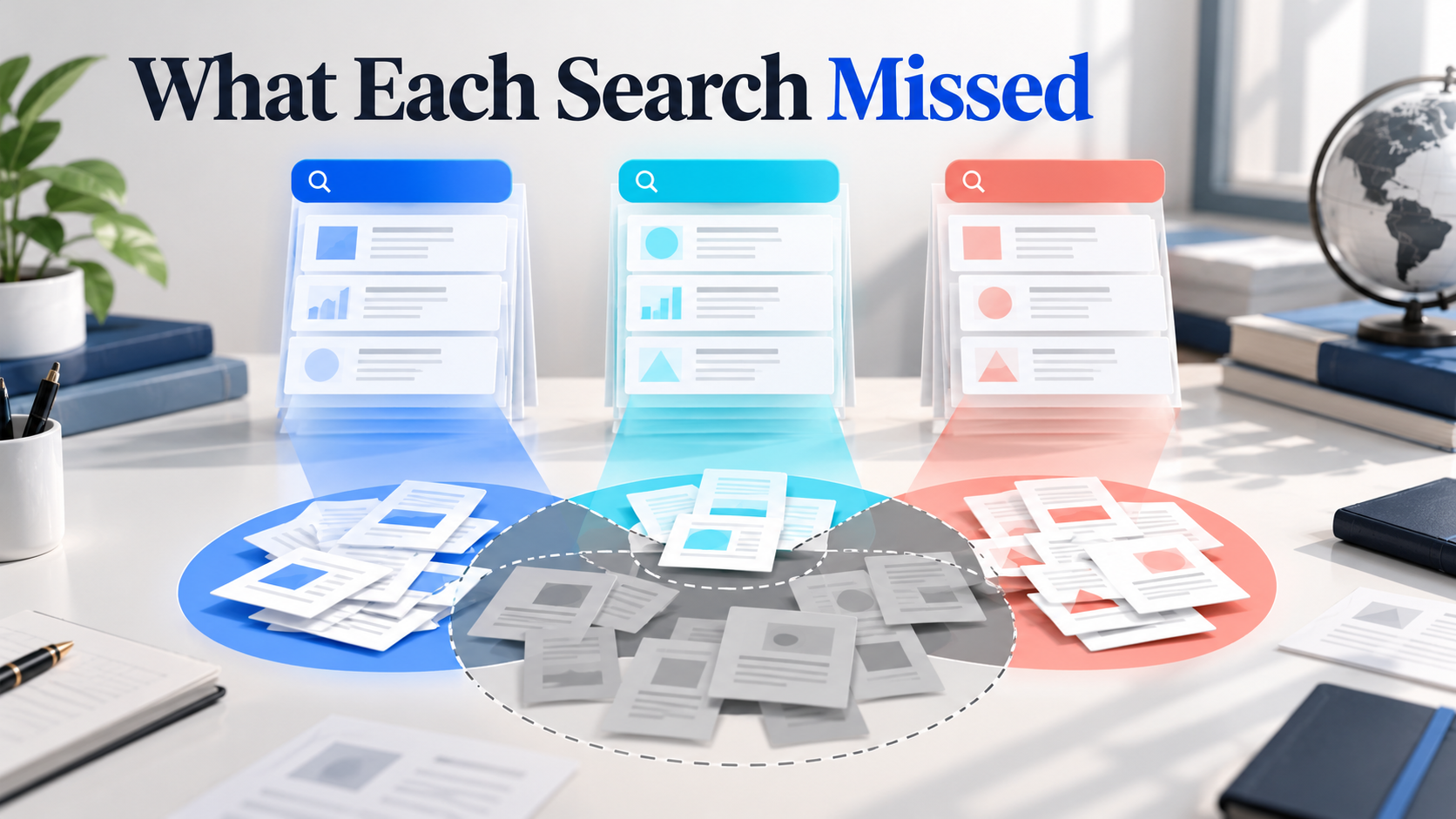
I Tried Three Paper Search Tools on the Same Question. What Did Each Miss?
A small audit of OpenAlex, Crossref, and Europe PMC shows how paper search tools miss vocabulary, populations, and document types.

Can You Trace Every Claim in an AI Literature Review Back to a Source?
Build a claim ledger that traces every factual statement in an AI literature review to an exact passage, table, or source.