
How to Recover a Missing Source from Notes and Quotes
A quote sits in your notes with no author, no year, and no link. It may be in a client deck, a decision memo, or a handoff document, and someone will eventually ask where it came from. Recovering the source is a reconstr
How to Repair Citations After Reorganizing a Draft
Reorganizing a draft breaks citations in a specific, predictable way: the reference list usually survives intact, but the links between sentences and sources do not. When you move a paragraph, split a section, or merge t

How to Run a Final Source Check Before Submission
A final source check is the last pass where you confirm that every claim in your draft still points to a source you can open, read, and defend. It is not a reread of your prose and not a fresh literature review. It is a

How to Run Full-Text Screening Without Losing Decisions
Full-text screening fails quietly. A reviewer reads a PDF, decides it does not fit, and moves on—but the reason lives only in their memory, the exclusion is never logged against the right criterion, and six weeks later a

How to Screen Titles and Abstracts Consistently
Title-and-abstract screening is the stage where a literature search becomes a defensible body of evidence. You have a list of records, and you must decide, record by record, which ones move forward to full-text review. C
How to Synthesize Quantitative Findings Without a Meta-Analysis
You have a set of quantitative studies on the same question, and you need to say what they collectively show. A pooled effect estimate is not on the table — the designs differ, the outcomes are measured differently, or t

How to Trace a Claim Back to the Original Study: A Step-by-Step Evidence Workflow
A claim reaches you secondhand—a guideline summary, a review, a colleague's slide, a news brief—and you need to know what the original study actually reported. Tracing it back is a chain of small verification decisions:
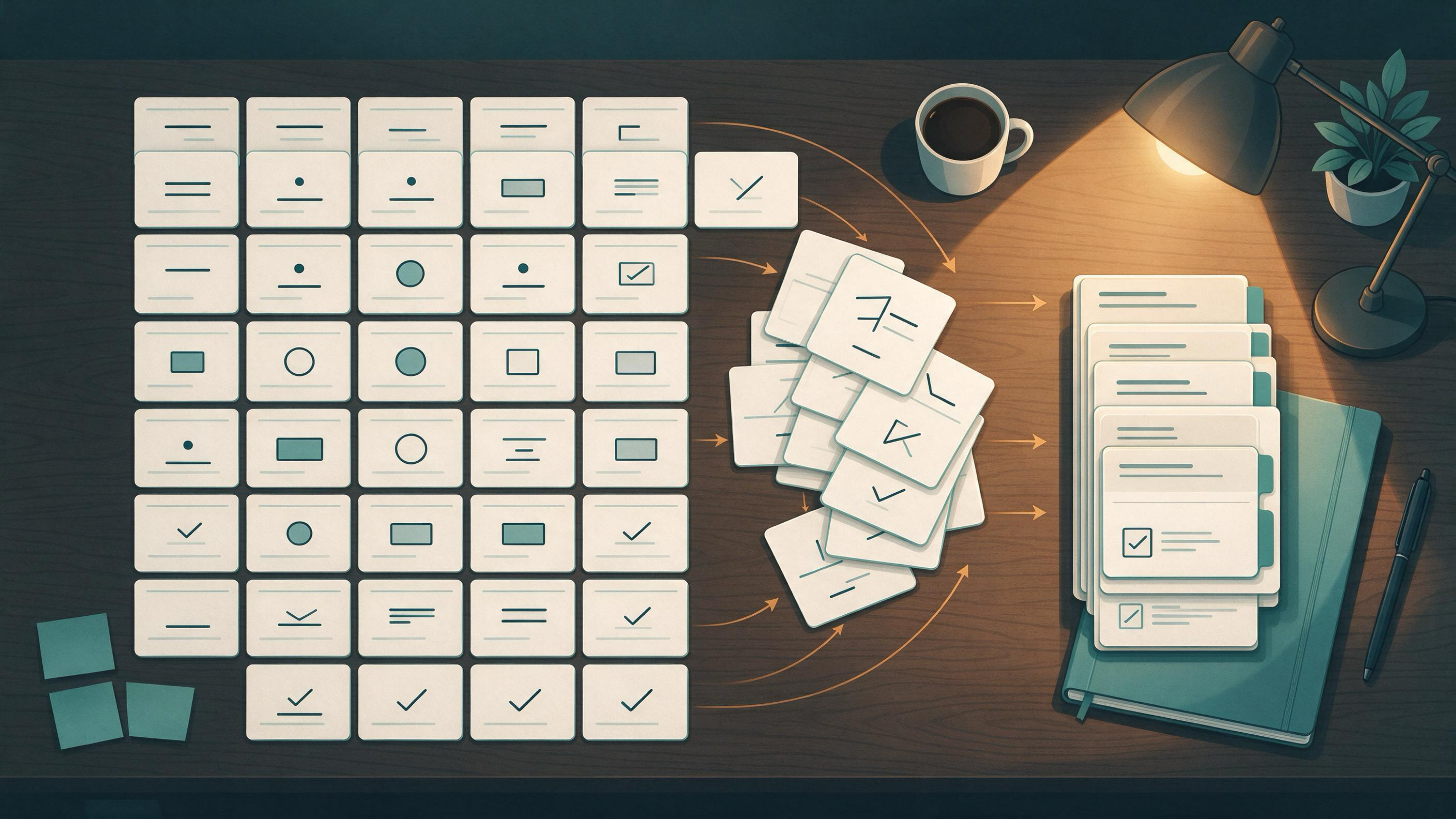
How to Turn an Evidence Matrix into a Literature Review Outline
An evidence matrix is a grid of studies and the claims, methods, and findings you extracted from them. A literature review outline is the argument you will make from that grid: an ordered set of sections, each with a job

How to Update an Old Literature Search Efficiently
An old literature search is not a document to reread; it is a set of decisions you can re-run. The efficient path is to recover the original eligibility criteria and search logic, then update only the parts that changed:

How to Update References Before Manuscript Submission
Updating references before submission is a verification pass, not a formatting pass. The goal is to confirm that every cited work still exists under the identifier you used, that its bibliographic fields match the record