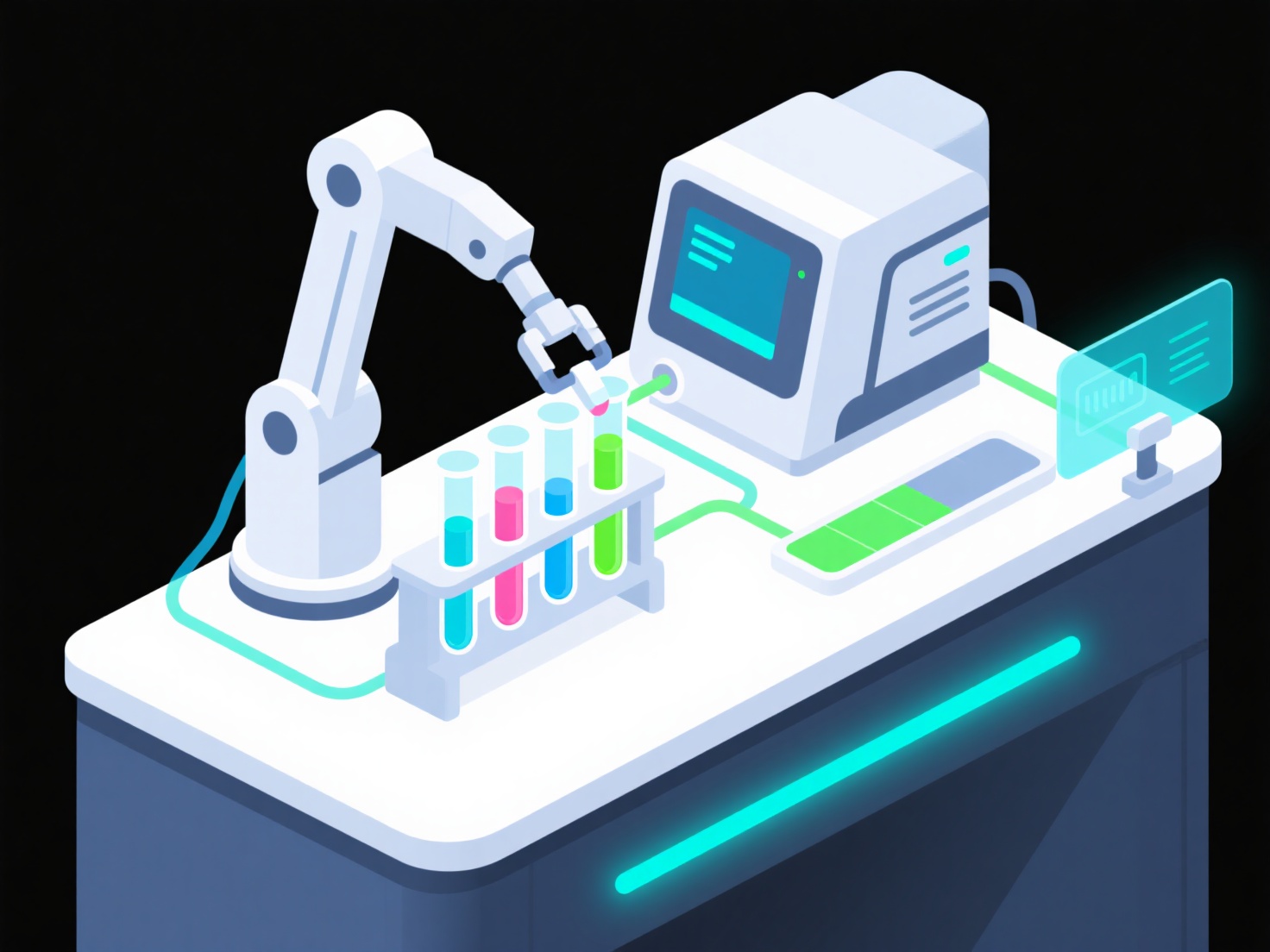
To automate lab work, you need to systematically replace manual, repetitive tasks with specialized hardware like liquid handlers, integrate software for data tracking, and use computational tools to streamline experimental design.
Lab automation is no longer restricted to massive pharmaceutical companies. Whether you are running assays in a biology lab or synthesizing compounds in chemistry, automating your workflows saves hours of manual labor, reduces human error, and makes your research highly reproducible.
Here is a practical guide to bringing automation into your daily lab routine.
1. Identify and Automate Repetitive Hardware Tasks
Start by auditing your daily bench work to find the biggest bottlenecks. If you spend hours manually transferring liquids, investing in an automated liquid handler or a motorized multichannel pipette is the best first step. For cell culture or microbiology labs, automated plate readers, colony counters, and robotic incubators can run experiments overnight, allowing you to walk away and focus on higher-level analysis.
2. Digitize Your Data Management
True lab automation requires moving away from paper notebooks. Implement an Electronic Lab Notebook (ELN) or a Laboratory Information Management System (LIMS) to automatically capture data directly from your instruments. Connecting your hardware to a LIMS ensures your data is instantly backed up, searchable, and formatted consistently without requiring tedious manual data entry.
3. Streamline Protocol Extraction and Planning
A hidden time-sink in lab work is figuring out exactly how to set up an experiment based on existing literature. Instead of manually parsing dense methodology sections to write out your steps, you can use WisPaper's PaperClaw by uploading a paper's PDF to automatically generate a full experiment reproduction plan. This instantly translates published research into an actionable, step-by-step workflow you can take straight to the bench or program into your lab robotics.
4. Use Scripts for Data Analysis
Stop manually copying and pasting instrument outputs into Excel spreadsheets. Learning basic Python or R allows you to write simple scripts that automatically clean, process, and visualize your raw data as soon as an instrument finishes a run. You can set up data pipelines that take raw CSV files from your assays and instantly generate publication-ready graphs.
By starting small—automating one protocol or data pipeline at a time—you can gradually build a highly efficient, automated lab environment that frees up your time for actual scientific discovery.