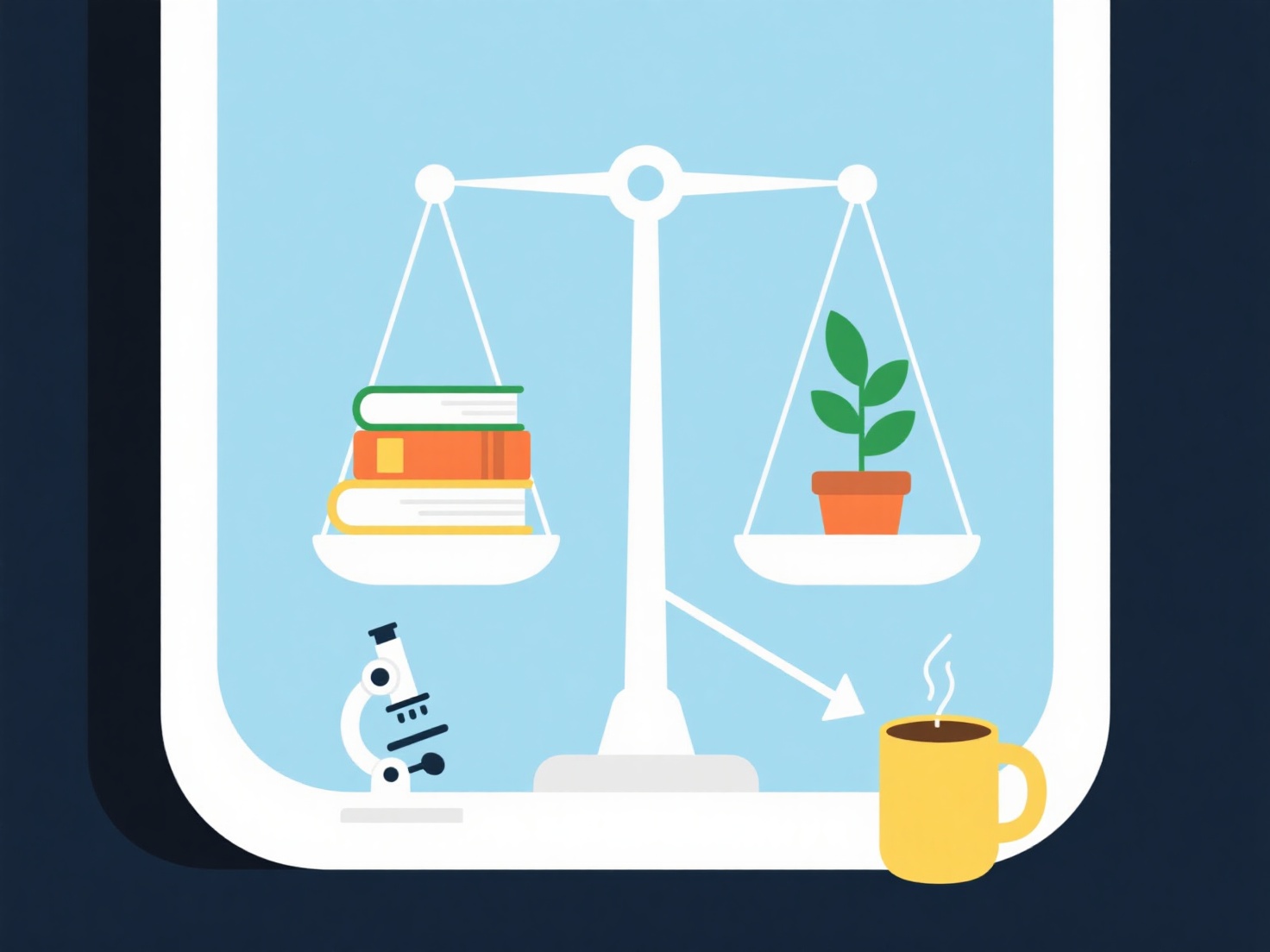
Balancing research and personal life requires setting strict boundaries, treating your academic work like a scheduled job, and using efficient time management strategies to prevent burnout.
In academia, the pressure to constantly publish, run experiments, and stay updated on literature can easily blur the lines between the lab and home. Achieving a healthy work-life balance in grad school or as an early-career researcher is essential for your mental health and long-term academic success. Here are the most effective ways to manage your workload while protecting your personal time.
Treat Your Research Like a Standard Job
One of the best ways to avoid PhD burnout is to establish set working hours. Decide on a realistic daily schedule—such as 9 AM to 5 PM—and stick to it. When your designated workday is over, physically leave the lab or close your laptop. Creating this physical and mental separation stops your research tasks from bleeding into your evenings and weekends.
Work Smarter with Your Literature
A major drain on a researcher's time is the endless cycle of finding, reading, and organizing academic papers. You can reclaim your free time by optimizing how you discover new research. Instead of spending your weekends sifting through irrelevant database results, using a tool like WisPaper's Scholar Search helps by understanding your true research intent and filtering out 90% of the noise. Streamlining your literature search means you spend less time hunting for sources and more time actually resting.
Schedule Personal Time as Non-Negotiable
Do not leave your personal life to chance. Block out time in your calendar for hobbies, exercise, family, and socializing just as you would for a mandatory meeting with your principal investigator (PI) or advisor. Treating your personal commitments with the same respect as your academic deadlines ensures you actually take the time to recharge.
Break Down Goals into Micro-Tasks
Large projects like writing a dissertation, conducting a literature review, or preparing a manuscript can feel overwhelming, often leading to procrastination and late-night panic. Break these massive milestones down into daily, actionable micro-tasks. Using time management methods like time-blocking or the Pomodoro technique can help you maintain intense focus during your working hours so you don't have to bring work home.
Learn to Say No
As you progress in your academic career, you will inevitably be asked to join committees, collaborate on side projects, or take on extra peer reviews. While these are great opportunities, taking on too much is a fast track to exhaustion. Protect your core research time and your personal life by politely declining tasks that do not align with your current priorities or capacity.