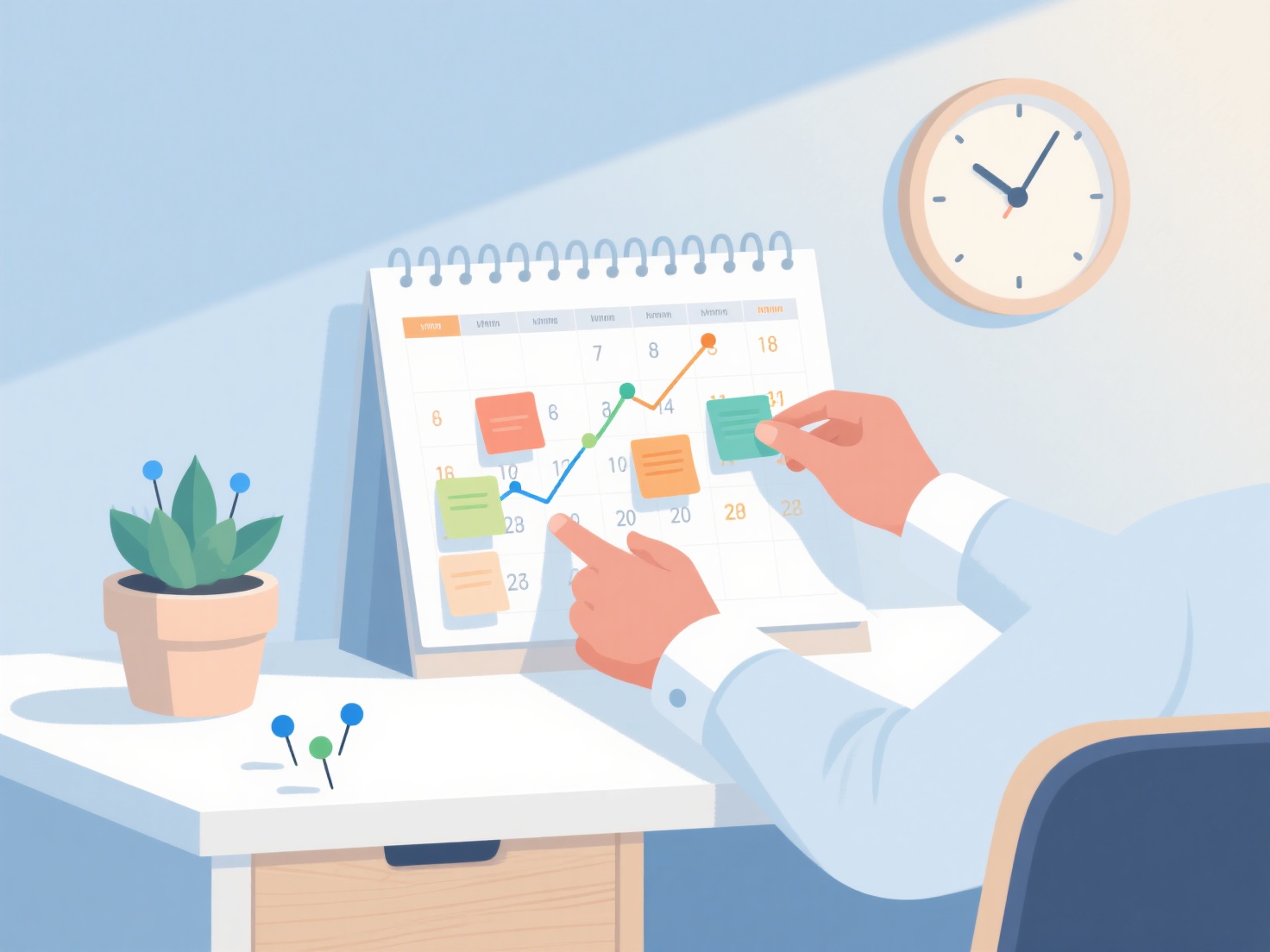
Handling academic project deadlines requires breaking the overarching research goal into smaller, manageable tasks, setting internal milestones, and consistently tracking your daily progress.
Whether you are working on a master's thesis, a grant proposal, or a conference paper, effective time management is essential for early-career researchers. Here is a practical approach to keeping your academic project planning on track.
Break Down the Research Process
Large academic projects can easily lead to procrastination if they feel too overwhelming. Start by dividing your project into distinct, actionable phases: literature review, methodology design, data collection, data analysis, and manuscript writing. Once you have these broad categories, break them down further into daily or weekly tasks. Assigning a realistic time estimate to each small step makes the overall workload much more manageable.
Set Internal Milestones
Never aim for the final official deadline. Instead, establish personal deadlines that fall at least one to two weeks before the actual due date. This buffer protects your research timeline against the inevitable unexpected delays of academic life, such as equipment failures, delayed survey responses, or slow feedback from your co-authors.
Optimize Your Biggest Time Sinks
Identify which parts of your research consume the most time and find ways to streamline them. Finding papers is often the biggest bottleneck when trying to meet deadlines. When you are under a time crunch, you can save hours of manual filtering by using WisPaper's Scholar Search, which understands your underlying research intent to bypass simple keyword matching and filter out 90% of irrelevant noise. Speeding up the discovery phase leaves you with significantly more time for deep reading and drafting.
Prioritize Daily Tasks
Use proven time management frameworks like time-blocking to maintain your focus. Each morning, identify the top two or three critical tasks that will tangibly move your project forward. Tackle these high-priority items during your most productive hours, and save low-impact activities—like organizing citations, formatting tables, or responding to administrative emails—for when your energy levels naturally dip.
Communicate Early and Adjust
If you realize a project deadline is genuinely at risk, do not wait until the last minute to speak up. Communicate with your Principal Investigator (PI) or collaborators as soon as possible. Propose a revised timeline or ask for guidance on scaling back the scope of the current project so you can still deliver a high-quality outcome without burning out.