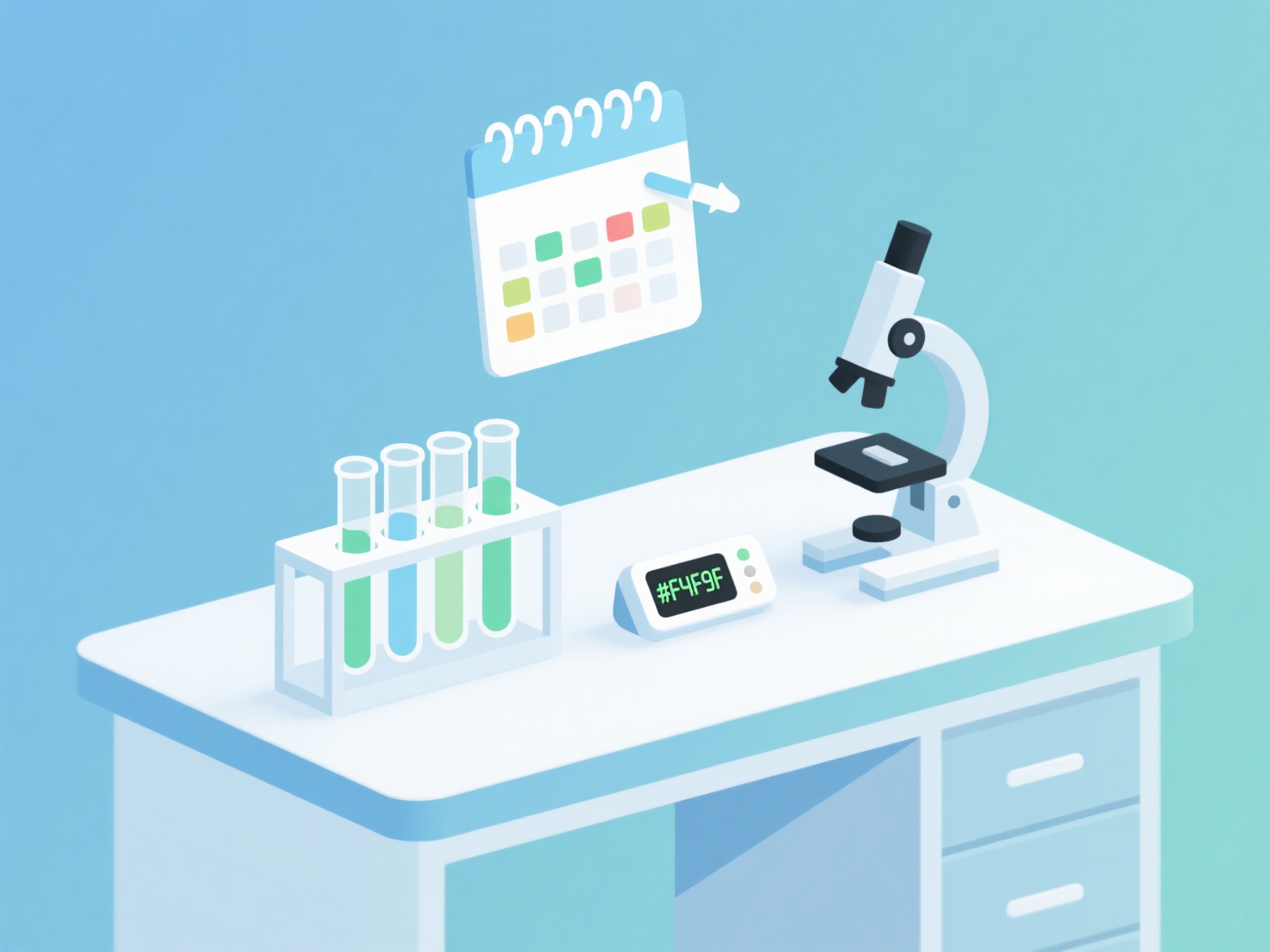
To maintain lab work on a tight schedule, you must prioritize your most critical experiments, batch similar tasks, and strategically use equipment downtime for data analysis and planning. Balancing bench work with classes, writing, and life requires a proactive approach to time management. By treating your lab hours like a highly organized schedule, you can maximize your research output without burning out.
Plan Your Week in Advance
Never arrive at the lab wondering what to do. Spend 15 minutes every Friday afternoon mapping out your experiments for the following week. Identify which days require heavy bench work and which days are lighter. Crucially, book shared lab equipment—like flow cytometers, microscopes, or PCR machines—well in advance so you aren't left waiting around and stalling your progress.
Batch Similar Lab Tasks
Context switching destroys productivity in the lab. Group your repetitive tasks together to save time on setup and cleanup. For example, prepare all your buffers, pour your gels, or complete your cell culture maintenance in a single dedicated block of time. Batching keeps your workflow smooth and significantly reduces the chance of pipetting errors.
Optimize Your Incubation Periods
Bench work is full of passive waiting, whether it is a two-hour western blot incubation, an autoclave cycle, or a lengthy centrifuge spin. Use these hidden pockets of time to tackle desk work. You can update your lab notebook, analyze recent data, or prep your next protocol. If you need to replicate a complex methodology for an upcoming run, you can use WisPaper's PaperClaw to automatically generate a full experiment reproduction plan directly from an uploaded PDF, saving you hours of manual protocol drafting.
Focus on the Critical Path
When time is short, not every experiment carries the same weight. Identify your "bottleneck" experiments—the essential assays that must be completed before you or your collaborators can move forward. Prioritize these high-impact tasks over minor optimizations or side projects that don't directly contribute to your immediate deadlines, grant proposals, or thesis goals.
Document as You Go
When you are rushing to finish an experiment, it is tempting to leave your documentation for later. However, trying to remember exact volumes, unexpected observations, or incubation times days later will cost you more time and compromise your data integrity. Keep your lab notebook updated in real-time, even if it means writing brief, bulleted notes that you can format properly at the end of the day.