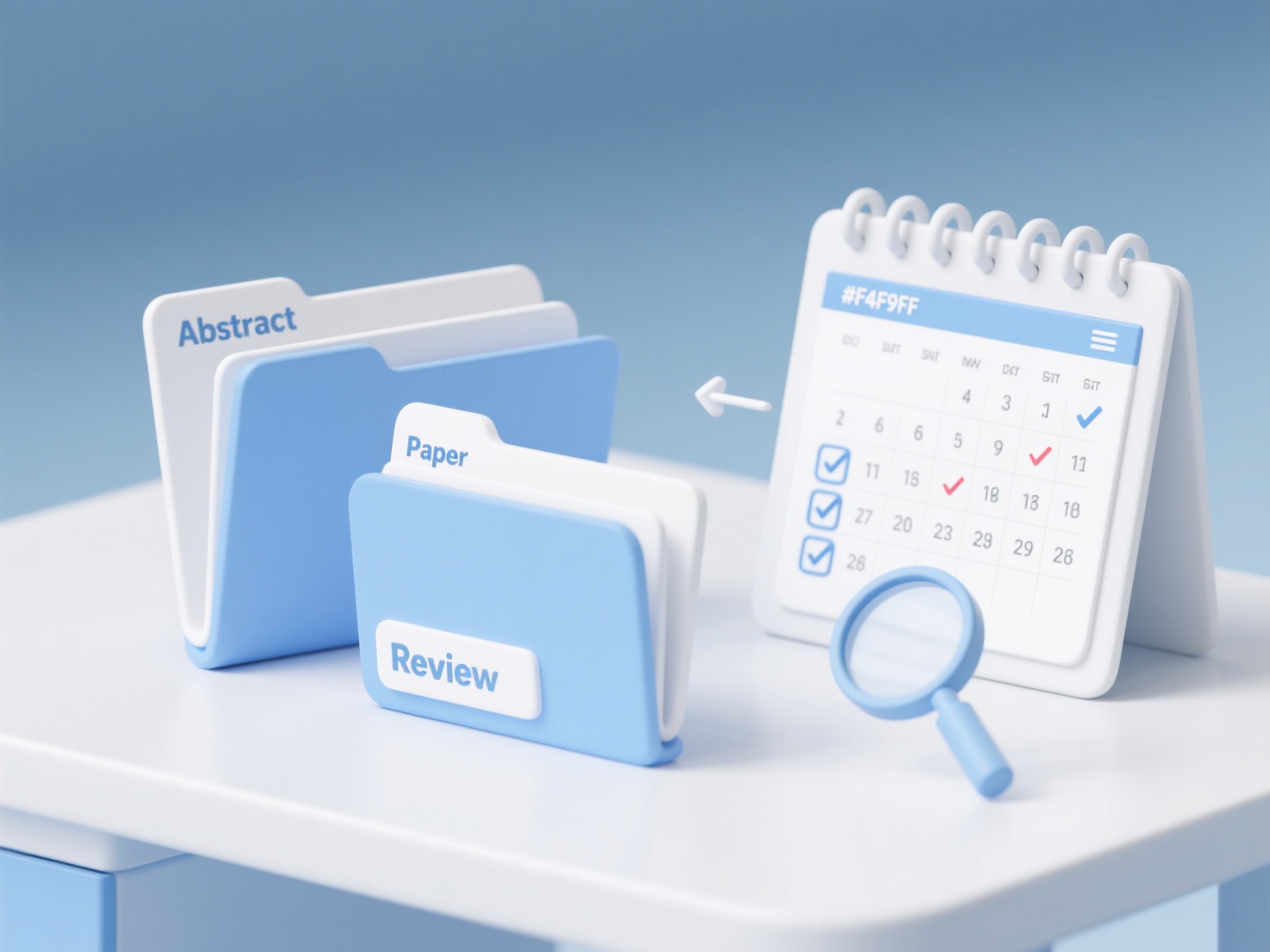
To optimize conference submissions and stay organized, create a centralized tracking system for deadlines, formatting requirements, and document versions well before the call for papers closes.
Submitting your research to academic conferences can quickly become overwhelming when juggling multiple tracks, strict guidelines, and co-author feedback. A systematic approach ensures you never miss an important date or accidentally upload the wrong draft.
1. Build a Master Submission Calendar
Start by mapping out every critical date for your target conferences. Don't just track the final submission deadline—include dates for abstract submission, rebuttal periods, notification of acceptance, and the camera-ready deadline. Use tools like Notion, Excel, or a dedicated calendar, and set automated reminders for two weeks before each major milestone to keep your writing schedule on track.
2. Centralize Your Literature and Notes
A major bottleneck in writing conference papers is losing track of your sources. Instead of scattering downloaded PDFs across desktop folders, use WisPaper's My Library to organize your references in a Zotero-style manager that also lets you chat with your uploaded papers via AI to instantly retrieve specific quotes and data. Keeping your literature centralized makes citing sources and building your bibliography seamless.
3. Implement Strict Version Control
Nothing causes more last-minute panic than trying to figure out which file is the actual final version. Avoid naming files things like Draft_Final_v3_ActualFinal. Instead, adopt a standardized naming convention such as YYYYMMDD_ConferenceName_FirstAuthor_v1. If you are collaborating with co-authors, use cloud-based platforms like Overleaf (for LaTeX) or Google Workspace to maintain a single source of truth and avoid conflicting edits.
4. Create a Pre-Submission Checklist
Every conference has unique author guidelines that can disqualify a paper if ignored. Before hitting submit, run your manuscript through a tailored checklist to ensure compliance. Key items to verify include:
- Anonymization: Have you removed all author names, acknowledgments, and identifying document metadata for double-blind peer review?
- Formatting: Does the document meet the exact page limits, margin sizes, and template requirements?
- Visuals: Are all figures and tables high-resolution, legible in grayscale, and properly referenced in the text?
By treating the submission process as a structured project, you eliminate administrative stress and free up your time to focus on polishing the actual science and narrative of your research.