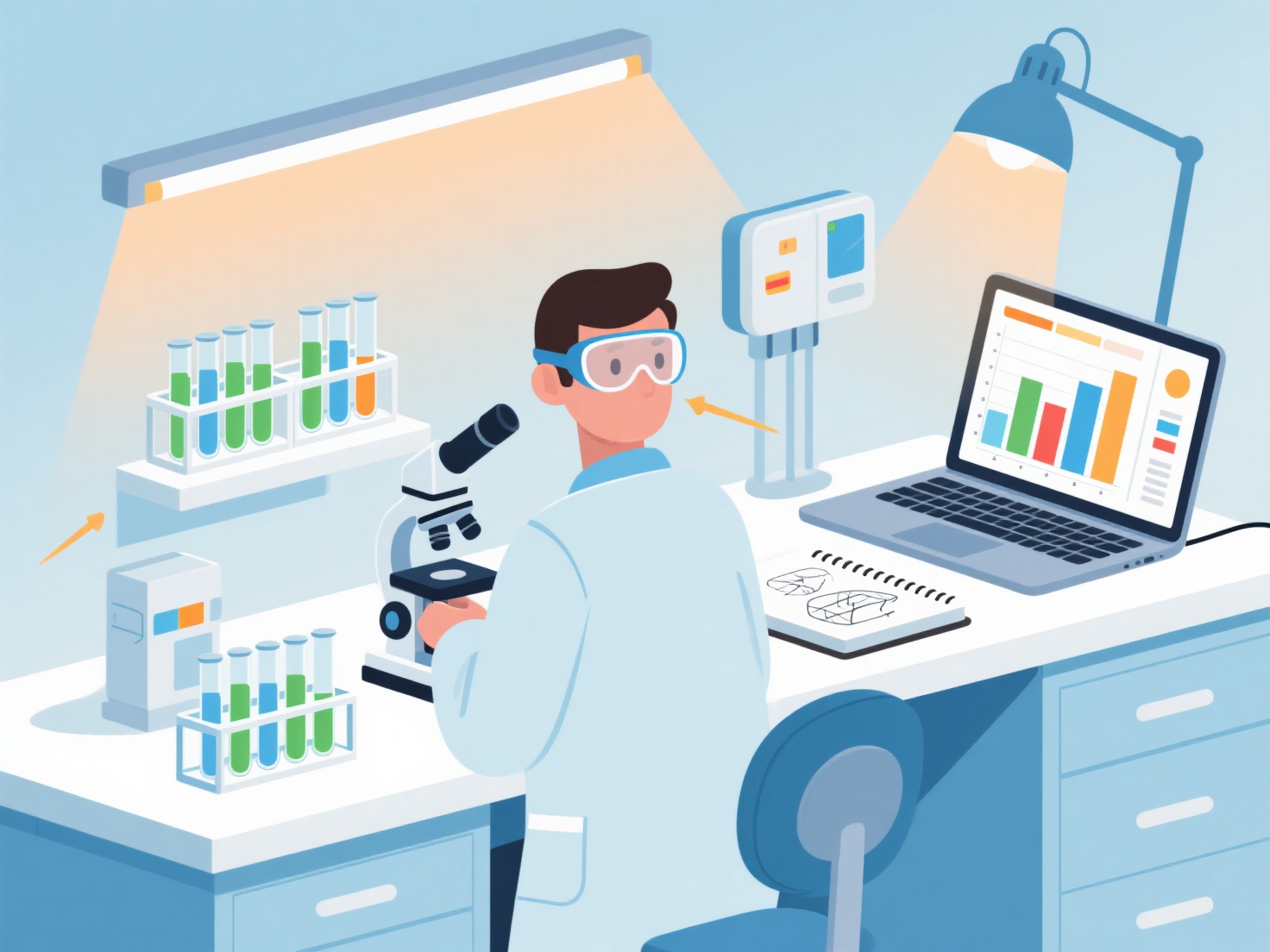
Optimizing lab work as a PhD student requires strategic planning, efficient time management, and standardizing your experimental protocols to maximize valid data output while minimizing wasted effort. Balancing bench work with reading, writing, and classes can feel overwhelming, but building strong laboratory habits early in your graduate program will significantly reduce your stress and accelerate your path to graduation.
Here are the most effective strategies to streamline your research and improve your daily lab productivity.
Plan Your Experiments in Advance
Never arrive at the laboratory without a clear plan for the day. Take time on Friday afternoon or Sunday evening to map out your experimental design for the upcoming week. Block out specific times for using shared equipment, preparing reagents, and running assays. By visualizing your week in advance, you can ensure you have all the necessary materials on hand and avoid bottlenecks caused by missing supplies or booked machinery.
Streamline Protocol Reproduction
One of the biggest time-sinks in any doctoral program is attempting to replicate results from published literature. Often, methodology sections lack the granular detail needed to successfully run the assay. To overcome this, WisPaper's PaperClaw feature lets you upload a paper PDF and automatically generates a full experiment reproduction plan, saving you weeks of troubleshooting vague methods. Having a clear, step-by-step protocol verified before you touch a pipette prevents wasted reagents and endless frustration.
Master Active vs. Passive Time
Lab work is full of passive waiting periods—centrifuge spins, PCR cycles, cell incubations, and running gels. Optimizing your workflow means never letting passive time go to waste. Use these 15- to 60-minute windows to update your electronic lab notebook (ELN), analyze previous data, read newly published papers, or set up your workstation for the next experiment. Batching your active tasks and overlapping them with passive waiting times is the secret to getting more done in an eight-hour day.
Maintain an Impeccable Lab Notebook
Your memory is not as reliable as you think. Documenting your work meticulously is a core component of lab optimization. Record everything immediately, including lot numbers, minor protocol deviations, and exact incubation temperatures. When an experiment inevitably fails, a detailed lab notebook is your best diagnostic tool for troubleshooting.
Leverage Lab Expertise
Do not try to reinvent the wheel. Senior PhD students, postdocs, and lab managers possess years of institutional knowledge and practical shortcuts. Before starting a new technique, ask an experienced lab mate to review your protocol or let you shadow them. Regular communication with your Principal Investigator (PI) will also ensure that your bench work stays tightly aligned with your overall thesis goals, preventing you from going down unproductive research rabbit holes.