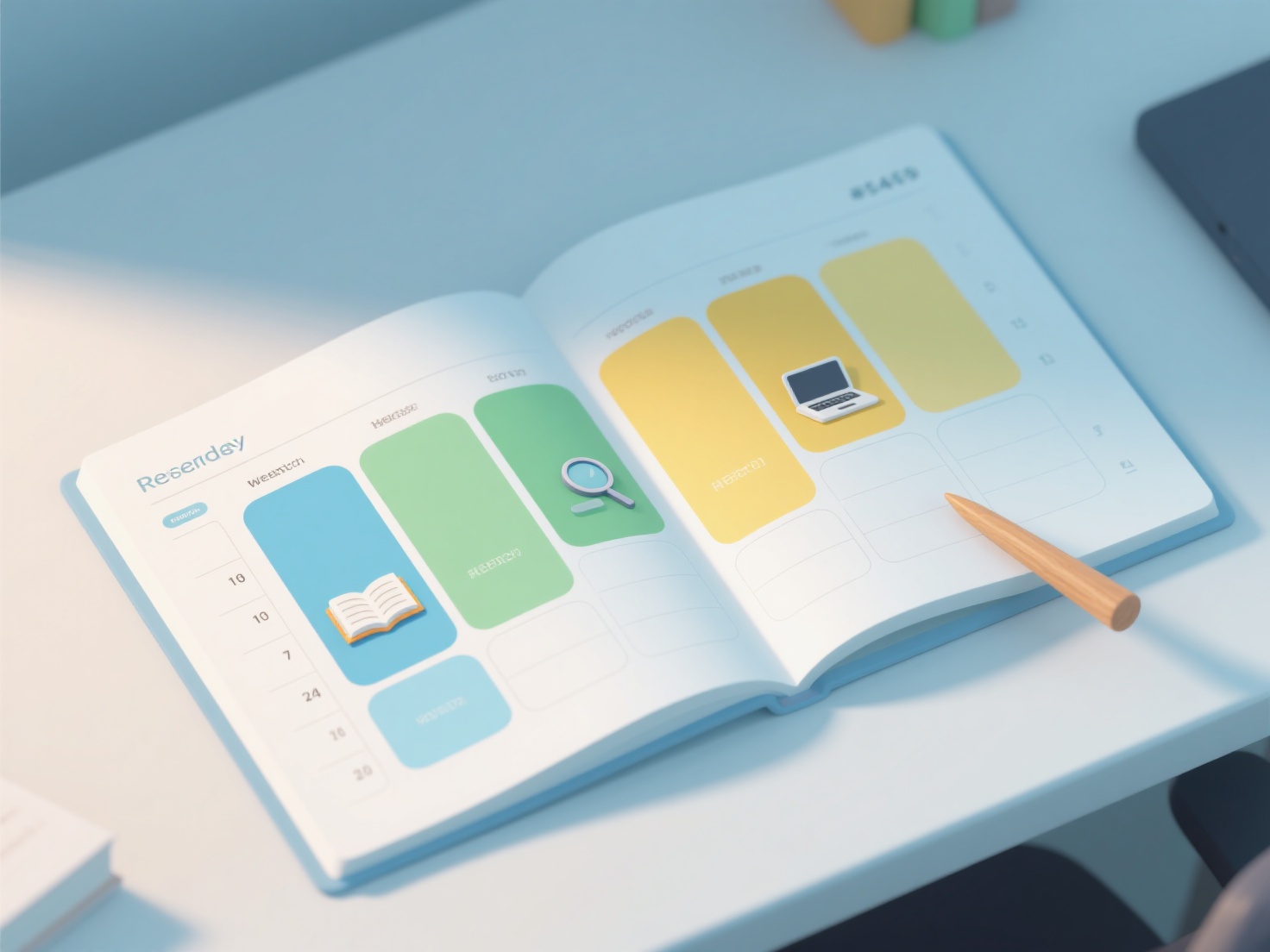
To organize a research schedule for the week, you should break your long-term project goals into daily, actionable tasks and block out specific times for reading, writing, and data analysis. Creating a structured weekly research plan is essential for maintaining academic productivity and preventing burnout during long-term projects like a thesis or dissertation.
Here is a step-by-step guide to structuring an effective week.
1. Define Your Weekly Objectives
Before Monday morning, identify one to three main goals for the week. Instead of writing a vague goal like "work on literature review," make it specific, such as "draft the methodology section" or "analyze the survey data from chapter two." Breaking down large milestones into smaller, measurable deliverables makes your workload feel manageable and keeps your momentum going.
2. Categorize and Time-Block Tasks
Group your research activities into distinct categories to avoid context switching, which drains your mental energy. Use calendar time blocking to dedicate specific windows to:
- Deep Work: Writing, complex data analysis, and coding.
- Literature & Reading: Finding papers, taking notes, and organizing citations.
- Admin & Communication: Answering emails, attending lab meetings, and prepping for advising sessions.
3. Match Tasks to Your Energy Levels
Effective time management for researchers isn't just about filling hours; it's about managing your natural energy. Schedule your most demanding tasks during your peak focus hours. If you are a morning person, block out 8:00 AM to 11:00 AM for deep work, and save lower-energy tasks like formatting references or responding to emails for the mid-afternoon slump.
4. Streamline Your Literature Review
Staying updated on new publications can easily consume hours of your week if you aren't careful. Instead of manually searching journals every day, you can save time by using WisPaper's AI Feeds to automatically push new papers matching your research interests directly to your dashboard. This allows you to condense your literature tracking into a single 30-minute time block each week, preventing information overload while ensuring you never miss a critical study.
5. Plan for Buffer Time and Friday Reviews
Research is inherently unpredictable. Experiments fail, code breaks, and reading a complex paper might take twice as long as expected. Leave at least 20% of your weekly schedule open as "buffer time" to absorb overflow work.
Finally, end your week with a Friday afternoon review. Take 15 minutes to evaluate what you accomplished, update your master to-do list, and draft a rough schedule for the following week. This allows you to fully disconnect and recharge over the weekend.