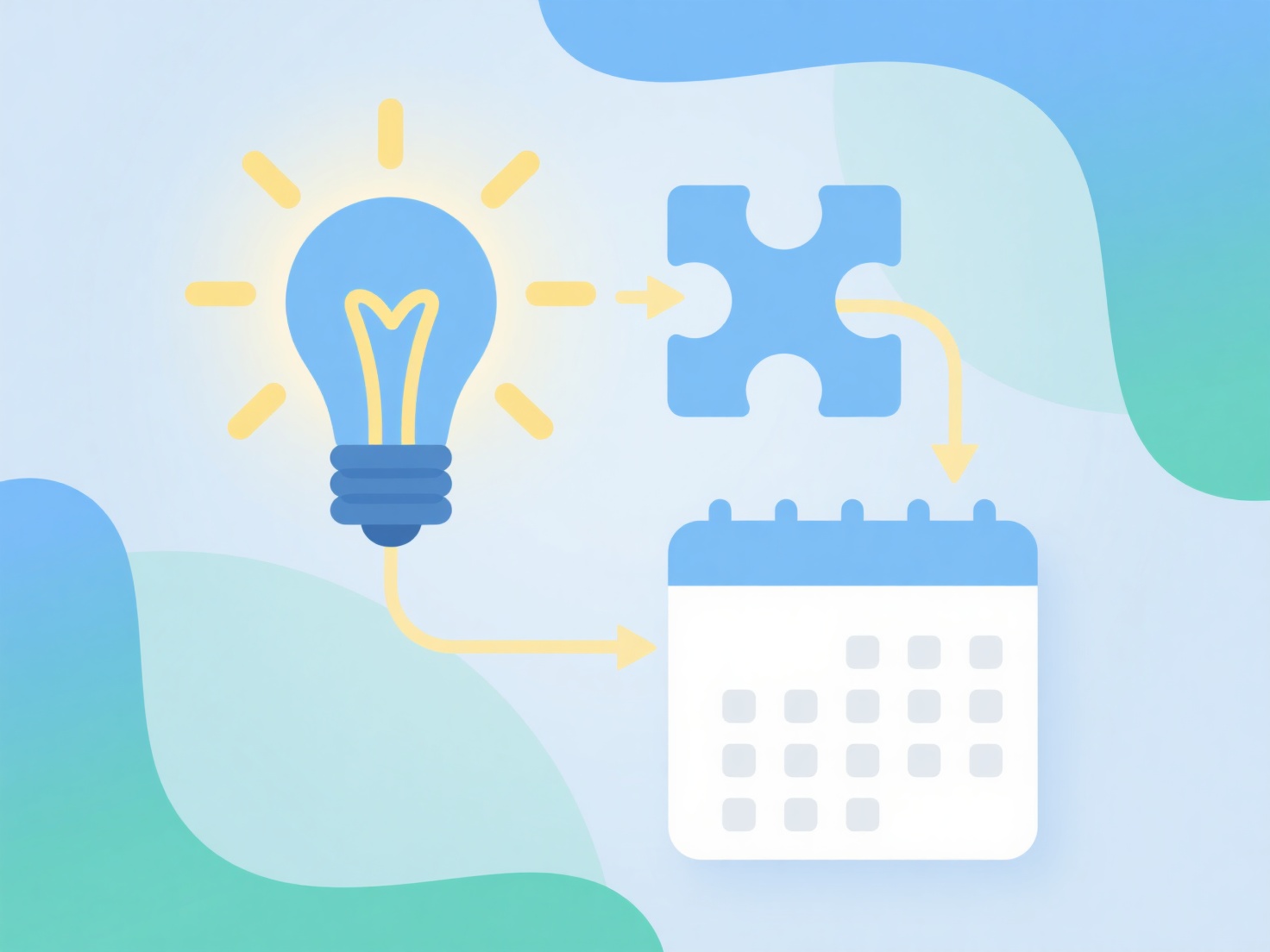
To plan a research project from scratch, you must systematically identify a research gap, formulate a testable question, design your methodology, and build a realistic timeline for execution.
Starting a new study can feel overwhelming, but breaking the process into manageable phases keeps you organized and focused. Whether you are preparing a master's thesis or aiming for your first journal publication, following a structured approach ensures your research is both original and achievable.
1. Identify a Research Gap and Question
Every successful project begins with a specific problem that needs solving. Start by exploring broad topics in your field, then narrow your focus to areas where current knowledge is lacking. If you are struggling to find an original angle, WisPaper's Idea Discovery uses agentic AI to analyze your existing literature and automatically identify unaddressed research gaps. Once you pinpoint a gap, draft a clear, concise, and testable research question to guide your entire study.
2. Conduct a Preliminary Literature Review
Before committing to your research question, dive into existing academic papers to understand the current state of the field. A preliminary literature review helps you refine your scope, familiarize yourself with key debates, and confirm that your exact project hasn't already been done.
3. Choose Your Research Methodology
Your methodology is the blueprint for how you will answer your research question. Decide whether a qualitative, quantitative, or mixed-methods approach makes the most sense. Clearly outline your research design, including how you will handle data collection, what statistical tools or analytical frameworks you will use, and whether you need to apply for institutional ethics approval.
4. Build a Realistic Project Timeline
Research projects rarely go exactly as planned, so a flexible but detailed schedule is essential. Break your project into distinct milestones:
- Literature search and reading
- Methodology design and ethics approval
- Data collection and experiments
- Data analysis
- Drafting and revisions
Assign deadlines to each phase using a calendar or Gantt chart, and always build in buffer time for unexpected delays like failed experiments or slow data gathering.
5. Define Your Final Deliverables
Determine early on what the final output of your project will be. Are you writing a conference paper, a dissertation chapter, or an independent study report? Knowing your target format helps you structure your writing process from day one and ensures you meet the specific formatting and length requirements of your target audience or journal.