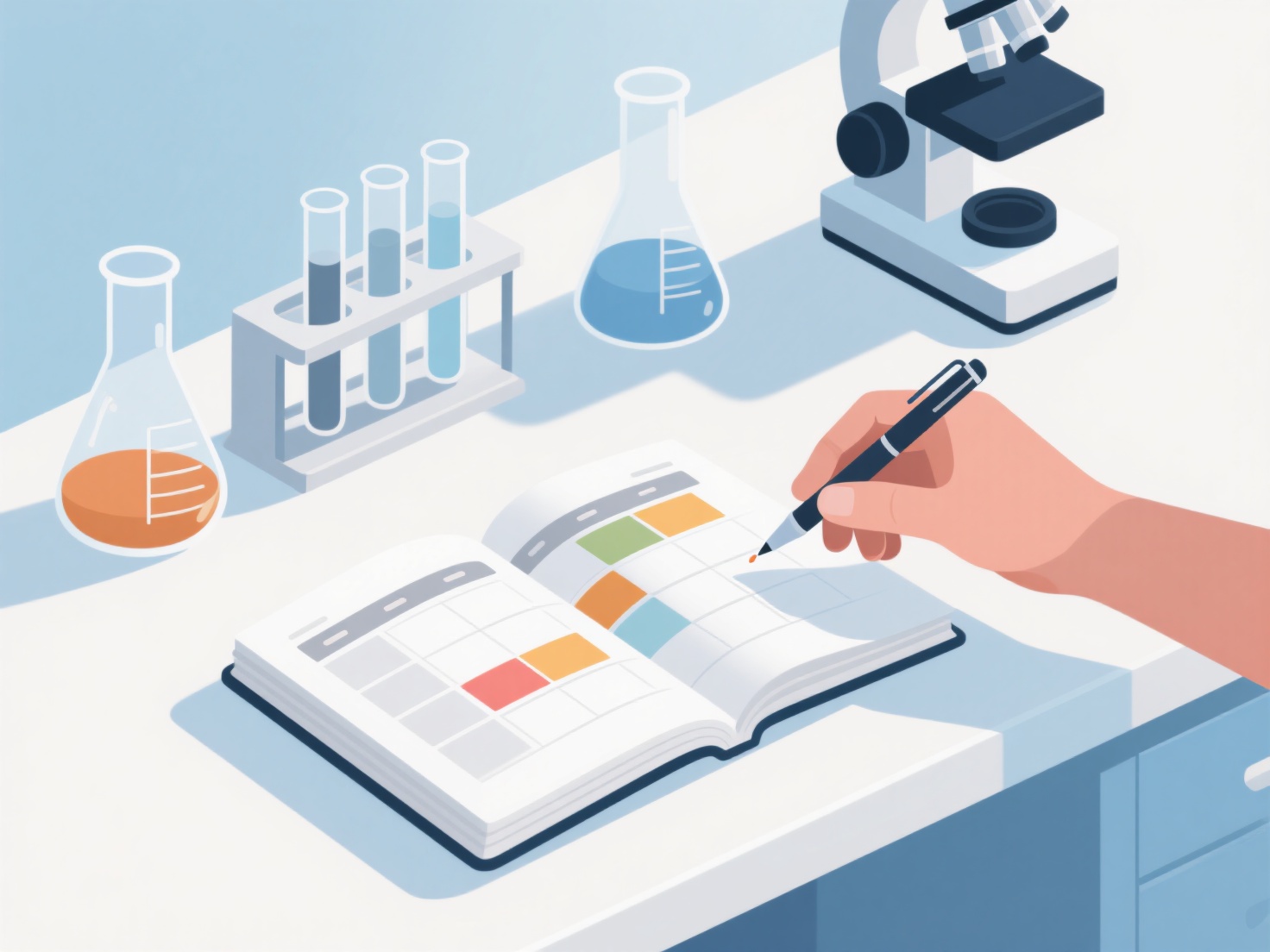
Planning lab work involves defining clear experimental objectives, breaking down protocols into actionable steps, scheduling resources, and preparing for contingencies. A well-structured approach prevents wasted reagents, reduces errors, and keeps your research timeline on track.
1. Define Your Experimental Goals
Before stepping into the laboratory, clarify exactly what question your experiment needs to answer. Are you testing a new variable, optimizing a protocol, or replicating previous results? Having a specific, measurable goal prevents scope creep and helps you focus only on the necessary procedures for that day.
2. Deconstruct the Protocol
Once your goal is set, map out the entire methodology. Write down every step, noting incubation times, required concentrations, and necessary controls. If you are basing your experimental design on existing literature and need to replicate their results, you can use WisPaper's PaperClaw to upload a paper PDF and automatically generate a full experiment reproduction plan. This ensures you do not miss critical methodological details that are often buried in dense text or supplementary materials.
3. Check Inventory and Book Equipment
Nothing derails a lab schedule faster than missing reagents or unavailable machinery. Review your protocol and take a physical inventory of your consumables, chemicals, and biological samples. Order anything you lack well in advance. Simultaneously, check your lab’s shared calendar to reserve essential equipment like centrifuges, microscopes, or flow cytometers to avoid scheduling conflicts with your lab mates.
4. Create a Time-Blocked Schedule
Estimate how long each step of your experiment will take, and always be generous with your time allowances. Use time-blocking to plan your day efficiently:
- Active time: Hands-on tasks like pipetting, cell passaging, or dissections.
- Passive time: Waiting periods like PCR cycles, running gels, or long incubations.
Plan to complete data analysis, literature reading, or lab notebook updates during these passive windows to maximize your daily productivity.
5. Plan for Contingencies
Experiments rarely go perfectly on the first try. Anticipate potential bottlenecks or failure points in your assay. Prepare backup aliquots, extra buffers, and alternative strategies in case a step fails. Building buffer time into your weekly schedule ensures that a minor technical setback does not ruin your entire project timeline.
By preparing meticulously before you put on your lab coat, you will execute your experiments with greater confidence, accuracy, and efficiency.