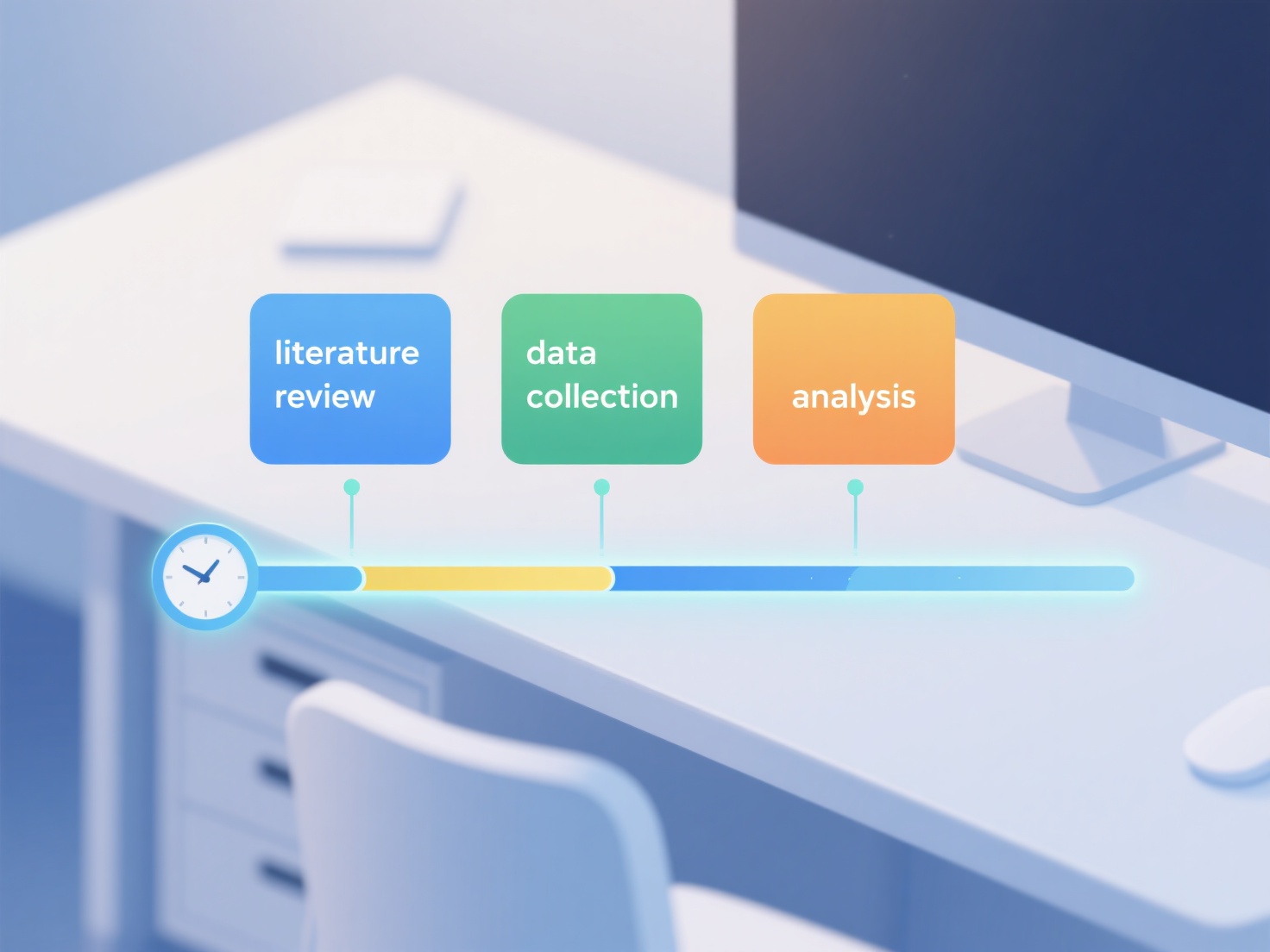
To plan research tasks and finish on time, you must break your entire project into manageable phases, assign realistic deadlines to each milestone, and work backward from your final due date.
Managing an academic research project requires treating it like a professional project rather than a massive homework assignment. By structuring your workflow efficiently, you can avoid the last-minute rush and maintain a healthy work-life balance.
Work Backward from Your Final Deadline
Start by identifying the hard deadline for your thesis, dissertation, or journal submission. From there, map out your major milestones in reverse order. Common phases include final editing, peer review, manuscript drafting, data analysis, experiment execution, and the literature review. Assigning a target completion date to each phase ensures you know exactly where you should be at any given month.
Break Milestones into Micro-Tasks
A milestone like "write literature review" is too overwhelming and often leads to procrastination. Instead, break these large phases down into actionable micro-tasks. For example, your daily tasks might include "outline introduction," "read three papers on methodology," or "format citations." Micro-tasks should take no more than a few hours to complete, giving you a constant sense of momentum and making it easier to start working each day.
Anticipate Bottlenecks and Build in Buffers
Academic research is inherently unpredictable. Experiments fail, data collection takes longer than expected, and reading complex papers can significantly slow you down. Always add a 20% time buffer to your timeline estimates. The literature search phase is particularly notorious for causing early delays, but you can avoid getting bogged down by using WisPaper's Scholar Search, which understands your underlying research intent to filter out 90% of irrelevant noise and help you locate key papers faster.
Use Visual Project Management Tools
Keeping your timeline in your head is a recipe for missed deadlines. Use visual academic time management tools to track your progress. A Gantt chart is excellent for visualizing how different research phases overlap over months or years. For daily and weekly task tracking, Kanban boards like Trello or Notion allow you to move specific micro-tasks from "To Do" to "Doing" to "Done."
Conduct Weekly Schedule Reviews
A research timeline is a living document. Set aside 15 minutes every Friday afternoon to review what you accomplished during the week. If you fell behind on data analysis or drafting, adjust your schedule for the upcoming weeks immediately. Regular check-ins prevent minor delays from snowballing into a panicked rush right before your final deadline.