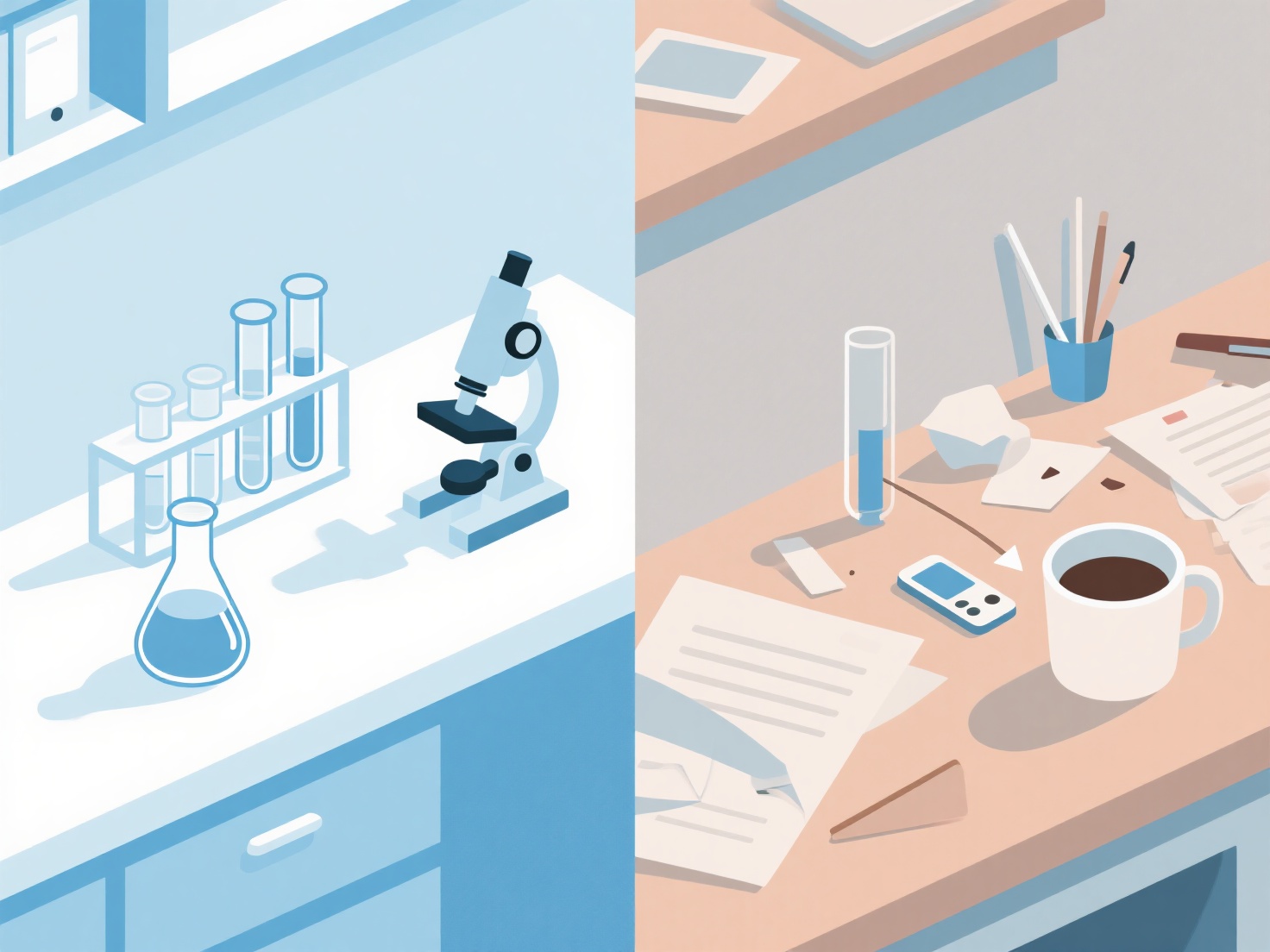
To prevent procrastination in your lab work, break complex experiments into small, actionable steps, establish a strict daily schedule, and prepare your materials the night before.
Procrastination in research rarely stems from laziness; it is usually caused by feeling overwhelmed, fearing failure, or lacking a clear starting point. By structuring your environment and your tasks, you can eliminate the friction that keeps you away from the bench.
1. Deconstruct Complex Protocols
Procrastination thrives on ambiguity. Writing "run protein assay" on your daily to-do list is intimidating because it represents hours of work. Instead, break the experiment down into micro-tasks like "make buffers," "prepare gels," and "load samples." Often, the hesitation comes from trying to replicate a dense methodology section. If you are stuck figuring out how to start, you can use WisPaper's PaperClaw to upload a reference PDF, allowing the AI to generate a full experiment reproduction plan. Having a clear, step-by-step blueprint removes the guesswork that leads to stalling.
2. Prepare Your Bench the Night Before
Lower the barrier to entry for your future self. Before leaving the lab for the day, spend fifteen minutes setting up for tomorrow. Label your tubes, lay out your pipettes, check your reagent inventory, and print your protocols. When you walk into the lab the next morning, you won't have to spend mental energy figuring out where to begin—you can simply execute the plan.
3. Manage Your Incubation Periods
Wet lab work is notorious for long wait times, such as centrifuging or waiting for incubations. These gaps are classic procrastination traps where graduate students often get lost in social media. To maintain your research productivity, plan exactly what you will do during these specific windows. Use a 30-minute incubation to update your lab notebook, read a specific paper, or analyze yesterday's data.
4. Implement Peer Accountability
Research can be incredibly isolating, which makes it easy to push deadlines back. Pair up with another graduate student or post-doc in your department to act as an accountability partner. Share your daily experimental goals with each other every morning. Knowing that someone will ask you about your progress later in the day makes it much harder to put off tedious extractions or repetitive assays.
5. Let Go of Perfectionism
Many researchers delay starting an experiment because they are waiting for the "perfect" conditions or fear the results will be negative. Accept that failed experiments are a normal, inevitable part of the scientific process. Focus on the goal of simply gathering data, whether it supports your hypothesis or not. Taking messy action is always better for your momentum than perfect inaction.