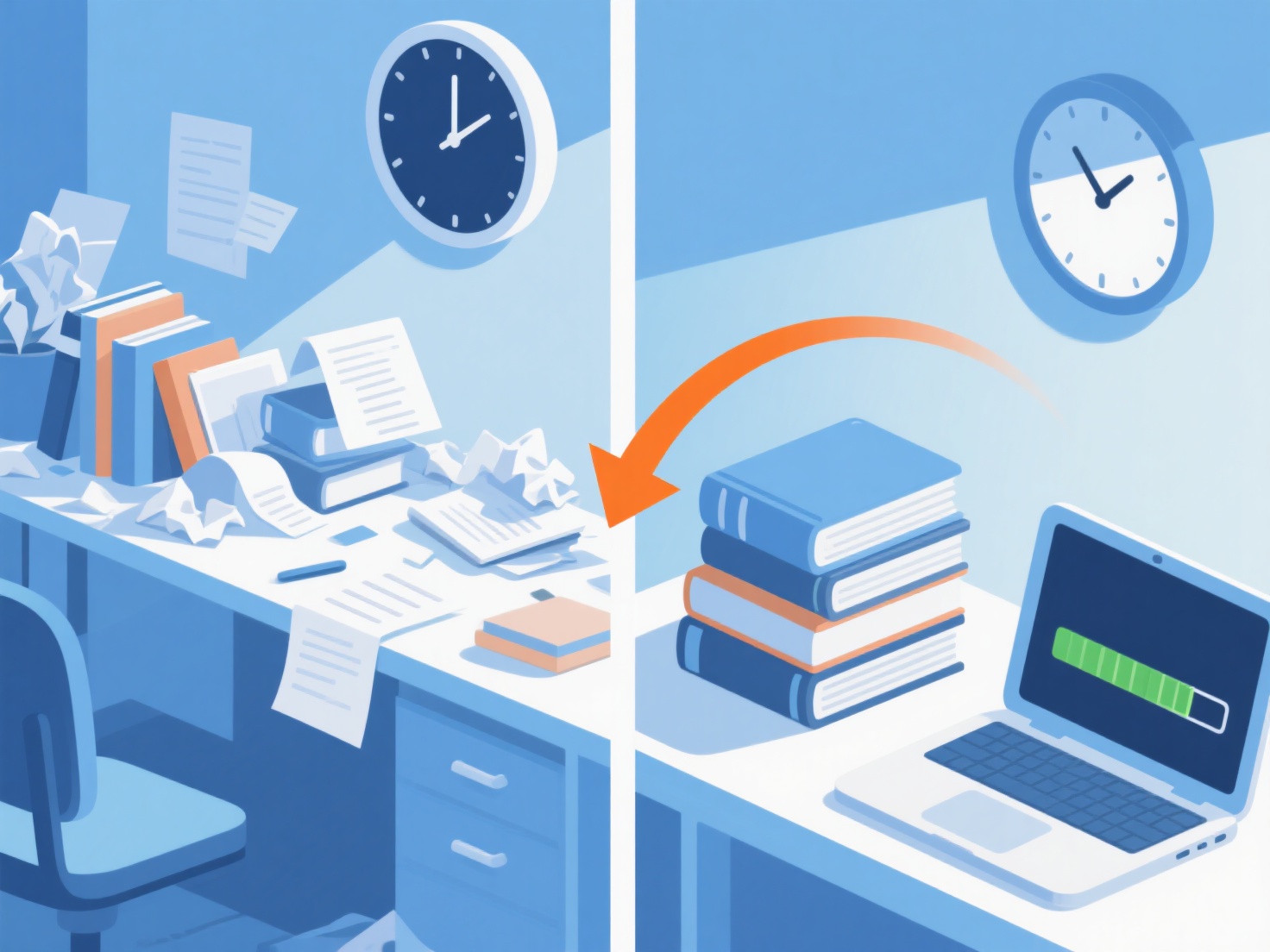
To reduce time spent on your academic workload and meet tight deadlines, you need to prioritize tasks with strict time-blocking, streamline your literature search, and automate repetitive formatting processes.
Balancing coursework, research, and writing can easily lead to burnout if you try to tackle everything at once. By adopting a few strategic productivity habits, you can work more efficiently and reclaim your time.
Break Projects into Micro-Deadlines
Large academic projects like dissertations or extensive literature reviews can feel overwhelming, leading to procrastination. Break these massive assignments into smaller, actionable tasks with their own micro-deadlines. For example, instead of adding "write research paper" to your to-do list, schedule specific blocks for "outline methodology," "draft introduction," and "format references." Using time management techniques like the Pomodoro method can also keep you highly focused during these targeted work sessions.
Optimize Your Literature Search
Falling down a rabbit hole of irrelevant academic papers is one of the biggest time sinks for graduate students and early-career researchers. Instead of manually sifting through hundreds of database results, you can speed up this phase by using WisPaper's Scholar Search, which understands your actual research intent rather than just matching exact keywords, filtering out up to 90% of the noise. Spending less time searching means you have more time to actually synthesize the data that matters.
Read Strategically
You do not need to read every journal article from beginning to end. To process information faster, adopt a strategic reading method. Start with the abstract and conclusion to determine if the paper is genuinely relevant to your thesis. If it is, scan the headings, tables, and figures before diving deeply into the methodology or discussion sections. Always take structured notes immediately after reading so you do not have to re-read the document later.
Automate Citations and References
Never leave your bibliography for the last minute. Manually formatting citations in APA, MLA, or Chicago style is a tedious process that can easily derail your final deadline. Use a reliable reference manager from day one to organize your sources, securely store your PDFs, and automatically generate your in-text citations as you write your drafts.
Embrace the "Ugly" First Draft
Perfectionism severely slows down the academic writing process. When drafting your manuscript, focus entirely on getting your research ideas onto the page without stopping to edit grammar, sentence structure, or flow. Once the core arguments are written, you can return to refine and polish the text. Separating the writing phase from the editing phase is one of the most effective ways to increase your overall writing speed and hit your deadlines with confidence.