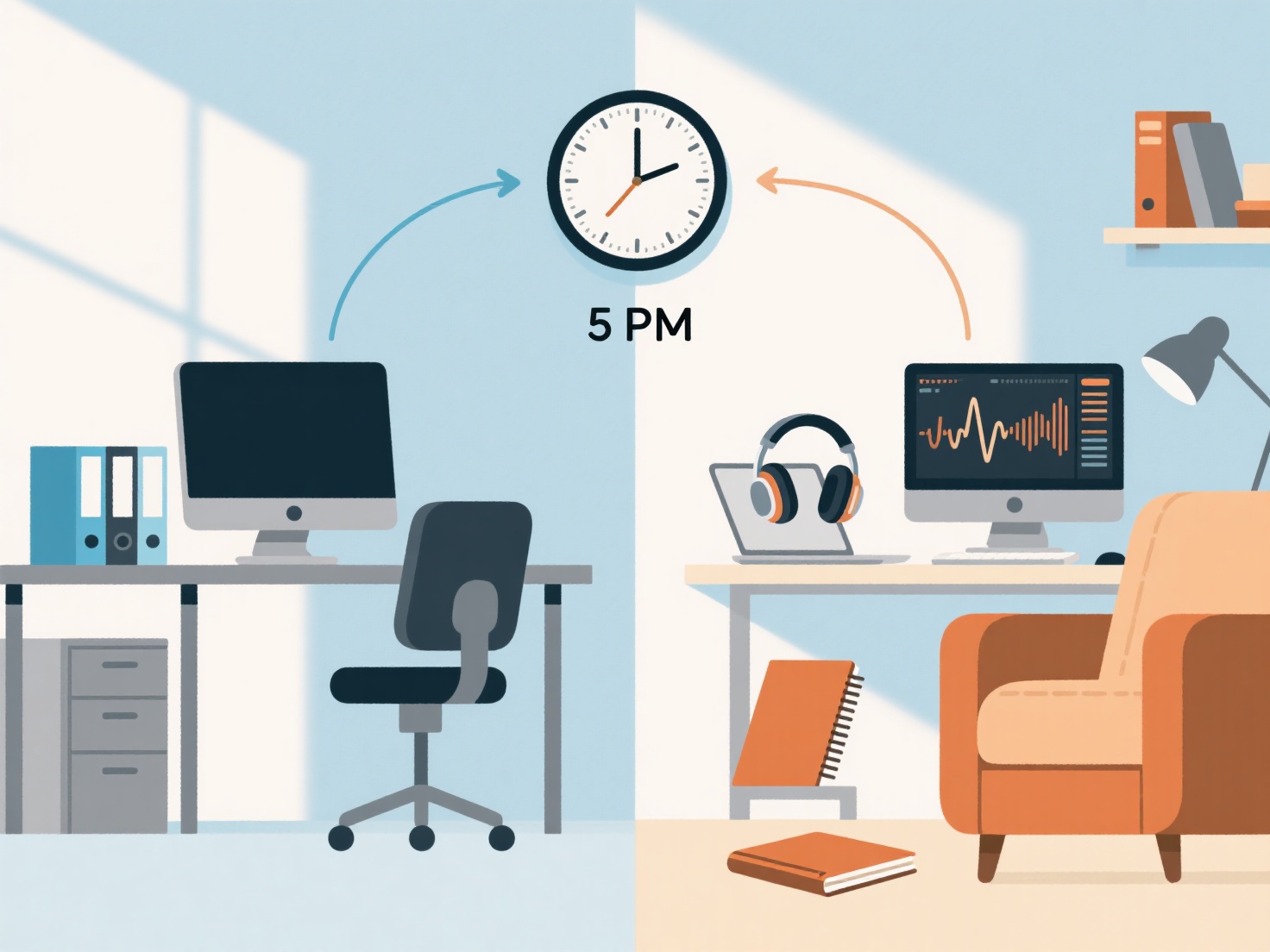
To start transcription while working full-time, you need to invest in basic transcription equipment, rely on time-blocking to manage your schedule, and leverage automated tools to speed up your workflow. Whether you are taking on freelance transcription as a side hustle or processing qualitative interviews for your own research, balancing this task with a full-time job requires a strategic approach to prevent burnout.
Equip Yourself for Efficiency
When your time is limited, your typing speed and accuracy need to be optimized. Do not rely on standard media players to pause and play audio, as switching between windows wastes valuable time. Instead, invest in a USB foot pedal and a high-quality, comfortable headset. Pairing these with dedicated transcription software—like Express Scribe or oTranscribe—allows you to control audio playback with your feet while keeping your hands entirely focused on typing.
Master Time Blocking
Working a full-time job leaves you with limited mental energy at the end of the day. Instead of attempting marathon four-hour transcription sessions, break the work into manageable chunks. Schedule 45-minute blocks early in the morning before your day job, during your lunch break, or on weekend mornings. Consistent, short bursts of focused work are much more productive than long sessions where fatigue inevitably leads to typos and constant rewinding.
Leverage AI for the First Draft
You do not have to type every single word from scratch. To save hours of manual labor, run your audio files through automated transcription tools first to generate a rough text draft. Your job then shifts from typing everything manually to simply proofreading, formatting, and correcting the AI-generated text against the original audio. This hybrid approach drastically reduces the time it takes to process lengthy files, making it much easier to balance with a 9-to-5 schedule.
Organize and Analyze Your Files
As you accumulate completed text files, managing your documents becomes critical, especially if you are working on academic research. If you are transcribing qualitative interviews for a study, WisPaper's My Library allows you to upload your finished transcripts alongside your literature, acting as a Zotero-style manager where you can chat with your own documents via AI to quickly extract key themes and quotes. Keeping your files highly organized ensures that the limited time you spend transcribing directly translates into actionable insights or completed projects without making you feel overwhelmed.