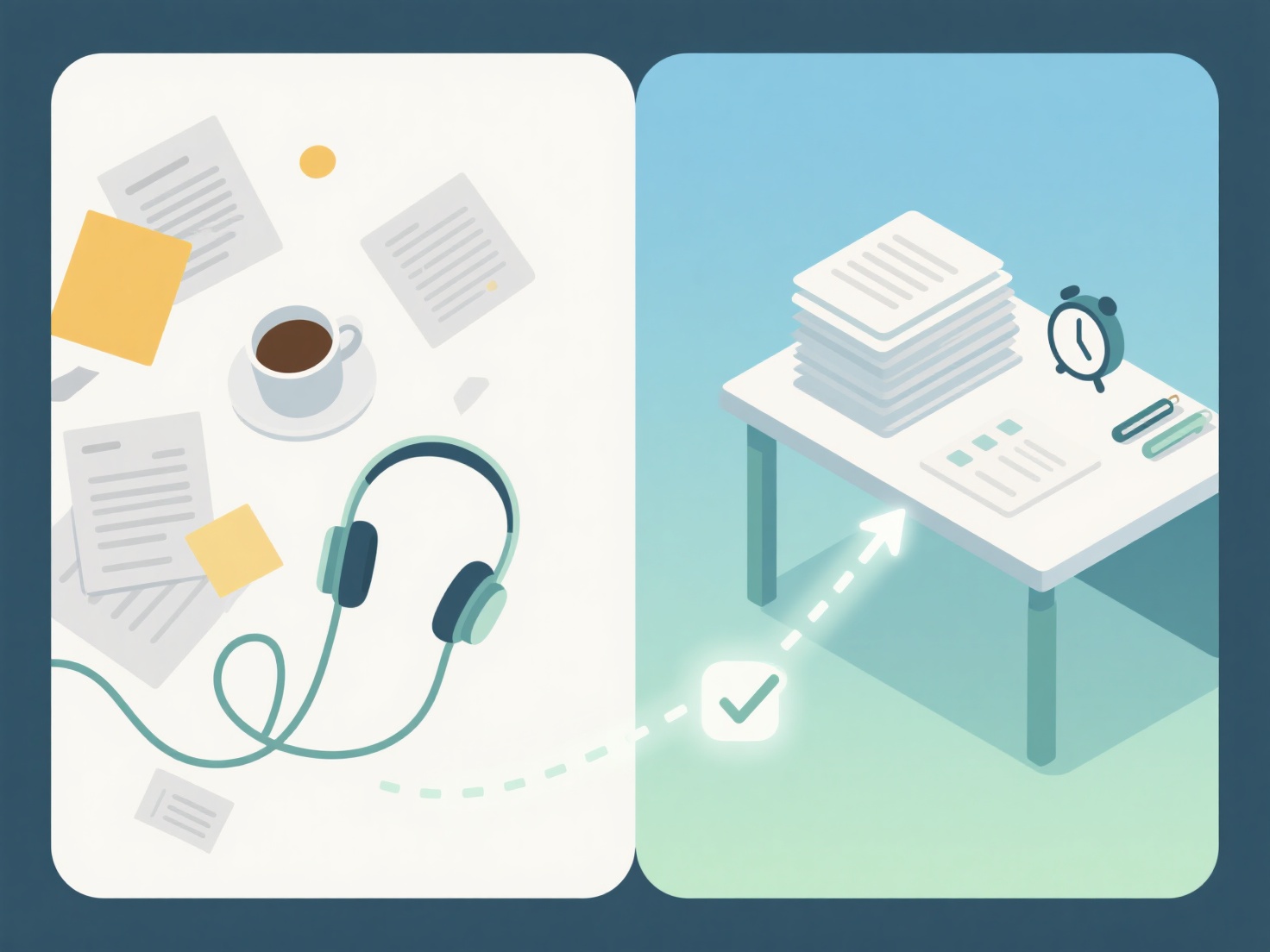
You can streamline thesis writing and reduce procrastination by breaking the project into micro-tasks, establishing a consistent daily writing routine, and organizing your research materials before you start drafting.
Thesis writing often feels overwhelming, which is the primary psychological trigger for procrastination. By treating your dissertation as a series of small, manageable steps rather than one massive document, you can build momentum and stay on track. Here are the most effective strategies to optimize your academic writing process.
Break the Project into Micro-Tasks
Procrastination thrives on ambiguity. Instead of adding "write literature review" to your to-do list, break the section down into highly specific, actionable micro-tasks. Goals like "write the methodology summary for paper A" or "format three data tables" are much easier to start and complete in a single sitting.
Separate Researching from Writing
Context-switching drains your focus and invites distraction. If you stop writing every five minutes to look up a citation or read a new journal article, you will quickly lose your flow. Dedicate specific blocks of time strictly to literature search and reading, and other blocks purely to drafting. If you realize you are missing a piece of information while writing, leave a placeholder (like "[INSERT STAT HERE]") and keep moving forward.
Organize Your Literature Early
A disorganized reference folder is a massive barrier to writing. Keeping your PDFs, notes, and citations in a centralized system prevents the dread of hunting down lost sources. For instance, using WisPaper's My Library allows you to manage references and chat directly with your uploaded papers via AI, helping you instantly locate elusive quotes or data points without breaking your writing stride.
Establish a Low-Friction Routine
When it comes to thesis writing, consistency beats intensity. Set a daily schedule that severely lowers the barrier to entry. Commit to writing for just 25 minutes a day using the Pomodoro technique, or set a tiny daily goal of 100 words. Often, the hardest part of writing is simply opening the word processor. Once you start typing, you will almost always exceed your micro-goal.
Embrace the Imperfect First Draft
Perfectionism is the root of most academic procrastination. Give yourself permission to write a messy, poorly worded first draft. Your primary goal in the early stages is simply to get your core arguments and evidence onto the page. You can always edit, refine, and polish your academic tone later, but you cannot edit a blank page.