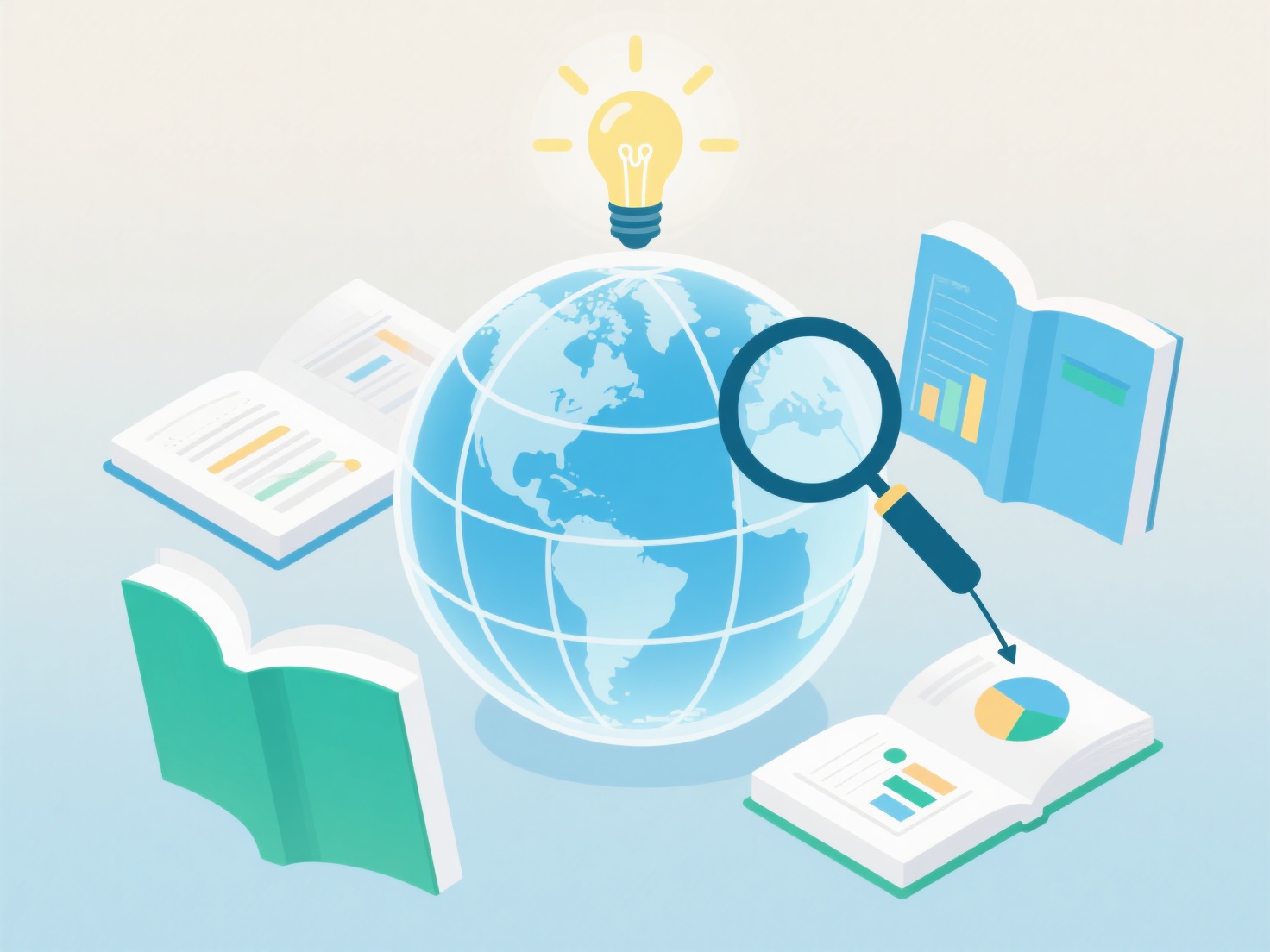
To understand international journals effectively, you should break down complex papers by first reviewing the abstract and conclusion, familiarizing yourself with field-specific terminology, and utilizing smart reading tools to overcome language barriers.
Reading academic papers published by international researchers can feel intimidating, especially when you encounter unfamiliar academic conventions, dense jargon, or foreign languages. However, mastering global literature is a necessary step for any graduate student or early-career researcher looking to conduct a thorough literature search.
Here are the most effective strategies to digest international research papers:
1. Start with the Big Picture
Never read a journal article from beginning to end like a book. Start with the abstract to grasp the core research question and main findings. Next, jump straight to the conclusion. This top-down approach gives you a clear roadmap of the paper's destination before you get bogged down in the dense academic writing of the methodology or literature review.
2. Build a Working Glossary
International journals often feature specific terminology or phrasing that might differ from your local academic norms. Keep a running document of unfamiliar terms, acronyms, and theoretical frameworks. Over time, this personal glossary will make reading foreign papers in your specific discipline significantly faster.
3. Leverage Smart Tools for Language Barriers
If you are dealing with a paper written in a foreign language or incredibly dense English, you don't have to struggle through it manually. For example, using WisPaper's AI Copilot can help you translate full papers instantly or rewrite complex sections into easy-to-digest summaries, allowing you to grasp the core arguments without losing the academic nuance.
4. Decode the Visuals First
Charts, graphs, and tables act as the universal language of academic research. Before diving into the results section, examine the figures and their captions. High-tier international journals require rigorous data presentation, and understanding these visuals will give you a solid, objective foundation for interpreting the authors' claims.
5. Trace the Academic Context
International papers may build upon foundational theories or regional studies you don't immediately recognize. Take a moment to review their references. Understanding the academic context and the broader conversation the authors are engaging in will clarify their unique contribution to the field and help you evaluate the relevance of their work to your own research.