

A seed paper is a paper you use as a starting point for literature discovery. It helps you move from one known source to related papers, older references, newer citations, author networks, and field vocabulary.
Seed papers are useful because keyword search depends on the words you already know. If another field uses different language, your search may miss important work. A good seed paper can reveal that language by showing what the field cites and how later papers build on it.
This guide explains how to choose seed papers, expand from them, and avoid letting one paper control your literature review. For the broader discovery context, see citation mapping tools compared.
What is a seed paper?
A seed paper is a trusted starting paper used to discover more literature. It may be a recent review, a foundational theory paper, a methods paper, or a study that directly matches your research question.
The seed is not automatically part of your final review. It is a doorway into the literature. You still need to screen every paper it helps you find.
The best seed paper gives you three things: references to earlier work, citations from later work, and vocabulary that improves your search. Once you understand that role, the next question is how to choose the right seed.
What makes a good seed paper?
A good seed paper clearly fits your research question and points to useful surrounding literature. It should not be chosen only because it is famous, readable, or easy to find.
Look for these qualities:
- Direct relevance to your topic, method, population, or outcome.
- A reference list that explains where the idea came from.
- Later citations that show how the field responded.
- Clear methods or concepts you can search for again.
- Enough detail to judge whether related papers are truly relevant.
A weak seed creates a weak map. If the paper is only loosely related, citation tools may lead you into a nearby but unhelpful field.
Before expanding from a seed, write down why the paper belongs. That note will protect the next stage of the search.
How many seed papers should you use?
Use several seed papers when possible. One seed can trap the review inside one author group, method, or discipline.
A balanced seed set might include:
- A recent review paper for current framing.
- A foundational paper for older concepts.
- A methods paper for how the topic is studied.
- A recent empirical paper for current evidence.
- A paper from an adjacent field for alternate vocabulary.
Multiple seeds help you see whether the field is unified or fragmented. If several seeds lead to the same papers, those papers may be central. If each seed leads to a different cluster, your topic may need a wider search strategy.
For formal work, use seed papers as a recall check as well as a discovery method. The process in auditing recall in AI literature search is useful here.
How do you start from a seed paper?
Start by turning the seed paper into a set of search clues. Do not immediately click every related paper.
Extract:
- The exact terms used in the title and abstract.
- The method names.
- The population or dataset.
- The outcome or finding.
- The authors and research groups.
- The journal, conference, or field.
- The papers it cites repeatedly.
These clues tell you how the paper sits in the field. They also give you new search terms for keyword databases and AI search tools.
Once the clues are visible, you can expand in two directions: backward to the sources the paper cites, and forward to the papers that cite it.
How do you use backward citation chasing?
Backward citation chasing means reviewing the papers your seed paper cites. It helps you find definitions, theories, methods, and earlier evidence.
Use backward chasing to ask:
- Which cited papers define the main concept?
- Which papers introduced the method?
- Which sources appear across several seed papers?
- Which older papers are still necessary for context?
- Which references are outside your scope?
Do not copy the seed paper’s bibliography into your own. The seed author had a different question, and some references may not fit your review.
Backward chasing is especially useful when you are writing background or methods context. It helps you avoid citing only recent papers that themselves depend on older work.
How do you use forward citation chasing?
Forward citation chasing means finding papers that cite your seed paper. It helps you see how the conversation changed after the seed was published.
Forward citations can reveal:
- New applications of the same method.
- Replications or extensions.
- Critiques of the original claim.
- Review articles that place the paper in context.
- Adjacent disciplines adopting the idea.
ResearchRabbit and Litmaps both build discovery workflows around this kind of paper relationship. ResearchRabbit’s article on finding a research gap uses the seed-paper-to-network pattern, while Litmaps explains seed and related-literature workflows in its literature review guide.
Forward citations are useful, but they are not automatically better evidence. Newer papers can be narrow, preliminary, or only loosely connected.
How do seed papers improve keyword search?
Seed papers improve keyword search by revealing terms you did not know to use. This is one of their most practical benefits.
After reading several seed papers, create term groups:
- Core concept terms.
- Method terms.
- Population terms.
- Outcome terms.
- Review type terms.
- Adjacent-field terms.
Then use those groups to revise your search strings. This prevents the literature review from depending on your first vocabulary guess.
For examples of turning terms into queries, use AI literature review search strings.
How do you screen papers found from seeds?
Screen seed-derived papers the same way you screen database results. A paper does not become eligible because it is connected to a strong seed.
Use a simple decision rule:
- Include papers that match the review question and criteria.
- Exclude papers that clearly fail a criterion.
- Mark unclear papers as maybe.
- Record the reason for each decision.
- Keep duplicate or related records visible.
This protects the review from citation-network bias. A map can show what is nearby, but criteria decide what belongs.
If your criteria are still vague, build inclusion and exclusion criteria before screening the expanded set.
What mistakes should you avoid with seed papers?
Seed-paper workflows fail when the seed becomes too powerful. The paper should guide discovery, not define truth.
Avoid these mistakes:
- Using only one seed paper.
- Choosing a seed because it is famous rather than relevant.
- Treating citation count as source quality.
- Ignoring papers outside the seed’s discipline.
- Calling a missing map area a research gap.
- Citing related papers without reading them.
- Forgetting to document how the seed was used.
The fix is to challenge every seed with another search method. Use keyword search, AI search, and citation mapping together.
How do you turn how to use seed papers to find better literature into a repeatable workflow?
Turn the advice into a repeatable workflow by defining the decision you need to make, the evidence required for that decision, and the record that will prove how the decision was made. In literature discovery, the problem is rarely one missing tool. The problem is usually that search, reading, checking, and writing happen in separate places without a shared rule.
Use a short operating routine:
- Name the review question or subquestion.
- Define the source set you are working from.
- Decide what counts as enough evidence for the next step.
- Apply the same criteria to every paper in that step.
- Mark uncertain cases instead of forcing a clean answer.
- Keep source locations for claims that may enter the final review.
- Review the workflow after each major search, screening, or writing session.
This routine keeps the work moving without making the review careless. It also gives supervisors, collaborators, and future you a way to understand why the source set changed.
What should you record while using this workflow?
Record the pieces that would be hard to reconstruct later. You do not need a diary of every click, but you do need enough detail to explain the path from question to source to claim.
For this topic, the most useful record usually includes queries, source routes, seed papers, result counts, and follow-up searches. Add the date, tool or source used, reviewer status, and next action. If AI assisted the step, write down what it helped with and what a human checked.
The record should distinguish discovery from evidence. A tool may help find a paper, but the paper itself must support the claim. A summary may help triage a source, but the original source should support any statement that appears in the literature review.
What should you check before writing from this work?
Before writing, check whether the workflow has produced usable evidence or only useful notes. Notes help you think. Evidence supports a sentence.
Ask:
- Which claim will this source support?
- Is the claim narrower than the evidence?
- Have methods, sample, outcome, or concept details been checked?
- Are limitations visible?
- Are conflicting papers handled rather than ignored?
- Is the citation real, current, and relevant?
- Can another reader understand how this source entered the review?
If the answer is unclear, keep the point in notes rather than moving it into the draft. This is the small pause that prevents AI-assisted research from becoming polished but weak writing.
How can WisPaper help after you identify seed papers?
WisPaper can help turn seed-paper discovery into a working paper set. Researchers can use the search workspace, including Deep Search, Scholar Agent, and Inspiration Discovery, to run natural-language queries around terms, methods, and questions found from seed papers.
Paper cards show source labels, summaries, publication details, authors, and preview images, which helps researchers triage papers before deciding what to read. Candidate papers can then be saved or uploaded into My Library so the source set is not scattered across search tabs and map tools.
Library QA supports questions based on the user’s own library. That helps after seed expansion, when the task becomes understanding what the selected papers say and how they relate. Final screening and citation decisions still stay with the researcher.
FAQs
Keep Reading

Scholarly Sources for Assignments: Where to Find Them and How to Use Them
You have an assignment due, and the instructions say "use scholarly sources." That usually means peer-reviewed journal articles, academic books, or conference papers. But if you have ever typed your research question int
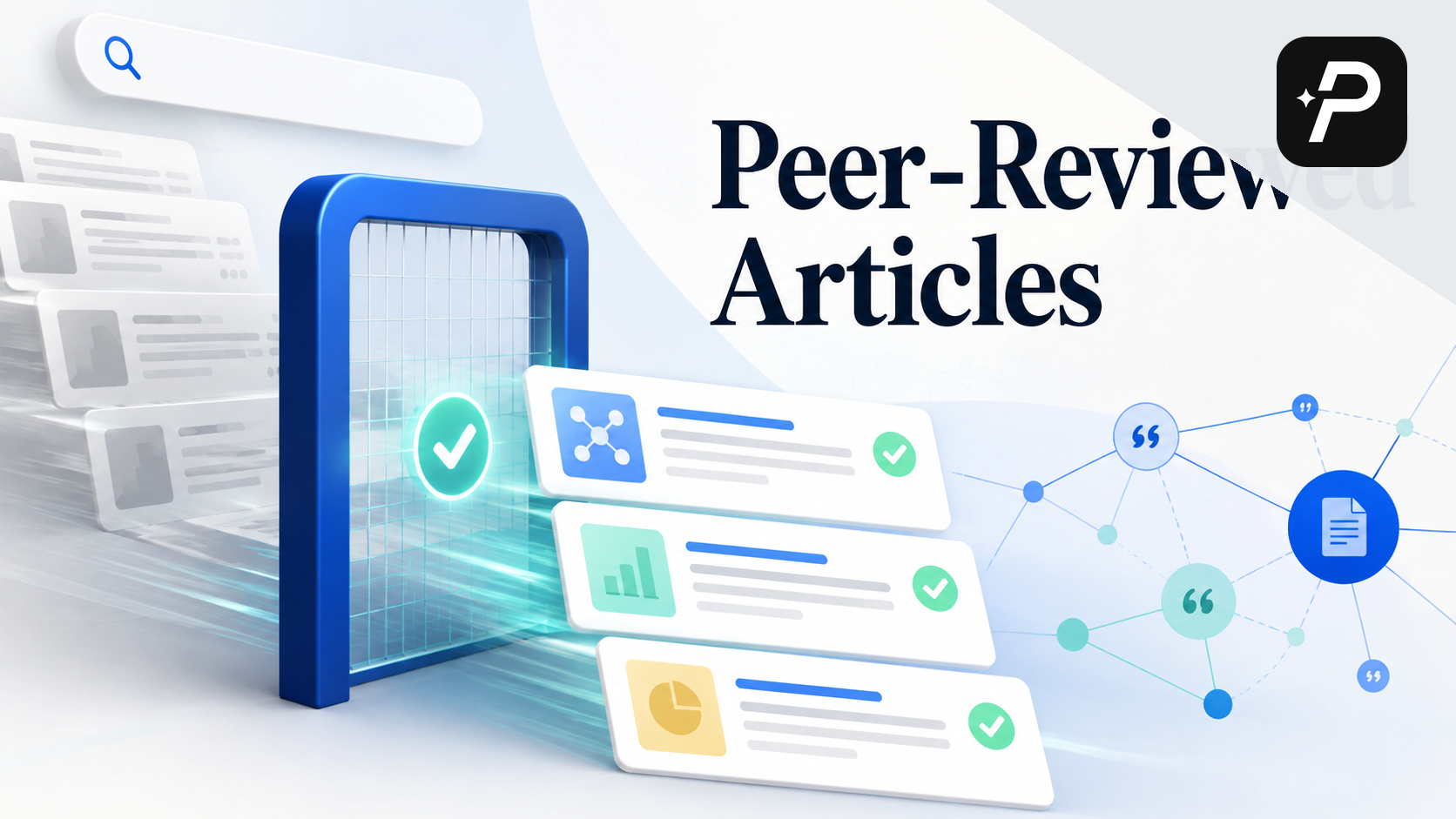
How to Find Peer-Reviewed Articles for a Research Paper
Your instructor wrote "peer-reviewed sources only" in the rubric. You need to find them, but you are not entirely sure what counts as peer reviewed or where to look. A quick Google Scholar search returns a mix of PDFs, p
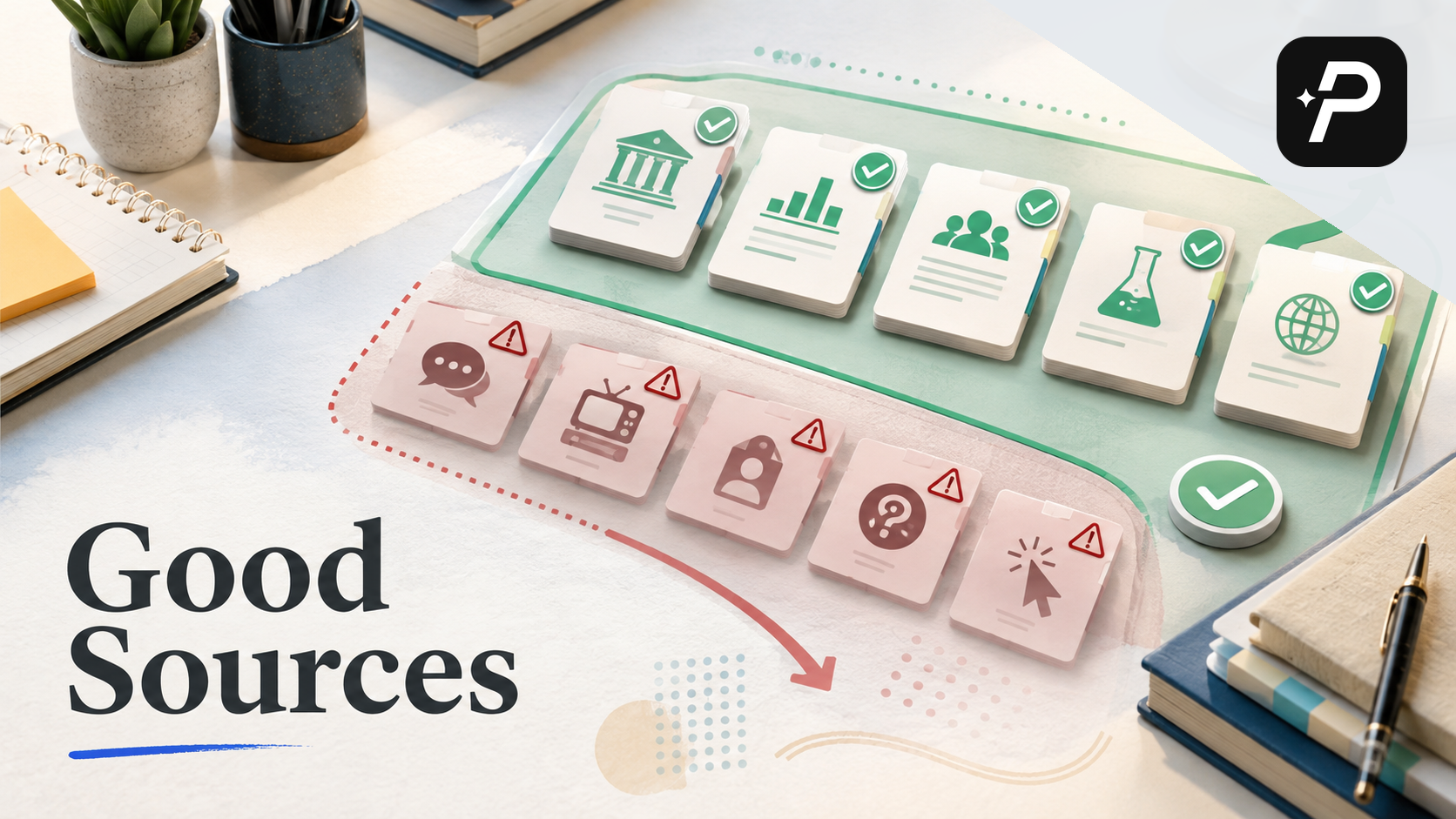
Good Sources for a College Research Paper: What Counts and What Does Not
You have a thesis, a deadline, and a blank page. The next step is finding sources, but the search results are overwhelming, and it is hard to tell what your professor will actually accept. A "good" source has to be accur